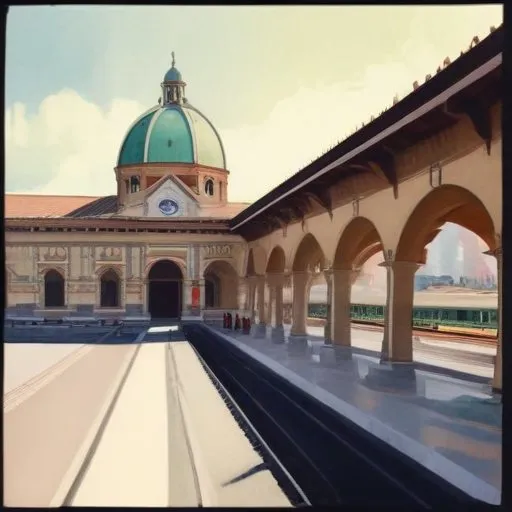
Giovanni Michelucci: The Visionary Architect of 20th Century Italy
A Legacy of Innovation and Design
Giovanni Michelucci was an Italian architect, urban planner, and designer, renowned for his iconic projects that reshaped Italy's urban landscape in the 20th century. His most notable works include the Firenze Santa Maria Novella railway station and the San Giovanni Battista church on the Autostrada del Sole, showcasing his innovative approach to architectural design.
Early Life and Influences
Born on January 2, 1891, in Pistoia, Tuscany, Michelucci grew up surrounded by the artistic iron craftsmanship of his family's workshop. This early exposure instilled in him a deep appreciation for the fusion of art and function. After graduating from the Higher Institute of Architecture at the Academy of Fine Arts of Florence, Michelucci became licensed as a professor of architectural design in 1914 and later served as the Dean of the Faculty of Architecture in 1944.
The War Years and Early Projects
During World War I, Michelucci built his first architectural work, a chapel on the eastern front in Casale Ladra, near Caporetto (now in Slovenia). This experience laid the groundwork for his future projects, which often involved reconstruction and revitalization. In the aftermath of World War II, Michelucci played a pivotal role in the reconstruction of Florence's city center, as well as the design of the church at Longarone after the devastating Vajont dam tragedy.
Notable Projects and Contributions
Michelucci's impressive portfolio includes:
- Firenze Santa Maria Novella railway station: A masterpiece of modernist architecture, this station epitomizes Michelucci's ability to blend functionality with aesthetics.
- San Giovanni Battista church on the Autostrada del Sole: This striking church, built along Italy's main highway, has become an iconic symbol of modern Italian architecture.
- Reconstruction of Florence's city center: Michelucci's sensitive approach to urban planning ensured the preservation of Florence's historic charm while incorporating modern amenities.
- Church at Longarone: This poignant project allowed Michelucci to explore the intersection of architecture, art, and community healing.
Lifetime Achievements and Legacy
Throughout his remarkable 99-year life, Michelucci witnessed and contributed to the evolution of 20th-century architecture. His dedication to innovation, cultural sensitivity, and community engagement has left an indelible mark on Italy's urban landscape. The Giovanni Michelucci Foundation, established in his studio-home in Fiesole, continues to promote his ideals and inspire future generations of architects and designers.
Award and Honors
Michelucci received numerous accolades for his contributions to architecture and urban planning, including:
- Dean of the Faculty of Architecture (1944)
- Recipient of the Grand Prix of the Milan Triennale (1951)
Philosophical Contributions and Beliefs
Michelucci's work embodied a deep understanding of the complexities of human experience, reflected in his emphasis on the emotional and psychological impact of architecture on individuals and communities. He believed that architecture should not only serve as a testament to human ingenuity but also as a tool for social transformation and community building.
As we reflect on Michelucci's extraordinary life and legacy, we are reminded of the profound influence one person can have on shaping the world around us. His vision, creativity, and dedication to his craft continue to inspire architects, designers, and urban planners, cementing his place as one of the most significant figures in 20th-century Italian architecture.
FAQ
What was Giovanni Micheluccis contribution to Italian architecture?
Giovanni Michelucci was a renowned Italian architect and urban planner who made significant contributions to the field of architecture. He is best known for designing the Firenze Santa Maria Novella railway station in Florence, Italy.
How did Giovanni Micheluccis work reflect his values and philosophy?
Giovanni Micheluccis work reflected his commitment to functionalism and his emphasis on the importance of social and cultural context in architectural design. He believed in creating buildings that served the needs of their users and enriched the urban environment.
What were Giovanni Micheluccis influences on modern Italian architecture?
Giovanni Micheluccis work had a significant impact on modern Italian architecture. He was a pioneer of modernist architecture in Italy and influenced a generation of architects who followed in his footsteps.
How did Giovanni Micheluccis urban planning experiences shape his architectural design?
Giovanni Micheluccis urban planning experiences had a profound impact on his architectural design. He understood the importance of integrating buildings into their urban context and designing spaces that served the needs of their users.
What is Giovanni Micheluccis legacy in Italian architecture and urban planning?
Giovanni Micheluccis legacy in Italian architecture and urban planning is marked by his commitment to functionalism, modernism, and social responsibility. He is remembered as a visionary architect who helped shape the urban landscape of Italy.