


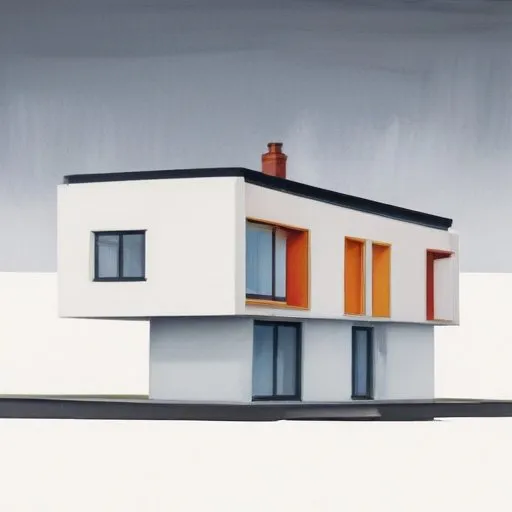
Gerrit Rietveld was a Dutch furniture designer and architect, best known for his iconic Red and Blue Chair, which has become a symbol of modern furniture design, and his innovative approach to architecture, exemplified in the Rietveld Schröder House.
Rietveld was born on June 24, 1888, in Utrecht, the Netherlands, as the son of a joiner. He left school at the age of 11 to apprentice with his father, and later enrolled in night school to study drawing and painting. This self-taught education would lay the foundation for his future success as a designer and architect.
Rietveld's early career as a cabinetmaker and furniture designer was heavily influenced by the De Stijl movement, a Dutch art movement that emphasized simplicity, functionality, and the use of primary colors. In 1917, he designed his famous Red and Blue Chair, which became an instant icon of modern furniture design. The same year, he opened his own furniture workshop, and in 1919, he became a member of the De Stijl group, alongside other notable artists and designers, such as Piet Mondrian and Theo van Doesburg.
In 1924, Rietveld designed and built the Rietveld Schröder House, a revolutionary building that showcased his innovative approach to architecture. The house, built in collaboration with Truus Schröder, lacked fixed walls on the top floor, instead using sliding walls to create and change living spaces. This radical design made the house a precursor to modern open-plan living. The Rietveld Schröder House has been a UNESCO World Heritage Site since 2000.
In 1928, Rietveld broke with De Stijl and became associated with the Nieuwe Zakelijkheid (New Objectivity) movement, which emphasized functionality and simplicity in architecture and design. He joined the Congrès Internationaux d'Architecture Moderne (CIAM) the same year, further solidifying his position as a leading modernist architect and designer.
Rietveld's innovative designs and architectural philosophy have had a lasting impact on modern furniture design and architecture. His emphasis on functionality, simplicity, and the use of primary colors has influenced generations of designers and architects. The Rietveld Schröder House, in particular, has become a benchmark for modernist architecture, and his Red and Blue Chair remains an iconic symbol of modern furniture design.
Rietveld's design philosophy was rooted in a belief that simplicity, functionality, and the use of primary colors were the key to creating modern, innovative designs. He believed that furniture and architecture should be designed to serve the needs of the user, rather than to showcase unnecessary ornamentation.
Born in 1886
A pioneering architect who revolutionized modern skyscraper design with sleek, minimalist, and functional buildings that redefined urban landscapes. His iconic creations continue to inspire architects and influence city skylines.
Born in 1887
A pioneer of modern architecture, famous for designing innovative, functional, and visually striking buildings that transformed urban landscapes. His works continue to inspire architects and designers worldwide.
Born in 1883
A pioneer of modernist architecture, he designed iconic buildings that blended functionality with aesthetics, including the John F. Kennedy Federal Building. His work continues to inspire architects and designers today.
Born in 1902
A pioneering architect and academic who designed iconic buildings, including the Ameritrust Tower, blending modernism with functionality. Known for his innovative use of materials and minimalist style.
Born in 1910
A Finnish-American architect and furniture designer who created iconic, futuristic structures and designs that blended art and functionality, including the iconic Gateway Arch.
Born in 1883
A Dutch artist who founded the De Stijl art movement, characterized by geometric shapes and primary colors, and is known for his abstract paintings and architectural designs.
