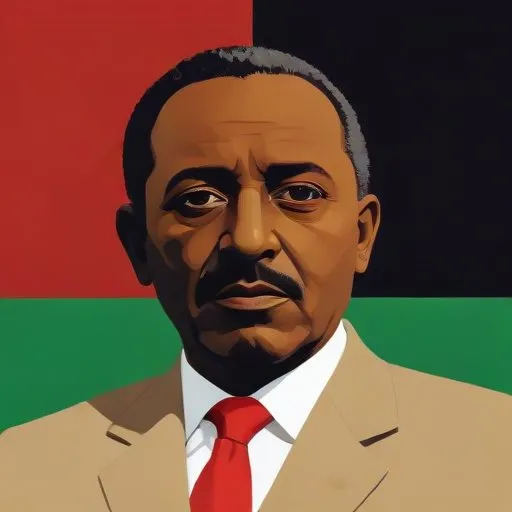
Girma WoldeGiorgis: The Symbolic Leader of Ethiopia
A Man of Many Firsts
Girma WoldeGiorgis was a trailblazer in Ethiopian politics, serving as the second president of the Federal Democratic Republic of Ethiopia from 2001 to 2013. During his tenure, he became a prominent figure in the country's political landscape, known for his commitment to unity, democracy, and economic development.
Early Life and Education
Born on December 28, 1924, in Addis Ababa, Girma received his early education at an Ethiopian Orthodox Church school. He later attended the Teferi Mekonnen School, where he pursued his studies until the Italian invasion. Between 1950 and 1952, he obtained certificates in management from the Netherlands, air traffic management in Sweden, and air traffic control in Canada, under the International Civil Aviation Organization's (ICAO) training program.
A Career of Service
Girma was one of the first Ethiopians to join the Ethiopian Air Force, which was dominated by American technicians at the time. He played a crucial role in motivating Ethiopians to join the airlines and wrote a book on the fundamentals of air traffic management. As an activist, he condemned the apartheid system in South Africa at the Inter Parliamentary Summit in Yugoslavia.
Presidential Tenure
Girma was elected as president on October 8, 2001, in a unanimous vote by the Ethiopian Parliament. Despite being a relatively unknown figure at the time, he went on to serve two six-year terms as president, until 2013. Although the Ethiopian presidency is largely a symbolic office, Girma used his platform to promote unity, democracy, and economic development in the country.
Personal Life and Legacy
Girma was a devoted member of the Ethiopian Orthodox Tewahedo Church and was married with five children. He was known for his regular attendance at the Ethiopian Orthodox Tewahedo Church's Meskel Demera Festivals. After his passing on December 15, 2018, Girma left behind a legacy as a symbol of national unity and a champion of democracy.
Impact on Modern Society
Girma's presidency marked a significant shift in Ethiopia's political landscape, as he worked to promote national unity and reconciliation. His leadership helped to stabilize the country and paved the way for economic growth and development. Today, Girma is remembered as a dedicated public servant who played a crucial role in shaping modern Ethiopia.
Awards and Honors
- Recipient of the Order of the Star of Ethiopia
- Recipient of the Order of Menelik II
- Recipient of the Order of the Queen of Sheba
Interesting Facts
- Girma spoke fluently in Afan Oromo, Amharic, and English
- He was one of the first Ethiopians to receive international training in air traffic management
- Girma's book on the fundamentals of air traffic management was a seminal work in the field
Legacy and Historical Context
Girma WoldeGiorgis's presidency marked a significant chapter in Ethiopia's transition to democracy. His commitment to national unity, democracy, and economic development helped to pave the way for a more stable and prosperous future for the country. As a symbol of national unity, Girma's legacy continues to inspire Ethiopians and Africans alike.
FAQ
What was Girma Wolde-Giorgiss role in Ethiopian politics?
Girma Wolde-Giorgis served as the President of Ethiopia from 2001 to 2013, following a long career in politics and public service.
What were Girma Wolde-Giorgiss accomplishments as President?
During his presidency, Girma Wolde-Giorgis implemented various reforms, including the decentralization of power and the promotion of human rights and democracy.
What was Girma Wolde-Giorgiss early career?
Before entering politics, Girma Wolde-Giorgis worked as a pilot and a diplomat, serving as Ethiopias ambassador to the United States and other countries.
Did Girma Wolde-Giorgis receive any international recognition?
Yes, Girma Wolde-Giorgis received several international awards and honors for his efforts to promote peace and development in Ethiopia and the African region.
Is Girma Wolde-Giorgis remembered as a prominent Ethiopian leader?
Yes, Girma Wolde-Giorgis is widely respected as a prominent Ethiopian leader who played a key role in shaping the countrys modern history.