


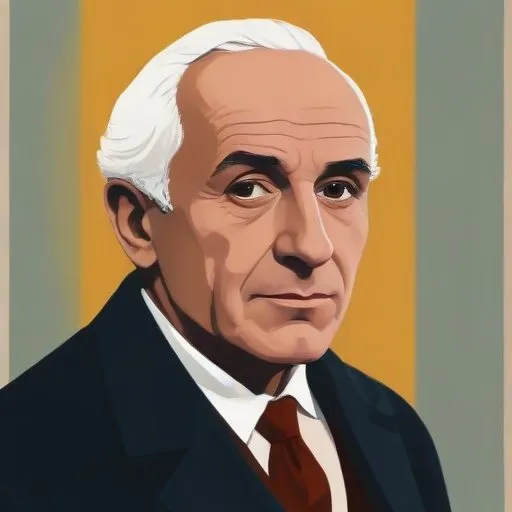
An 18th-century poet and educator who wrote satirical verse that critiqued the excesses of the aristocracy and advocated for social reform. His works are considered some of the greatest in Italian literature.
Giuseppe Parini, an Italian Enlightenment satirist and poet, is renowned for his scathing critiques of the nobility and his contributions to the neoclassic period. His most celebrated work, Il Giorno (The Day), a biting satire of the aristocracy, solidified his position as a prominent figure in 18th-century Italian literature.
Born on May 23, 1729, in Bosisio, Lombardy, Parini hailed from a poor family. His father, a petty silk trader, sent him to Milan to study under the Barnabites in the Arcimboldi Academy. While pursuing his education, Parini supported himself by copying manuscripts, demonstrating his early dedication to the literary craft.
In 1741, Parini's great aunt left him a monthly stipend on the condition that he enter the priesthood. Although he was ordained, his religious studies were hindered by his need to work in a lawyer's office during his free time and his aversion to outdated teaching methods. Undeterred, Parini continued to write, publishing his first collection of poems, Alcune poesie, in 1752 under the pseudonym Ripano Eupilino.
Parini's magnum opus, Il Giorno, is a three-part poem that offers wry commentary on the lives of the aristocracy. The first part, Il Mattino (Morning), appeared in 1763 and was an instant success. Two years later, the second part, Il Mezzogiorno (Midday), was published. Although Parini never completed the final two parts, Il Vespro (Evening) and La Notte (Night), due to his perfectionism, the work cemented his reputation as a master satirist.
Il Giorno not only showcased Parini's mastery of Italian blank verse but also influenced the development of Italian literature. His biting satire and clever use of irony continue to inspire writers and scholars alike. Parini's work remains a testament to his commitment to social commentary and his ability to hold a mirror to the excesses of the aristocracy.
Giuseppe Parini's contributions to Italian literature and his fearless satire of the aristocracy have left an indelible mark on the literary world. His work continues to inspire generations of writers, scholars, and readers alike, ensuring his legacy as one of the most important voices of the Italian Enlightenment.
Born in 1749
A leading figure of the Italian Enlightenment, known for his passionate and patriotic works that fueled the country's struggle for independence and unity.
Born in 1778
A leading figure of Italian Romanticism, known for his passionate and patriotic poetry, which often explored themes of love, beauty, and the struggle for Italian independence.
Born in 1785
Wrote influential novels that helped shape the modern Italian language and identity, particularly with his iconic work "I Promessi Sposi" (The Betrothed).
Born in 1798
A leading figure of the Italian Romantic movement, known for his poignant and introspective poetry that explores themes of love, nature, and the human condition.
