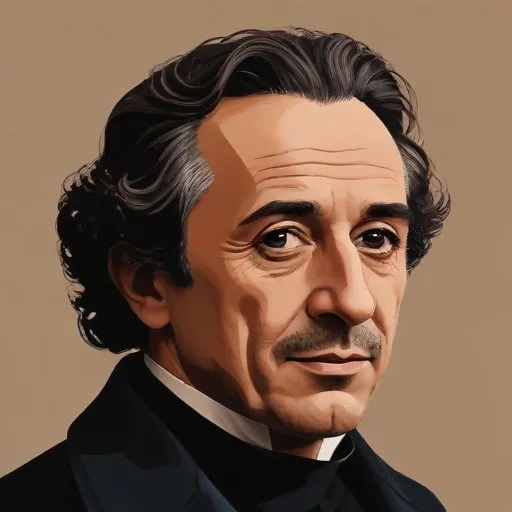
Ugo Foscolo: The Revolutionary Poet of Italian Literature
A Legacy of Passion and National Pride
Ugo Foscolo is renowned for his thought-provoking poetry and novels that ignited a sense of national pride and resistance against foreign occupation in Italy. His most notable work,
Dei Sepolcri (On Sepulchres), a long poem written in 1807, is a testament to his literary genius and continues to inspire generations of Italians.
Early Life and Influences
Born Niccolò Foscolo on February 6, 1778, in Zakynthos, Ionian Islands, to an impoverished Venetian nobleman and a Greek mother, Foscolo's cultural heritage played a significant role in shaping his literary style. His father's death in 1788 prompted the family's move to Venice, where Foscolo completed his studies at the University of Padua. Among his influential teachers was Abbé Melchiore Cesarotti, whose version of Ossian left an indelible mark on Foscolo's literary tastes.
Nationalism and Literary Ambitions
Foscolo's literary career began to take shape with the publication of his tragedy,
Tieste, in 1797, which enjoyed moderate success. However, it was his involvement in national politics that truly ignited his passion. He became an active member of national committees, addressing an ode to Napoleon, hoping the French leader would overthrow the Venetian oligarchy and establish a free republic.
The Fall of the Venetian Republic and Its Impact
The Treaty of Campo Formio in 1797, which dissolved the ancient Republic of Venice and handed over the city and the Veneto to the Austrians, dealt a severe blow to Foscolo's hopes. This tumultuous period inspired his novel,
The Last Letters of Jacopo Ortis, published in 1798. This work, often compared to
Johann Wolfgang von Goethe's
The Sorrows of Young Werther, reflected Foscolo's anguish and disillusionment with the fall of the Venetian Republic.
Major Works and Contributions
- Dei Sepolcri (On Sepulchres, 1807): A long poem that explores the theme of national pride, mourning, and the importance of remembering one's heritage.
- The Last Letters of Jacopo Ortis (1798): A novel that captures the sorrow and disillusionment of the fall of the Venetian Republic.
- Tieste (1797): A tragedy that marked Foscolo's entry into the literary world.
Legacy and Impact on Italian Literature
Foscolo's works embodied the spirit of Italian nationalism, inspiring generations of intellectuals and writers. His poetry and novels continue to be celebrated for their beauty, passion, and unwavering dedication to the cause of Italian independence. Ugo Foscolo's legacy serves as a testament to the power of literature in shaping national identity and fostering a sense of community.
Personal Milestones and Key Life Events
- 1778: Born Niccolò Foscolo in Zakynthos, Ionian Islands.
- 1788: Moved to Venice after his father's death.
- 1797: Published his tragedy, Tieste, and became involved in national politics.
- 1798: Published his novel, The Last Letters of Jacopo Ortis.
- 1807: Published his long poem, Dei Sepolcri.
- 1827: Passed away on September 10 in Turnham Green, England.
Philosophical Contributions and Beliefs
Foscolo's works often explored the themes of national identity, freedom, and the importance of preserving cultural heritage. His poetry and novels reflected his deep-seated passion for Italian independence and his desire to inspire a sense of national pride among his fellow countrymen.
FAQ
What were Ugo Foscolos most famous literary works?
Ugo Foscolo was an Italian author and poet, best known for his novels, including The Last Letters of Jacopo Ortis and The Women of Arabia.
What was Ugo Foscolos role in the Italian literary movement?
Ugo Foscolo was a key figure in the Italian literary movement of the late 18th and early 19th centuries, contributing to the development of Italian Romanticism.
What were Ugo Foscolos views on Italian independence?
Ugo Foscolo was a strong advocate for Italian independence and unity, expressing his nationalist sentiments through his poetry and fiction.
How did Ugo Foscolos poetry reflect his personal life?
Ugo Foscolos poetry often expressed his personal emotions and experiences, including his struggles with love, loss, and exile.
What was Ugo Foscolos legacy in Italian literature?
Ugo Foscolo left a lasting legacy in Italian literature, influencing later writers and poets, and his works remain a significant part of Italian cultural heritage.