


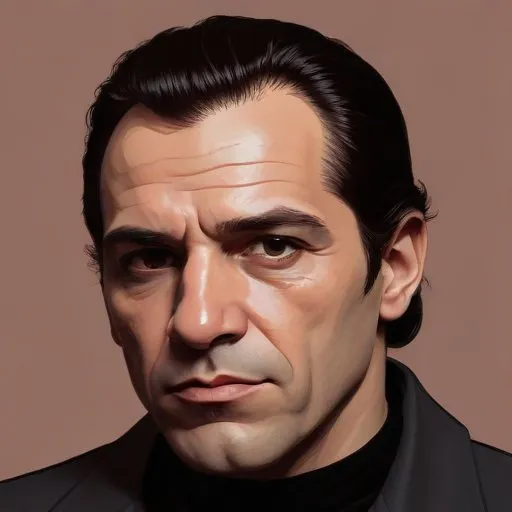
An Italian-American anarchist who attempted to assassinate President-elect Franklin D. Roosevelt, but instead killed the mayor of Chicago, Anton Cermak, in 1933.
Giuseppe Zangara is infamous for his attempt to assassinate President-Elect Franklin D. Roosevelt on February 15, 1933, just 17 days before Roosevelt's inauguration. On that fateful night in Miami, Florida, Zangara fired five shots with a handgun, missing his target and instead killing Anton Cermak, the Mayor of Chicago, and injuring five bystanders.
Zangara was born on September 7, 1900, in Ferruzzano, Calabria, Italy. After serving with the Royal Italian Army in the Tyrolean Alps during World War I, he worked various menial jobs in his home village before emigrating to the United States with his uncle in 1923. He settled in Paterson, New Jersey, and became a naturalized citizen of the United States in 1929.
Zangara suffered from severe abdominal pain, which doctors deemed chronic and incurable. He underwent an appendectomy in 1926, but it brought no relief. The doctors who performed his autopsy later attributed his pain to adhesions on his gallbladder. In his own words, Zangara believed his pain began when he was forced to do grueling physical labor on his father's farm from an early age, which he wrote about in his prison memoir.
The events of that February night in Miami sparked controversy over Zangara's mental state. Some argued that he was mentally ill and incapable of distinguishing right from wrong, while others contended that he was sane. The question remains whether Zangara should have had an insanity defense presented on his behalf.
Zangara was arrested on the spot and put on trial. His counsel argued that he was insane, but the jury found him guilty of murder. He was sentenced to death and executed by electric chair on March 20, 1933, just over a month after the assassination attempt.
Zangara's attempt on Roosevelt's life had a profound impact on the country. It led to increased security measures for public figures and the establishment of the Secret Service's protection of presidents and vice presidents. Though Zangara's actions were heinous, they inadvertently contributed to the safety of future leaders.
Zangara's story serves as a reminder of the dangers of political extremism and the importance of protecting those who serve the public. Though his actions were misguided, they remain a significant part of American history.
Born in 1873
A Czech-American captain and politician who served as the 44th Mayor of Chicago, known for his strong leadership and efforts to reform the city's government. He's also infamous for being assassinated in 1933, allegedly in an attempt to kill President-elect Franklin D. Roosevelt.
Born in 1882
Led the United States through the Great Depression and World War II, implementing a series of reforms known as the New Deal and helping to establish the country as a global superpower.
Born in 1899
Notorious leader of a powerful organized crime syndicate during the Prohibition era, infamous for bootlegging and brutal tactics.
Born in 1902
The 48th Mayor of Chicago, a dominant figure in American politics, known for his strong leadership and machine-style politics that shaped the city's development. He played a crucial role in the 1968 Democratic National Convention.
Born in 1903
Notorious bank robber and gang leader during the Great Depression, known for his brazen crimes and charismatic persona. 82
Born in 1908
Notorious bank robber and member of John Dillinger's gang, known for his violent temper and involvement in the infamous shootout at Little Bohemia.
Born in 1909
Notorious outlaw and bank robber during the Great Depression, known for his reckless crimes and romanticized media portrayal.
Born in 1910
Notorious outlaw and poet, known for her criminal exploits with Clyde Barrow during the Great Depression, romanticized in folklore and popular culture.
