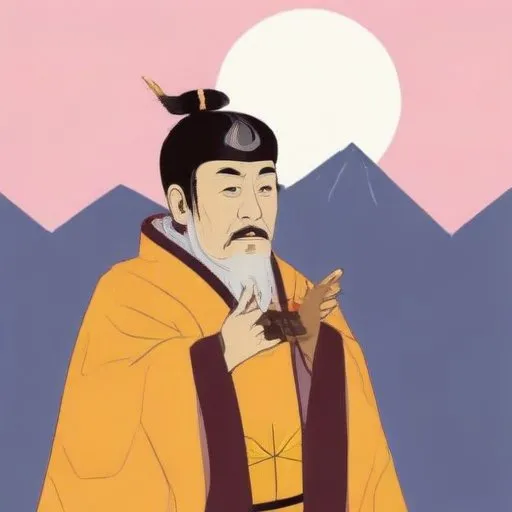
GoKomatsu: The 100th Emperor of Japan and Unifier of the Northern Court
A Legacy of Power and Controversy
GoKomatsu, also known as GoKomatsutenn, is remembered as the 100th emperor of Japan, a title he held from 1382 to 1412. He is perhaps most famous for being the sixth and final Emperor of the Northern Court, and his role in unifying the two formerly contending courts, the Northern and Southern Courts, under a single rule.
Early Life and Accession
Born on August 1, 1377, GoKomatsu was the first son of Emperor GoEny and his mother, Tsymonin no Itsuko, daughter of the Lord Keeper of the Privy. Before his accession to the Chrysanthemum Throne, his personal name was Motohitoshinn. GoKomatsu's early life was marked by turmoil, as the Northern and Southern Courts vied for power and legitimacy.
The Struggle for Legitimacy
In 1382, at the age of five, GoKomatsu was proclaimed emperor by the Northern Court, sparking a period of conflict and power struggles between the two courts. This period, known as the Nanbokuchō period, would last for over a decade, with GoKomatsu being recognized as the Northern pretender from 1382 to 1392.
Unification and Reign
In 1392, following the abdication of Emperor GoKameyama, GoKomatsu was recognized as the legitimate emperor, marking the end of the Southern Court's claims to sovereignty. However, instead of following the agreed-upon ten-year plan to alternate control of the throne between the Northern and Southern Courts, GoKomatsu reneged and ruled for 20 years, until his abdication in 1412. During his reign, he was succeeded by his own son, rather than a member of the former Southern Court.
Legacy and Impact
GoKomatsu's reign had a lasting impact on Japanese history, as the present Japanese Imperial Family is descended from the three Northern Court emperors, including GoKomatsu. His legacy is also marked by controversy, as his decision to renege on the agreement with the Southern Court has been seen as a power grab.
Personal Milestones and Key Life Events
- 1377: Born on August 1st
- 1382: Proclaimed emperor by the Northern Court at the age of five
- 1392: Recognized as the legitimate emperor following the abdication of Emperor GoKameyama
- 1412: Abdicated the throne on October 5th
Historical Context and Legacy
GoKomatsu's reign is often seen as a turning point in Japanese history, marking the end of the Nanbokuchō period and the beginning of a new era of imperial unity. His legacy has been the subject of much debate and analysis, with some historians viewing him as a shrewd and cunning leader, while others see him as a power-hungry usurper.
Comparative Analysis with Contemporaries
GoKomatsu's reign is often compared to that of his contemporaries, including Emperor GoKameyama, with whom he reached an agreement to alternate control of the throne. However, GoKomatsu's decision to renege on this agreement has led some historians to view him as more cunning and ruthless than his contemporaries.
Trivia and Fun Facts
- GoKomatsu's personal name, Motohitoshinn, was changed to GoKomatsu after his accession to the throne.
- The Japanese word "go" in GoKomatsu's name translates to "later" or "second".
- GoKomatsu's reign is often referred to as the "later" or "second" reign of Emperor Kōkō, after whom he was named.
FAQ
What was Go-Komatsus role in Japanese history?
Go-Komatsu was the 100th Emperor of Japan, ruling from 1392 to 1412, and played a significant role in the countrys medieval period.
What were Go-Komatsus relationships with other Japanese monarchs?
Go-Komatsus relationships with other Japanese monarchs were marked by reunification and unity, as he oversaw the end of the Northern and Southern Courts rivalry and established a single imperial court.
What were Go-Komatsus administrative reforms?
Go-Komatsus administrative reforms included strengthening the imperial court, promoting agriculture and commerce, and establishing a new system of provincial administration.
What was Go-Komatsus cultural significance?
Go-Komatsus cultural significance lies in his patronage of the arts, particularly in literature and poetry, which flourished during his reign.
What is Go-Komatsus legacy in Japanese history?
Go-Komatsus legacy in Japanese history is that of a unifying figure who brought stability and prosperity to the country, marking the beginning of a new era in Japanese politics and culture.