


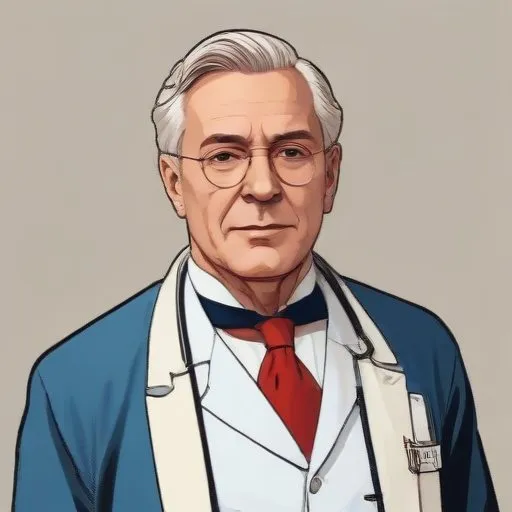
A pioneering otolaryngologist who developed innovative surgical techniques for treating vocal cord disorders, revolutionizing the field of voice restoration.
Godfrey Edward Arnold, a renowned Austrian-American professor of medicine, is celebrated for his groundbreaking research in speech disorders and clinical communicology. His most notable contribution lies in the development of phonosurgery, a revolutionary technique that has transformed the treatment of vocal cord disorders.
Born on January 6, 1914, in Vienna, Austria-Hungary, Arnold grew up in a musical family, with his father, Anton Arnold, being a tenor at the Vienna Court Opera. He attended the Theresian Academy in Vienna and later completed his medical studies at the University of Vienna.
In addition to his medical pursuits, Arnold also honed his skills as a pianist at the State Academy of Music and Performing Arts. His internship with Hermann Gutzmann Jr. in Berlin further deepened his understanding of phoniatrics.
A major breakthrough in Arnold's career came with the publication of his fundamental work, "Die traumatischen und konstitutionellen Störungen der Stimme und Sprache" (Traumatic and Constitutional Disorders of Voice and Speech) in 1948. This work laid the foundation for his subsequent research in speech disorders.
In 1949, Arnold co-authored the seminal textbook "Lehrbuch der Stimm- und Sprachheilkunde" (Textbook of Voice and Speech Medicine) with Swiss phoniatrist Richard Luchsinger. This comprehensive work cemented his reputation as a leading authority in the field of phoniatrics.
In 1949, Arnold immigrated to the United States, where he spent 14 years in New York City working at the National Hospital for Speech Disorders and as head of research at the Otolaryngology Department of the New York Eye and Ear Infirmary.
In 1962, Arnold developed the innovative method of injecting Teflon into the vocal cords, paving the way for modern phonosurgery. The following year, he coined the term "phonosurgery" along with Hans von Leden.
A major milestone in Arnold's career came when he became the founding director of the Division of Otolaryngology at the University of Mississippi Medical Center in Jackson, Mississippi, a position he held from 1963 to 1979.
Godfrey Edward Arnold's groundbreaking work has had a profound impact on the field of phoniatrics and speech disorders. His research has led to the development of new treatments and therapies, improving the lives of countless individuals suffering from vocal cord disorders.
A testament to his enduring legacy, Arnold's co-authored textbook "Voice, Speech, Language" remains a seminal work in the field, with its topics remaining remarkably relevant even decades after its publication.
Godfrey Edward Arnold's remarkable life and career serve as a testament to his dedication to advancing the field of phoniatrics and improving the lives of those affected by speech disorders.
Born in 1856
Pioneering psychoanalyst who developed theories on the subconscious mind, childhood experiences, and the structure of personality, revolutionizing our understanding of human behavior and psychology.
Born in 1875
Developed the concept of collective unconscious and archetypes, and founded analytical psychology, which emphasizes the integration of opposites and the process of individuation.
Born in 1857
A Swiss psychiatrist who coined the term "schizophrenia" and developed a more humane approach to treating mental illnesses, also advocating for forced sterilization of people with mental disabilities.
Born in 1870
Developed the concept of individual psychology, focusing on the importance of early childhood experiences and the drive for superiority to overcome feelings of inferiority.
Born in 1884
Developed the concept of "will therapy" and explored the role of creativity and art in human psychology, emphasizing the importance of individuality and self-expression.
Born in 1877
A pioneer in psychoanalysis, developing theories on childhood trauma and its effects on adult psychology, and authoring influential works on the subject.
Born in 1888
A German psychiatrist and author who developed the theory of "physique and character" and wrote influential books on psychiatry, particularly on the topic of schizophrenia.
Born in 1809
A German psychiatrist and author who created the beloved children's book "Struwwelpeter", featuring darkly humorous tales that warned of the consequences of misbehavior. His work remains a cultural icon in Germany and beyond.
