


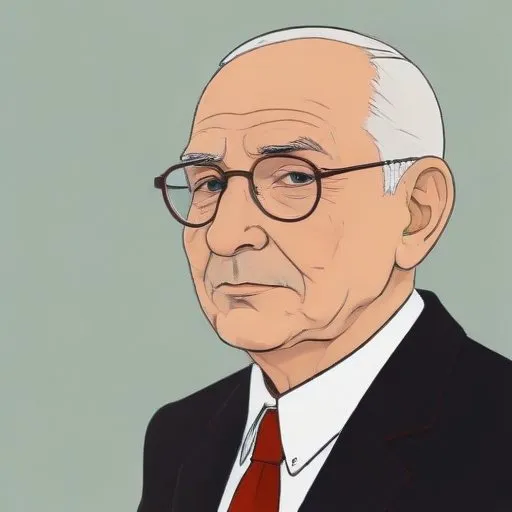
A German psychiatrist and author who developed the theory of "physique and character" and wrote influential books on psychiatry, particularly on the topic of schizophrenia.
Ernst Kretschmer, a German psychiatrist, is renowned for his groundbreaking research on human constitution and the development of a typology that bears his name. Specifically, he is known for his work on the persistent vegetative state, also referred to as Kretschmer's syndrome, and sensitive paranoia, a classification that has contributed significantly to the field of psychiatry.
Born on October 8, 1888, in Wüstenrot, near Heilbronn, Germany, Kretschmer attended the prestigious Cannstatt Gymnasium, one of the oldest Latin schools in the Stuttgart area. He then went on to study theology, medicine, and philosophy at the universities of Tübingen, Munich, and Hamburg between 1906 and 1912.
Kretschmer's academic career was marked by significant milestones. In 1913, he became an assistant to Robert Gaupp in Tübingen, where he received his habilitation in 1918. He continued as assistant medical director until 1926, after which he became the director of the psychiatric clinic at Marburg University. Later, from 1946 to 1959, he served as the director of the psychiatric clinic of the University of Tübingen.
Kretschmer's most notable contribution lies in his work on psychiatric typology. He developed a system of classification based on the physical and psychological characteristics of individuals, which he believed were linked to specific personality traits and mental health conditions. His research led to the identification of three main types: the pyknic, athletic, and asthenic types.
Kretschmer's life was not without controversy. In 1933, he signed the Vow of allegiance of the professors of the German universities and high schools to Adolf Hitler and the National Socialistic state, a move that has been widely criticized. He later resigned from the International General Medical Society for Psychotherapy, which he had co-founded, due to political differences.
Kretschmer's work has had a lasting impact on the field of psychiatry. His research on persistent vegetative state and sensitive paranoia has contributed significantly to our understanding of these conditions. Despite controversies surrounding his later life, his contributions to the field of psychiatry remain undeniable.
Born in 1856
Pioneering psychoanalyst who developed theories on the subconscious mind, childhood experiences, and the structure of personality, revolutionizing our understanding of human behavior and psychology.
Born in 1875
Developed the concept of collective unconscious and archetypes, and founded analytical psychology, which emphasizes the integration of opposites and the process of individuation.
Born in 1857
A Swiss psychiatrist who coined the term "schizophrenia" and developed a more humane approach to treating mental illnesses, also advocating for forced sterilization of people with mental disabilities.
Born in 1856
A German psychiatrist and academic who developed the first modern classification system for mental illnesses, laying the foundation for modern psychiatry. He's also known for his work on dementia praecox, a precursor to schizophrenia.
Born in 1883
A German-Swiss psychiatrist and philosopher who developed the concept of existentialism, emphasizing individual freedom and responsibility, and wrote extensively on philosophy, psychology, and politics. His work explored the human condition, morality, and the search for meaning.
Born in 1809
A German psychiatrist and author who created the beloved children's book "Struwwelpeter", featuring darkly humorous tales that warned of the consequences of misbehavior. His work remains a cultural icon in Germany and beyond.
Born in 1832
Founded the first formal laboratory of psychology, establishing psychology as a separate field of study and developing the concept of structuralism, which focuses on breaking down mental processes into basic components.
Born in 1850
A pioneer in memory research, known for discovering the forgetting curve and developing the spacing effect, which optimizes learning and retention.
