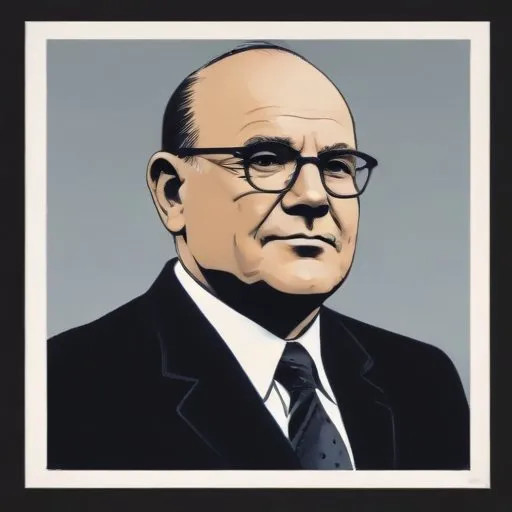
Gordon Moore: The Visionary Behind the Semiconductor Revolution
The Birth of Moore's Law
Gordon Moore, the American businessman, engineer, and co-founder of Intel Corporation, left an indelible mark on the world of technology with his groundbreaking observation, known as Moore's Law. This phenomenon, which he proposed in 1965, describes the exponential growth of transistors in an integrated circuit, effectively doubling every two years.
A Humble Beginning
Born on January 3, 1929, in San Francisco, California, Moore grew up as the second son of Walter Harold Moore, a county sheriff, and Florence Almira Mira Williamson, a homemaker. His introverted personality was first observed by his school faculty when he started school in 1935. Moore's early life was marked by a strong interest in chemistry, which was sparked by a Christmas gift – a chemistry set – when he was just 11 years old.
Education and Early Career
Moore's passion for chemistry led him to pursue higher education. He attended Sequoia High School, San Jose State College (now San Jose State University), and later transferred to the University of California, Berkeley, where he studied under renowned professors like Glenn Seaborg,
Melvin Calvin, and
William Giauque. Moore graduated with a Bachelor of Science degree in chemistry in 1950. He went on to earn his Ph.D. in chemistry from the California Institute of Technology (Caltech) in 1954.
Scientific Breakthroughs
Moore's most significant contribution came when he joined Fairchild Semiconductor, where he served as the director of research and development. It was during this time that he observed the exponential growth of transistors in an integrated circuit, leading to the formulation of Moore's Law. This notion revolutionized the semiconductor industry, enabling the rapid development of smaller, faster, and more powerful microchips.
The Traitorous Eight and Fairchild Semiconductor
Moore was part of the "Traitorous Eight," a group of talented engineers who left Shockley Semiconductor Laboratory to form Fairchild Semiconductor. This bold move led to the creation of one of the most influential companies in the industry.
Intel Corporation and Beyond
In 1968, Moore co-founded Intel Corporation with
Robert Noyce. As the company's chairman and CEO, he played a pivotal role in shaping the company's vision and strategy. Intel went on to become a leading manufacturer of microprocessors, with Moore's Law remaining a guiding principle in the industry.
Legacy and Impact
Gordon Moore's contributions to the semiconductor industry have had a profound impact on modern society. His observation has enabled the development of smaller, faster, and more powerful electronic devices, transforming the way we live, work, and communicate. Moore's Law has also driven innovation in fields like artificial intelligence, data storage, and computing.
Awards and Honors
Throughout his illustrious career, Moore has received numerous awards and honors, including:
- The National Medal of Technology (1990)
- The Presidential Medal of Freedom (2002)
- The IEEE Founders Medal (1996)
- The IEEE Robert N. Noyce Medal (2007)
Personal Life and Philanthropy
Moore, along with his wife, Betty, has been dedicated to philanthropic efforts, particularly in the areas of education and healthcare. The Gordon and Betty Moore Foundation, established in 2000, has donated millions to various causes, including environmental conservation and patient care.
In Conclusion
Gordon Moore's pioneering spirit, vision, and contributions have left an indelible mark on the world of technology. As we continue to navigate the complexities of the digital age, Moore's Law remains a guiding principle, inspiring innovation and driving progress.