


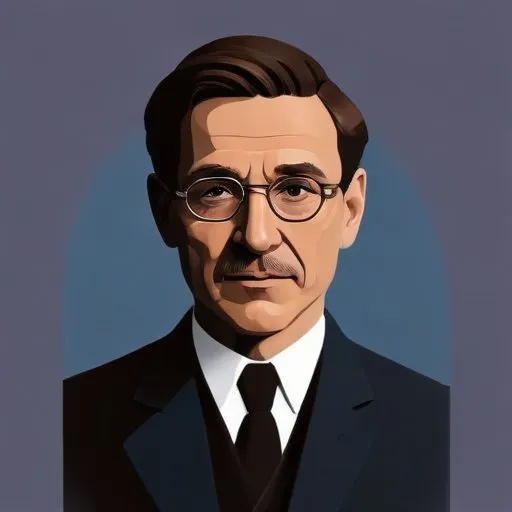
Developed theories on thermodynamics and won the Nobel Prize in Chemistry in 1949 for his work on the properties of matter at extremely low temperatures.
William Giauque, a Canadian-born American chemist, is renowned for his groundbreaking research on the properties of matter at temperatures approaching absolute zero, earning him the Nobel Prize in Chemistry in 1949. His pioneering work in the field of cryogenics has had a profound impact on our understanding of the behavior of materials at extremely low temperatures.
Born on May 12, 1895, in Niagara Falls, Ontario, Canada, Giauque's American father bestowed him with American citizenship. After his father's passing in 1908, Giauque returned to Canada for his secondary education. He later pursued a two-year business course at the Niagara Falls Collegiate Institute, subsequently working in the field of electrical engineering at the Hooker Electrochemical Company in Niagara Falls, New York. This experience sparked his interest in chemical engineering, leading him to enroll in the College of Chemistry at the University of California, Berkeley.
Giauque earned his Bachelor of Science degree with honors in 1920 and went on to pursue his Ph.D. in chemistry with a minor in physics, which he completed in 1922. Under the influence of Professor Gilbert N. Lewis, Giauque developed a passion for research, which led to him becoming an instructor of chemistry at Berkeley in 1922. He progressed through the ranks, eventually becoming a full professor.
Giauque's pioneering work in cryogenics has had a lasting impact on our understanding of the behavior of materials at extremely low temperatures. His research has led to significant advances in fields such as superconductivity, superfluidity, and magnetics. His legacy continues to inspire scientists and researchers, driving innovation and discovery in the field of cryogenics.
Giauque's dedication to his craft and his passion for research have left an indelible mark on the scientific community. His work serves as a testament to the power of human curiosity and the importance of fundamental research in advancing our understanding of the world around us.
Born in 1901
Pioneering chemist and peace activist who won two unshared Nobel Prizes, one for chemistry and one for peace, for his groundbreaking work on the nature of the chemical bond and his tireless efforts to promote nuclear disarmament.
Born in 1893
A pioneering scientist who discovered deuterium, a heavy isotope of hydrogen, and later contributed to the discovery of many other elements, revolutionizing our understanding of the universe.
Born in 1892
A Nobel Prize-winning physicist who discovered the Compton effect, a phenomenon where light scatters off free electrons, leading to a deeper understanding of light and its behavior. His work has had a significant impact on the development of quantum mechanics and X-ray technology.
75 Years Old
A renowned theoretical physicist and professor, known for his groundbreaking work on superstring theory and its application to cosmology and particle physics.
Born in 1918
A brilliant physicist and engineer who pioneered quantum mechanics and famously explained complex concepts in simple terms, making science accessible to all.
97 Years Old
A pioneer in particle physics, discovering subatomic particles like quarks and gluons, and developing the theory of quantum chromodynamics.
