


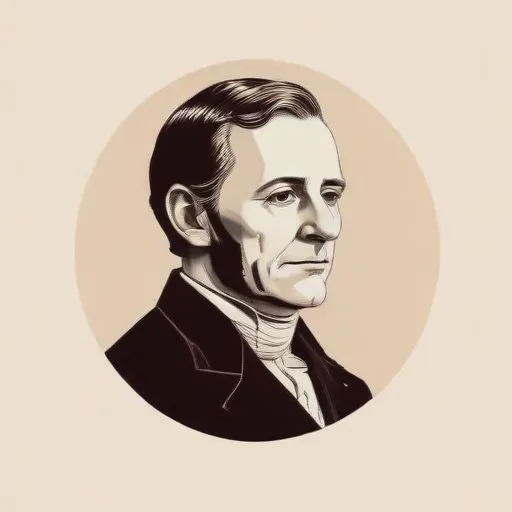
A pioneering American pastor and botanist who classified and discovered numerous plant species, greatly contributing to the field of botany. His work remains essential for modern botanical research.
Gotthilf Heinrich Ernst Muhlenberg is renowned for his groundbreaking contributions to the field of botany, particularly in the discovery and classification of various plant species in North America. As a clergyman, botanist, and educator, Muhlenberg's work had a profound impact on the scientific community, earning him a revered place in the annals of American botanical history.
Born on November 17, 1753, in Trappe, Pennsylvania, Muhlenberg was the son of Heinrich Melchior Muhlenberg, a prominent Lutheran minister. His early education at Franckesche Stiftungen in Halle and the University of Halle laid the foundation for his future pursuits in theology and botany.
Muhlenberg's calling as a Lutheran minister led him to serve in various capacities in Pennsylvania and New Jersey. However, his passion for botany soon took center stage, and he devoted himself to the study of plant species, ultimately earning a Doctor of Divinity degree from Princeton University.
Muhlenberg's magnum opus, Catalogus Plantarum Americae Septentrionalis (1813), is a seminal work that cataloged and described numerous plant species in North America. This comprehensive tome earned him recognition as a leading authority in the field of botany.
In addition to his written works, Muhlenberg's discoveries had a lasting impact on the scientific community. The Muhlenbergia genus of grasses was named in his honor, a testament to his tireless efforts in uncovering the secrets of the natural world.
Muhlenberg's commitment to education led him to become the first president of Franklin College in 1787. His dedication to nurturing young minds and fostering a love for learning paved the way for future generations of scholars and scientists.
In 1785, Muhlenberg was elected as a member of the American Philosophical Society, a prestigious organization dedicated to promoting scientific inquiry and discovery.
Muhlenberg married Mary Catherine Hall in 1774, and the couple had eight children together. His family played a vital role in supporting his botanical pursuits, with his daughter assisting him in his later years after he suffered a paralytic stroke in 1815.
Gotthilf Heinrich Ernst Muhlenberg's contributions to botany, education, and the scientific community continue to inspire and educate generations of scholars and enthusiasts. His legacy serves as a testament to the power of dedication, hard work, and a passion for discovery.
Born in 1707
Developed the system of binomial nomenclature, which is still used today to classify and name living organisms. This system has had a profound impact on the fields of biology, ecology, and conservation.
Born in 1712
A pioneering thinker who shaped modern democracy and education with his ideas on social contracts, general will, and the importance of early childhood education. His writings influenced the French Revolution and modern political thought.
Born in 1699
America's first botanist, who explored and cataloged the New World's flora, introducing many species to Europe and establishing a renowned botanical garden. He's considered the "Father of American Botany".
Born in 1706
A founding father of the United States, he was a leading figure in the Enlightenment, known for his groundbreaking inventions, scientific discoveries, and influential writings. He played a key role in shaping American history and politics.
Born in 1817
A 19th-century thinker who advocated for simple living, civil disobedience, and individualism, inspiring generations to reevaluate their relationship with nature and society.
Born in 1803
A leading figure in the Transcendentalist movement, he advocated for individualism, self-reliance, and nature-inspired spirituality through his essays and poetry. His ideas continue to influence American thought and culture.
Born in 1810
A pioneering botanist who contributed significantly to the development of American botany, particularly in the fields of plant classification and evolution.
Born in 1785
A pioneering ornithologist and artist, famous for meticulously illustrating and documenting North American bird species in his iconic book "The Birds of America". His work remains a cornerstone of ornithology and wildlife art.
