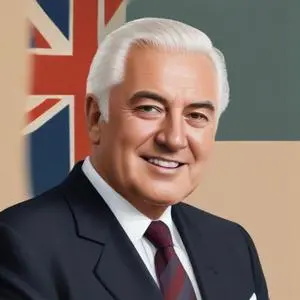
Gough Whitlam: The Reformist Prime Minister of Australia
A Legacy of Social Progress and Reform
Gough Whitlam, the 21st Prime Minister of Australia, is renowned for his reformist and socially progressive administration that lasted from 1972 to 1975. Notably, he is the only Australian Prime Minister to have been removed from office by the Governor-General, Sir
John Kerr, during the 1975 constitutional crisis.
Early Life and Career
Born on July 11, 1916, Whitlam served as an air navigator in the Royal Australian Air Force during World War II. Following the war, he worked as a barrister before entering politics. Whitlam was first elected to the Australian House of Representatives in 1952, representing the division of Werriwa.
Rise to Leadership
Whitlam became the Deputy Leader of the Labor Party in 1960 and later succeeded Arthur Calwell as the Leader of the Party in 1967. He led the Labor Party to victory in the 1972 election, ending 23 years of continuous Coalition government.
Reformist Policies and Initiatives
During his tenure, Whitlam introduced numerous socially progressive and reformist policies, including:
- Termination of military conscription
- End of Australian involvement in the Vietnam War
- Institution of universal health care
- Free university education
- Implementation of legal aid programs
Constitutional Crisis and Dismissal
The Whitlam government faced opposition from the Senate, leading to a constitutional crisis. In response, Whitlam called a snap double dissolution election in May 1974, which resulted in a slightly reduced majority in the House of Representatives. However, the crisis culminated in his dismissal by Sir John Kerr on November 11, 1975.
Personal Milestones and Key Life Events
Whitlam's life was marked by significant milestones, including:
- Marriage to Margaret Dovey in 1942
- Service in World War II
- Election as the Leader of the Labor Party in 1967
- Victory in the 1972 election
- Dismissal as Prime Minister in 1975
- Passing on October 21, 2014, at the age of 98
Legacy and Impact
Whitlam's legacy is characterized by his commitment to social progress and reform. His government's initiatives had a lasting impact on Australian society, shaping the country's trajectory towards a more equitable and just society. Despite his tumultuous removal from office, Whitlam remains an important figure in Australian history, inspiring generations of politicians and citizens alike.
Historical Context and Comparative Analysis
Whitlam's premiership occurred during a period of significant social and political change in Australia. His reformist agenda was influenced by the global movements of the 1960s and 1970s, including the civil rights movement and the anti-war movement. In comparison to his contemporaries, Whitlam's leadership style and policy initiatives were distinct, reflecting his strong commitment to social justice and equality.
Philosophical Contributions and Beliefs
Whitlam's philosophical contributions were shaped by his strong sense of social justice and his belief in the importance of government intervention in addressing social and economic inequalities. His administration's policies reflected a commitment to egalitarianism and a desire to create a more equitable society.
Quotes and Memorable Sayings
Whitlam was known for his wit and eloquence, often using memorable phrases to articulate his vision for Australia. One notable quote is:
"We are all Australians now, in a way that we have not been before."
This quote captures the essence of his commitment to social unity and national identity.
Awards and Honors
Whitlam received numerous awards and honors, including:
- Companion of the Order of Australia (AC) in 1978
- Right Honourable designation in 1977
Charitable Work and Social Contributions
Throughout his life, Whitlam was involved in various charitable activities, demonstrating his commitment to social justice and equality. His legacy continues to inspire Australians to work towards creating a more just and equitable society.
FAQ
What were Gough Whitlams achievements as Prime Minister of Australia?
Gough Whitlam was a Australian politician who served as the 21st Prime Minister of Australia from 1972 to 1975. During his tenure, he implemented significant reforms, including universal healthcare and free education.
How did Gough Whitlams government impact Australian politics?
Whitlams government was a watershed moment in Australian politics, introducing progressive reforms and challenging the countrys social and economic status quo.
What was Gough Whitlams early life and political background like?
Born in 1916, Whitlam studied law and later served in the Royal Australian Air Force during World War II. He entered politics in the 1950s, rising through the ranks of the Australian Labor Party.
What were Gough Whitlams most notable policies and reforms?
Whitlams government introduced several landmark reforms, including Medicare, free education, and the recognition of Aboriginal land rights. His policies continues to shape Australian society.
How is Gough Whitlam remembered in Australian politics?
Gough Whitlam is remembered as a visionary leader who transformed Australian politics and society. His progressive reforms continue to inspire new generations of politicians and citizens.