


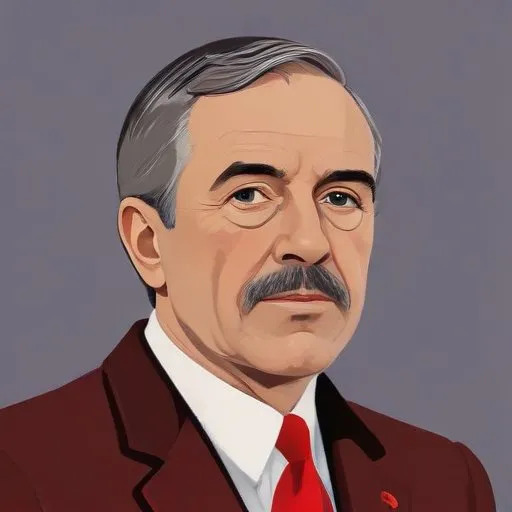
A pioneering figure in social psychology and education, known for his work on human behavior, democracy, and the role of education in shaping society.
Graham Wallas, a pioneering English socialist, social psychologist, and educationalist, is best known for co-founding the London School of Economics (LSE) and leading the Fabian Society, a prominent socialist organization. His groundbreaking works in social psychology and politics continue to influence modern thinkers and policymakers.
Born on May 31, 1858, in Monkwearmouth, Sunderland, Wallas was the older brother of Katharine, a future politician. He received his education at Shrewsbury School and Corpus Christi College, Oxford, where he abandoned his religious beliefs.
Wallas's teaching career began at Highgate School, where he taught until 1885, when he resigned rather than participate in communion. He later became a university extension lecturer in 1890 and lectured at the LSE from 1895. His notable works include:
Wallas was a strong advocate for socialism and was deeply influenced by the ideas of utilitarian radical Francis Place. He believed that a social-psychological approach could provide a deeper understanding of societal problems and inform more effective solutions. His work The Great Society is a testament to this philosophy, as it seeks to explain the consequences of individual psychology on society.
Wallas was a prominent figure in the Fabian Society, joining in 1886 alongside Sidney Webb and George Bernard Shaw. He played a crucial role in shaping the society's policies and was elected to the London School Board in 1894, where he championed educational reform and higher academic standards.
On December 18, 1897, Wallas married writer Ada Radford, and they had a daughter, May, in 1898. May went on to publish editions of her father's works, including the 1940 collection Men and Ideas: Essays by Graham Wallas.
Graham Wallas's contributions to social psychology, politics, and education continue to resonate today. His work at the LSE helped establish it as a leading institution for social sciences, and his ideas have influenced generations of thinkers and policymakers.
As a testament to his legacy, the LSE's Wallas Room is named in his honor, and his papers are housed in the LSE Archives.
Born in 1858
A pioneering social reformer and co-founder of the London School of Economics, known for her groundbreaking work on poverty, labor, and social welfare. Her research and writings greatly influenced British social policy and the development of the welfare state.
Born in 1856
A renowned Irish playwright and critic, known for his witty, thought-provoking plays that often challenged social norms and conventions. His works include Pygmalion and My Fair Lady.
Born in 1866
A visionary writer who pioneered the science fiction genre, crafting timeless classics like "The Time Machine" and "War of the Worlds" that continue to inspire and captivate audiences today.
Born in 1887
A pioneering biologist and conservationist who played a key role in establishing UNESCO and promoting the concept of evolution, making significant contributions to the fields of biology and anthropology.
Born in 1894
Author of dystopian classics like Brave New World, exploring the consequences of technological advancements on humanity. Known for prophetic warnings about government control and manipulation.
Born in 1872
A renowned thinker who made significant contributions to mathematics, philosophy, and social commentary, known for his influential writings on logic, ethics, and politics. He's a prominent figure in shaping modern intellectual thought.
Born in 1882
A pioneering author of modernist literature, known for experimental novels and essays that explored the human experience, blurring the lines between reality and fiction.
