


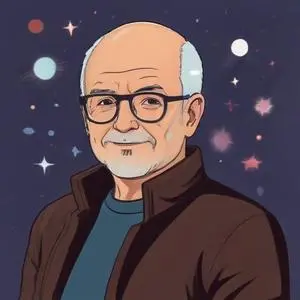
A renowned science fiction author, known for blending science and technology with compelling storytelling, exploring themes of artificial intelligence, consciousness, and humanity's future.
Greg Bear is renowned for his thought-provoking science fiction novels that delve into the realms of galactic conflict, parallel universes, consciousness, and accelerated evolution. With a writing career spanning over five decades, Bear has penned over 50 books, exploring the intricacies of human nature, scientific discoveries, and the consequences of technological advancements.
Born on August 20, 1951, in San Diego, California, Greg Bear's fascination with science fiction began at an early age. He pursued his undergraduate degree in English from San Diego State University, where he also worked as a teaching assistant to Elizabeth Chater in her science fiction writing course. This experience not only honed his writing skills but also forged a lifelong friendship with Chater.
Bear's writing career took off in 1967 when he sold his first story, "Destroyers," to Famous Science Fiction. He soon gained recognition as a hard science fiction author, known for his meticulous attention to scientific detail. Some of his most notable works include:
Bear's works often raise fundamental questions about human existence, morality, and the consequences of scientific progress. Through his fiction, he encourages readers to think critically about the world around them and the potential consequences of emerging technologies. His philosophical contributions have sparked debates and discussions in both scientific and literary circles.
Bear's contributions to science fiction have been recognized with numerous awards and nominations, including the Nebula Award, the Hugo Award, and the British Science Fiction Award.
Throughout his career, Bear has been an advocate for environmental awareness and has been involved in various charitable initiatives. His last novel, The Unfinished Land, published in 2021, marked a significant milestone in his writing career.
Greg Bear's works have not only shaped the science fiction genre but have also influenced modern society's perception of science, technology, and their impact on human existence. His exploration of complex scientific concepts has inspired a new generation of scientists, engineers, and thinkers.
As we bid farewell to this visionary author, his legacy continues to inspire and provoke thought. Greg Bear's contributions to science fiction will remain a testament to his boundless imagination, his passion for scientific exploration, and his commitment to inspiring a better future for humanity.
Born in 1917
Pioneering science fiction author who wrote prophetic and imaginative novels, such as "2001: A Space Odyssey", that explored the intersection of technology and humanity.
Born in 1920
A renowned science fiction author and biochemistry professor who wrote or edited more than 500 books and an estimated 90,000 letters and postcards throughout his lifetime.
Born in 1920
Prolific author of poetic and imaginative science fiction, exploring the human condition through fantastical worlds and characters, with works adapted into films and TV shows.
96 Years Old
A celebrated author of fantasy and science fiction, crafting imaginative worlds and exploring complex social themes, particularly in the Earthsea series and The Left Hand of Darkness.
Born in 1920
Pioneering science fiction author behind the iconic Dune series, exploring complex ecological and philosophical themes through intricate world-building.
75 Years Old
A renowned science fiction author, best known for his iconic novel "Ender's Game", which explores complex themes and moral dilemmas in a futuristic setting.
78 Years Old
Acclaimed writer of horror, science fiction, and historical fiction novels, often blending genres and exploring complex themes, with works like "Hyperion" and "The Terror".
66 Years Old
Prolific science fiction and historical fiction author, known for blending historical and philosophical themes with speculative fiction and exploring the intersection of technology and society.
