


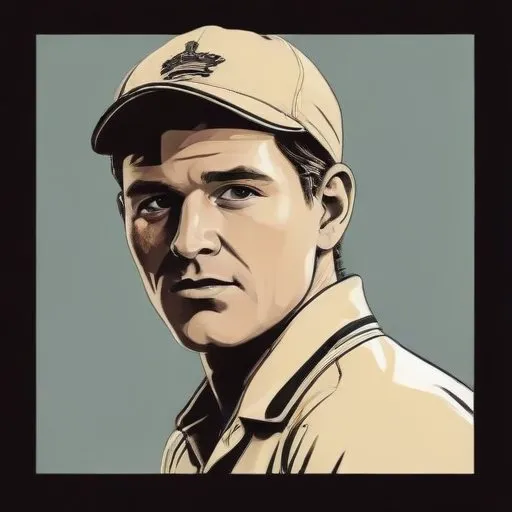
Australian right-arm medium-pace bowler who played 11 Test matches and 23 One Day Internationals for Australia between 1985 and 1992. Known for his impressive debut series against New Zealand.
Greg Dyer is famously known for his brief but eventful stint as an Australian wicketkeeper, playing in six Tests and 23 ODIs from 1986 to 1988, including the victorious 1987 World Cup Final.
Dyer's cricketing journey began with the New South Wales and Australian Under 19 sides, eventually making his way to the NSW colts team. He soon became the preferred backup keeper for Steve Rixon when Rixon was injured or on international duty.
In 1985-86, Dyer played several games for NSW, helping the team win the Sheffield Shield. When Rixon signed to tour in South Africa, Dyer became NSW's first-choice wicketkeeper. His strong performances in tour games earned him a spot as a reserve keeper on the 1986 tour to India.
However, it was during this tour that Dyer's career was marred by controversy. In a Test match against New Zealand in 1987-88, Dyer claimed to have caught Andrew Jones, but television replays showed the ball had touched the ground before being caught. This incident led to his eventual dropping from the team two matches later.
After retiring from first-class cricket, Dyer went on to become the president of the Australian Cricketers Association in 2011. He has since been involved in various charitable initiatives, using his platform to give back to the cricketing community and beyond.
Despite his short-lived international career, Dyer left an indelible mark on Australian cricket. He shares an Australian One Day International 7th wicket partnership record with Steve Waugh, which still stands today.
As a wicketkeeper, Dyer's contributions paved the way for future generations of Aussie keepers, including the likes of Ian Healy and Adam Gilchrist.
Greg Dyer's legacy may have been marked by controversy, but his on-field achievements and off-field contributions have cemented his place as a respected figure in Australian cricket.
71 Years Old
Australian cricket legend and coach, renowned for leading the national team to World Cup victory in 1985 and holding multiple records, including most Test appearances as captain.
55 Years Old
A German-Irish footballer and coach who played as a goalkeeper, known for his successful career in the Premier League and international appearances. He later transitioned into coaching, managing several teams.
61 Years Old
A legendary Australian cricketer and captain, known for his aggressive batting style and unbeaten 168-run partnership in the 1999 World Cup semifinal. He's a national hero and cricket icon.
51 Years Old
Former Australian cricket team captain and one of the most successful batsmen in the history of the game, known for his aggressive playing style and exceptional leadership. He is now a respected commentator and cricket analyst.
57 Years Old
A legendary Australian cricketer, coach, and sportscaster who revolutionized the sport with his unorthodox spin bowling style and charismatic on-field personality. He's a cricket icon and household name in Australia.
56 Years Old
A legendary fast bowler and commentator, known for his exceptional cricketing skills and entertaining commentary style. He's a household name in the cricket world, respected for his on-field achievements and off-field charisma.
48 Years Old
Australian sportsman who played cricket for New South Wales and football for the Eastern Suburbs club, known for his all-round skills and athletic prowess.
52 Years Old
American tennis player and educator who coached tennis at the University of Wisconsin and developed the "Wagner Method" of tennis instruction, a pioneering approach to teaching tennis.
