


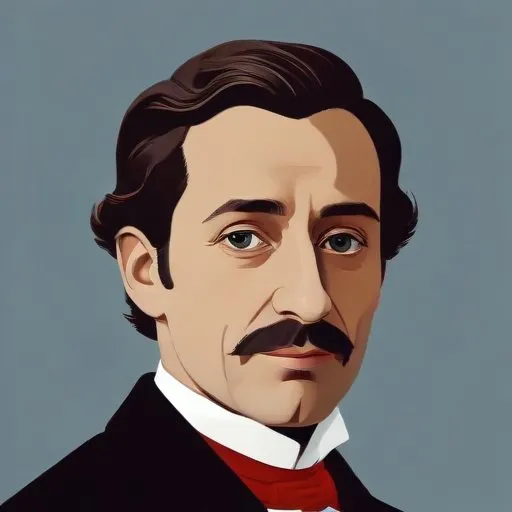
French Enlightenment historian and philosopher who wrote influential works on colonialism and slavery, shaping 18th-century European thought.
Guillaume Thomas Franois Raynal, popularly known as Abb Raynal, was a renowned French writer, former Catholic priest, and man of letters who made significant contributions to the Age of Enlightenment. He is best known for his magnum opus, Histoire philosophique et politique des tablissements et du commerce des Europens dans les deux Indes, a monumental work that critiqued European colonialism and slavery in the two Indies.
Born on April 12, 1713, in Lapanouse, Rouergue, France, Raynal received his education at the Jesuit school of Pzenas. He later became a Catholic priest, but his career in the clergy was short-lived. He was dismissed from the parish of Saint-Sulpice, Paris, due to unexplained reasons, which led him to abandon his priestly duties and pursue a career in writing.
Raynal's writing career was marked by a series of popular yet superficial works, including L'Histoire du stathoudrat, L'Histoire du parlement d'Angleterre, and Anecdotes historiques. These works earned him recognition and access to influential salons, including those of Mme. Geoffrin, Helvtius, and the Baron d'Holbach. His writing style was characterized by a unique blend of narrative and declamation, often featuring tirades on political and social issues.
This four-volume work, published in 1770, was Raynal's most significant contribution to literature. Co-authored with prominent figures of the Enlightenment, including Diderot, Jean Pechmja, Baron d'Holbach, Jacques Paulze, and Alexandre Deleyre, this work presented a scathing critique of European colonialism and slavery in the two Indies. Voltaire praised the work, describing it as "du rchauff avec de la dclamation." Raynal released expanded editions in 1774 and 1780, which further solidified his reputation as a pioneering historian and thinker.
Raynal's philosophy was deeply rooted in the principles of the Enlightenment, particularly in his critique of colonialism and slavery. He believed in the inherent dignity and equality of all human beings, regardless of their geographical location or social status. His work reflected a strong sense of justice and a commitment to exposing the atrocities committed by European powers in the colonies.
Raynal's work had a profound impact on modern society, influencing prominent thinkers and historians of the Enlightenment. His Histoire philosophique et politique contributed to the development of modern historiography, encouraging a more critical approach to the study of history. Moreover, his critique of colonialism and slavery helped shape public opinion and inform policy decisions in the decades that followed.
In May 1754, Raynal was elected a Fellow of the Royal Society, and in 1775, he became a member of the American Philosophical Society. These honors marked significant milestones in his career, recognizing his contributions to literature and historiography.
Guillaume Thomas Franois Raynal's life and work were deeply embedded in the intellectual and cultural currents of the Enlightenment. His legacy as a pioneering historian, philosopher, and writer continues to inspire scholars and thinkers today, offering a powerful testament to the enduring power of critical inquiry and intellectual curiosity.
Born in 1694
A witty and insightful 18th-century writer and philosopher who used satire to critique societal norms and advocate for reason, tolerance, and human rights.
Born in 1712
A pioneering thinker who shaped modern democracy and education with his ideas on social contracts, general will, and the importance of early childhood education. His writings influenced the French Revolution and modern political thought.
Born in 1689
A French lawyer and philosopher who developed the concept of separation of powers, which divides a government into legislative, executive, and judicial branches to prevent abuse of power. His ideas greatly influenced modern democracy.
Born in 1717
A French Enlightenment thinker who made significant contributions to mathematics, physics, and philosophy, particularly in the fields of fluid dynamics and the study of vibrating strings. He's also known for his work on the Encyclopedia, a comprehensive reference work that aimed to compile all knowledge of the time.
Born in 1741
A witty and insightful French writer who penned biting social commentary and clever aphorisms, known for his sharp observations on human nature and society.
