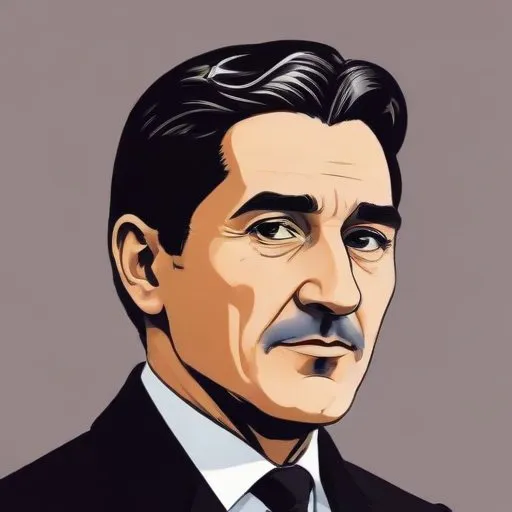
Guillermo Rawson: The Argentine Visionary Behind the Welsh Settlement in Patagonia
A Pioneer in Medicine and Politics
Guillermo Rawson, a medical doctor and politician, is best known for his pivotal role in the creation of a Welsh settlement in Patagonia, Argentina, in the 19th century. As the Interior Minister of Argentina in 1862, he met with Captain Love Jones-Parry and Lewis Jones, who were on a mission to explore the feasibility of establishing a Welsh colony in the region, and his agreement with them led to the foundation of the colony in the Chubut Valley.
Early Life and Education
Born on June 24, 1821, in San Juan, Argentina, Rawson was the son of Amn Rawson, a doctor who had emigrated from the United States, and Justina Rojo, a member of a wealthy family in San Juan. His elder brother, Franklin Rawson, was an artist, and his half-brother, Lieutenant Colonel Juan de Dios Rawson, was the grandfather of
Arturo Rawson. Rawson received a Jesuit education in San Juan before graduating from the Medical Faculty of the University of Buenos Aires in 1844.
A Passion for Politics and Democracy
Rawson's interest in politics and democracy led him to take a stand against Nazario Benavidez, the caudillo of San Juan, in 1853, for which he was jailed. The following year, he became a member of the Paran Congress and, in 1862, he was appointed Interior Minister in the government of
Bartolomé Mitre.
Contributions to Medicine and Hygiene
Apart from his political career, Rawson was also a dedicated medical professional. In 1876, he attended the Centennial Exposition in Philadelphia, where he presented his work on public health in Buenos Aires, which was considered the most comprehensive study of its kind at the time. He was elected a member of the American Antiquarian Society in 1879.
Legacy and Honors
In recognition of his contributions to medicine and politics, the Escuela Dr. Guillermo Rawson, the first medical school in Buenos Aires, was named in his honor. Today, Rawson is remembered as a visionary who played a crucial role in shaping the history of Argentina and its relationships with other nations.
Personal Life and Later Years
Rawson spent a year in Paris in 1881 for medical treatment and returned to Argentina before traveling to France again in 1885 for further treatment. He passed away in Paris on January 20, 1890, leaving behind a legacy that continues to inspire generations of Argentines.
Timelines and Milestones
- 1821: Born on June 24 in San Juan, Argentina
- 1844: Graduated from the Medical Faculty of the University of Buenos Aires
- 1853: Jailed for opposing Nazario Benavidez
- 1862: Became Interior Minister in the government of Bartolomé Mitre
- 1876: Presented his work on public health in Buenos Aires at the Centennial Exposition in Philadelphia
- 1879: Elected a member of the American Antiquarian Society
- 1881: Spent a year in Paris for medical treatment
- 1885: Returned to France for further treatment
- 1890: Died on January 20 in Paris
Trivia and Fun Facts
- The city of Rawson, the capital of the province of Chubut, was named after him.
- Rawson's half-brother, Lieutenant Colonel Juan de Dios Rawson, was the grandfather of Arturo Rawson.
Influence on Modern Society
Guillermo Rawson's legacy extends beyond his contributions to medicine and politics. His role in the creation of the Welsh settlement in Patagonia has had a lasting impact on the cultural and economic development of the region. Today, the city of Rawson stands as a testament to his vision and perseverance.
FAQ
What was Guillermo Rawsons role in Argentine politics?
Guillermo Rawson was an Argentine physician and politician who played a significant role in the countrys early history. He served as the Minister of the Interior and helped to shape the countrys early political and social institutions.
What was Guillermo Rawsons contribution to the development of Argentine medicine?
Guillermo Rawson was a skilled physician who made significant contributions to the development of Argentine medicine. He helped to establish several medical institutions and wrote influential works on medical topics.
How did Guillermo Rawsons work influence the development of Argentine society?
Guillermo Rawsons work had a profound impact on the development of Argentine society, particularly in the areas of politics and medicine. His contributions helped to shape the countrys early institutions and pave the way for future generations of leaders.
What legacy did Guillermo Rawson leave behind in Argentine history?
Guillermo Rawsons legacy in Argentine history is significant. He is remembered as a dedicated leader and physician who helped to shape the countrys early development.
How did Guillermo Rawsons work influence the development of Argentine education?
Guillermo Rawsons work influenced the development of Argentine education, particularly in the areas of medical education. His contributions helped to establish several educational institutions and pave the way for future generations of students.