


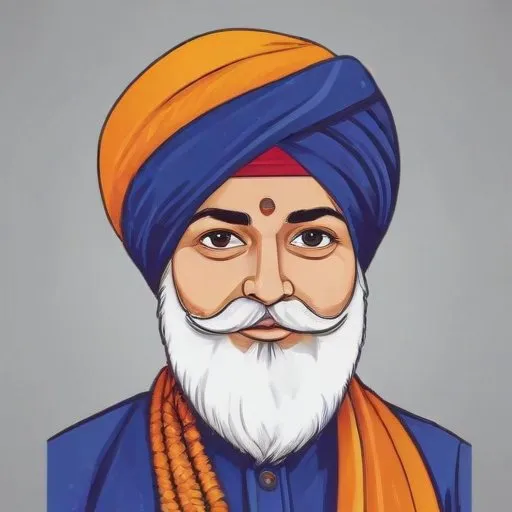
The fourth Sikh Guru is known for composing the Laava, the four hymns of the Sikh marriage ceremony, and for designing the Golden Temple in Amritsar, India. They played a crucial role in shaping Sikhism's spiritual and cultural practices.
Guru Ram Das, the fourth Sikh Guru, is revered for his unwavering devotion to the principles of love, compassion, and selfless service. He is credited with establishing the holy city of Amritsar, which has become a beacon of spirituality and harmony for millions of devotees worldwide.
Born on September 24, 1534, in Lahore, Pakistan, Guru Ram Das was originally named Jetha. Orphaned at the tender age of seven, he was raised by his maternal grandmother in a village. At 12, he met Guru Amar Das, the third Sikh Guru, and dedicated his life to serving him. His unwavering devotion and selfless service earned him the respect and admiration of Guru Amar Das, who eventually chose him as his successor.
In 1574, Guru Ram Das founded the city of Ramdaspur, which would later become Amritsar, the spiritual hub of Sikhism. This city was designed to embody the principles of harmony, equality, and compassion, and it quickly became a haven for people from all walks of life. The city's central attraction, the Golden Temple, is a stunning example of architectural beauty and spiritual significance.
Guru Ram Das played a pivotal role in expanding the Sikh movement by establishing the manji system, a network of clerical appointments and donation collections that financially supported the Sikh community. This innovative system enabled the Sikh movement to spread rapidly across the Indian subcontinent, attracting thousands of devotees.
Guru Ram Das's teachings emphasized the importance of love, compassion, and humility. He advocated for the equality of all human beings, regardless of caste, creed, or social status. His philosophy of selfless service and devotion to the Almighty continues to inspire millions of people around the world.
Guru Ram Das's remarkable life and teachings have left an indelible mark on human history. His message of love, compassion, and selfless service continues to inspire generations, reminding us of the transformative power of spirituality and devotion.
As we reflect on the life and legacy of Guru Ram Das, we are reminded of the importance of living a life of humility, compassion, and service to others. May his teachings continue to guide us on our own paths of spiritual growth and self-discovery.
Born in 1469
Founded Sikhism, a religion that emphasizes spiritual growth, social justice, and equality, and is revered for his poetic hymns and teachings that promote love, compassion, and devotion.
Born in 1479
The third Sikh Guru, a key figure in Sikhism, is known for establishing the Sikh holy city of Amritsar and introducing the concept of langar, a communal kitchen where people of all faiths and backgrounds can eat together.
Born in 1630
The seventh Sikh Guru, known for his compassion and kindness, healed the son of a Mughal emperor and is revered for his selfless service and devotion to humanity.
Born in 1666
A spiritual leader who founded the Sikh warrior community and wrote poetic compositions that are still revered today, known for his bravery and spiritual guidance.
