


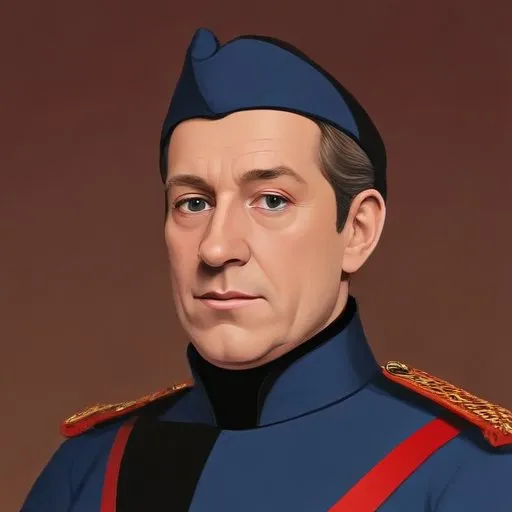
A Swedish nobleman and military leader who played a key role in the Thirty Years' War, known for his victories and strategic alliances.
Gustav Horn, Count of Pori, was a renowned Swedish nobleman, military officer, and Governor-General, best known for his instrumental role in securing victory at the Battle of Breitenfeld in 1631 during the Thirty Years War. His exceptional leadership skills and strategic thinking earned him the trust of King Gustav II Adolf, who appointed him as his second in command in Germany.
Gustav Horn was born on October 22, 1592, at Örbyhus Castle in Uppsala County, Sweden, to Field Marshal Carl Horn and Agneta von Dellwig. Despite being born while his father was imprisoned, Gustav received an excellent education in European universities, studying military sciences under Prince Maurice of Orange in the Netherlands.
Gustav Horn's military career was marked by significant achievements, including his participation in the siege of Riga in 1621, where he was seriously wounded. He later led troops that conquered Tartu in Livonian Estonia and defended Livonia against Poland in the late 1620s, earning him the rank of Field Marshal at the age of 35.
The Battle of Breitenfeld in 1631 was a turning point in Gustav Horn's career, where he prevented the Imperial force under Tilly from flanking the main body of the Swedish army, ensuring a crucial victory for the Swedish forces. This achievement earned him recognition and respect from King Gustav II Adolf, who trusted him to lead troops in Upper Germany.
In 1651, Queen Christina created Gustav Horn the Count of Björneborg, and he went on to serve as Governor-General of Livonia in 1652, President of the War Department, and Lord High Constable in 1653. His extensive experience and leadership skills made him an invaluable asset to the Swedish monarchy.
Gustav Horn's legacy extends beyond his military achievements, as he played a significant role in shaping Sweden's history during the Thirty Years War. His leadership skills, strategic thinking, and bravery inspired generations of military leaders and politicians, solidifying his place as one of the most notable figures in Swedish history.
Gustav Horn's remarkable life and achievements serve as a testament to his dedication to his country and his people, leaving behind a lasting impact on Swedish history.
Born in 1533
The first king of the Vasa dynasty, who ruled Sweden from 1560 to 1568, known for his brutal and erratic behavior, leading to his deposition and eventual murder. He's infamous for his paranoia and violence, earning him a notorious reputation in Swedish history.
Born in 1583
Lord High Chancellor of Sweden who played a crucial role in shaping the country's government and military during the 17th century, known for his diplomatic skills and administrative reforms.
