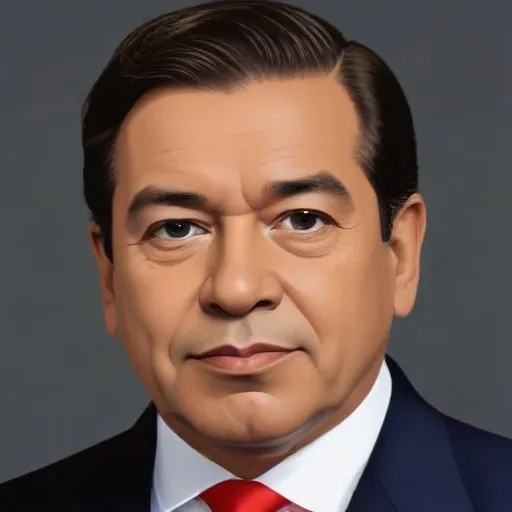
Gustavo Rojas Pinilla: The Colombian Leader Who Shaped a Nation
Gustavo Rojas Pinilla, a name synonymous with Colombian politics, is best known for his role as the 19th President of Colombia, ruling the country as a military dictatorship from 1953 to 1957. During his tenure, he implemented significant reforms, reduced political violence, and extended female suffrage, leaving a lasting impact on the country's history.
Early Life and Education
Born on March 12, 1900, in the city of Tuña, Boyacá, Colombia, Gustavo Rojas Pinilla was the son of Julio Rojas Jiménez and Hermencia Pinilla Suárez. He spent his youth in Tunja, Villa de Leyva, and Arcabuco, where he pursued his education. Rojas Pinilla earned a secondary degree at the Normal School of Tunja's Su Leiva and later graduated with a bachelor's degree in 1917. He then entered the José María Córdova Military School in Bogotá as a cadet.
Rise to Power
Rojas Pinilla's rise to power began during the period of La Violencia, a time of civil strife in Colombia that lasted from the late 1940s to the early 1950s. As a colonel, he gained prominence and was named to the cabinet of Conservative President Mariano Ospina Pérez. In 1953, he orchestrated a successful coup d'état against President Laureano Gómez Castro, imposing martial law and establishing himself as the de facto ruler of Colombia.
Reforms and Achievements
During his presidency, Rojas Pinilla implemented several significant reforms aimed at reducing political violence and promoting national development. Some of his notable achievements include:
- Extending female suffrage, giving women the right to vote
- Implementing infrastructure programs, including road construction and public works projects
- Alliances with trade unions, promoting labor rights and social justice
- Implementing martial law to reduce political violence and maintain order
Downfall and Later Life
In 1957, Rojas Pinilla was forced to step down due to public pressure and international condemnation. He went into exile, only to return to Colombia in 1961, where he founded the National Popular Alliance (ANAPO) in opposition to the National Front, a power-sharing agreement between the Conservative and Liberal parties. He contested the 1970 presidential election but was defeated by the National Front candidate, Misael Pastrana Borrero.
Legacy and Controversy
Rojas Pinilla's legacy is marked by controversy and debate. While some view him as a strong leader who brought stability to a tumultuous nation, others criticize his authoritarian rule and alleged human rights abuses. His supporters, however, credit him with reducing political violence and promoting social and economic development.
Impact on Modern Society
Rojas Pinilla's influence on modern Colombian society is undeniable. His reforms paved the way for future leaders, and his legacy continues to shape the country's political landscape. The ANAPO party he founded remains a significant force in Colombian politics, and his supporters continue to advocate for social justice and labor rights.
Personal Milestones
Throughout his life, Rojas Pinilla faced numerous challenges and controversies. Despite these, he remained a complex and intriguing figure, driven by a passion for his country and its people.
- Born on March 12, 1900, in Tuña, Boyacá, Colombia
- Graduated from the José María Córdova Military School in 1917
- Became the 19th President of Colombia in 1953
- Founded the National Popular Alliance (ANAPO) in 1961
- Died on January 17, 1975
In conclusion, Gustavo Rojas Pinilla's life and legacy are a testament to the complexities of Colombian politics and the enduring impact of strong leadership. While controversies may surround his authoritarian rule, his reforms and achievements continue to shape the nation's history, making him a fascinating and important figure in Colombian politics.
FAQ
What was Gustavo Rojas Pinillas role in Colombian politics?
Gustavo Rojas Pinilla was the 19th President of Colombia, serving from 1953 to 1957. He implemented several reforms, including the creation of a national oil company and the expansion of social services.
What were some of Gustavo Rojas Pinillas most notable achievements?
Gustavo Rojas Pinillas presidency was marked by several notable achievements, including the construction of the Magdalena River canal and the establishment of a national airline.
What was Gustavo Rojas Pinillas early life and education like?
Gustavo Rojas Pinilla was born in Colombia and studied engineering at the National University of Colombia. He began his career in the military and rose to the rank of general before entering politics.
What was Gustavo Rojas Pinillas relationship with the Colombian military?
Gustavo Rojas Pinilla was a career military officer who played a key role in the Colombian military. He was known for his strong leadership and his ability to maintain stability during a period of civil unrest.
What is Gustavo Rojas Pinillas legacy in Colombian politics?
Gustavo Rojas Pinilla is remembered as a significant figure in Colombian politics who implemented important reforms and maintained stability during a turbulent period. His legacy continues to be debated by historians and politicians today.