


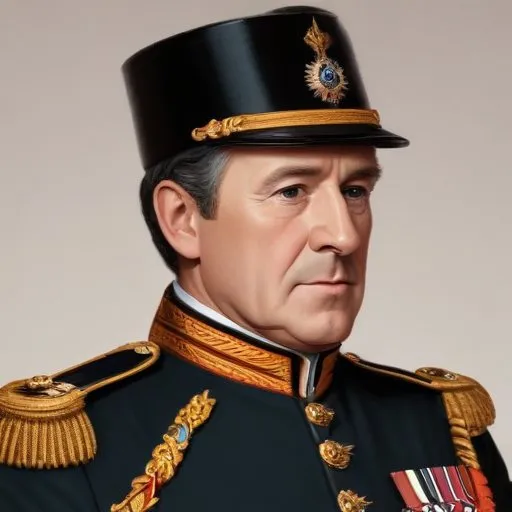
An Irish-English general and politician who served as the 21st Governor General of Canada, known for his military victories and administrative reforms during the French and Indian War and the American Revolution. He played a key role in shaping Canada's early history.
Known for his unwavering leadership and strategic prowess, Guy Carleton, 1st Baron Dorchester, was a British Army officer, peer, and colonial administrator who played a pivotal role in shaping the course of British North America. As the Governor of the Province of Quebec, he twice served the British Crown, from 1768 to 1778 and again from 1785 to 1795, earning recognition for his defense of Quebec during the American Revolutionary War.
Born on September 3, 1724, in Strabane, County Tyrone, Northern Ireland, Guy Carleton was part of an Ulster Protestant military family. Following the death of his father, Christopher Carleton, at the age of fourteen, his mother, Catherine Carleton, married Reverend Thomas Skelton, who oversaw his education. In 1742, Carleton was commissioned as an ensign into the 25th Regiment of Foot, marking the beginning of his illustrious military career.
Carleton's early military service saw him participate in the War of the Austrian Succession and the Seven Years' War. In 1768, he was appointed Governor of the Province of Quebec, a position he held concurrently with that of Governor General of British North America. During this period, he oversaw the implementation of the Quebec Act, which granted greater autonomy to the province and paved the way for future British-Canadian relations.
As the American Revolutionary War unfolded, Carleton played a crucial role in defending British interests. He commanded British troops in Quebec, fending off the rebel invasion in 1775 and leading the counteroffensive that drove the rebels from the province in 1776. His leadership earned him the respect of his peers and the admiration of King George III, who knighted him in 1776.
In 1782 and 1783, Carleton served as the commander-in-chief of all British forces in North America. During this time, he carried out the Crown's promise of freedom to slaves who joined the British, overseeing the evacuation of British forces, Loyalists, and over 3,000 freedmen from New York City to British colonies. This humanitarian effort was commemorated through the Book of Negroes, a meticulous record of the freed slaves.
In 1786, Carleton was elevated to the peerage as the 1st Baron Dorchester. He continued to serve the British Crown, although his influence began to wane in the late 1790s. Carleton passed away on November 10, 1808, leaving behind a legacy that would shape the course of British North American history.
Carleton's younger brother, Thomas Carleton, served as his aid-de-camp during his military campaigns. Their careers were intertwined, with Thomas eventually rising to prominence in his own right. Carleton's sister, Connolly Crawford, remained close to him throughout his life. Despite his dedication to his military career, Carleton maintained strong family ties, demonstrating his commitment to both duty and kinship.
Guy Carleton, 1st Baron Dorchester, left an indelible mark on British North American history. His military prowess, strategic brilliance, and humanitarian efforts have earned him a place among the most revered figures of the American Revolutionary War era. As a testament to his enduring legacy, the town of Dorchester, New Brunswick, was named in his honor, serving as a reminder of his unwavering dedication to the British Crown and the people he served.
With a legacy built on courage, strategy, and compassion, Guy Carleton, 1st Baron Dorchester, stands as a shining example of British military leadership and dedication to the Crown. His historical significance continues to inspire generations, reminding us of the complexities and triumphs of the American Revolutionary War era.
Born in 1727
Led British forces to victory in the Battle of Quebec in 1759, a pivotal moment in the French and Indian War, and is considered a hero in British military history.
