


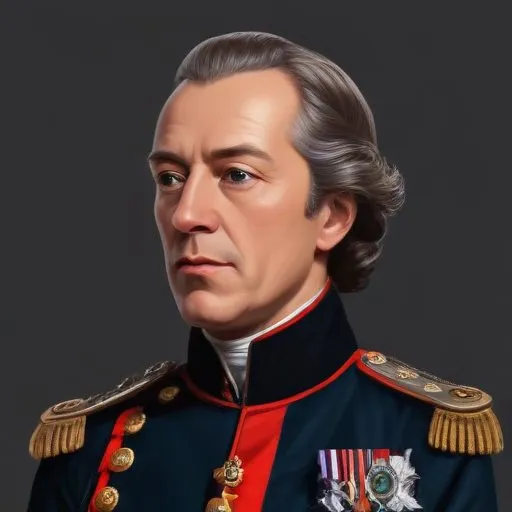
Led British forces to victory in the Battle of Quebec in 1759, a pivotal moment in the French and Indian War, and is considered a hero in British military history.
James Wolfe, a British Army officer, etched his name in history books as the victor of the pivotal Battle of the Plains of Abraham in 1759, securing British dominance over Quebec and cementing his legacy as a brilliant military strategist. His triumph marked a turning point in the Seven Years War, solidifying British control over Canada and earning him the esteemed titles of "The Hero of Quebec" and "The Conqueror of Canada."
Born on January 2, 1727, Wolfe was the son of distinguished General Edward Wolfe. His early commission at a young age set the stage for an illustrious military career, with extensive service in Europe during the War of the Austrian Succession. Wolfe's service in Flanders and Scotland, where he played a crucial role in suppressing the Jacobite Rebellion, garnered attention from his superiors and accelerated his promotion to brigade major at just 18 years old.
The outbreak of the Seven Years War in 1756 presented Wolfe with fresh opportunities for advancement. His involvement in the abortive raid on Rochefort in 1757 caught the attention of William Pitt, who appointed him second-in-command of an expedition to capture the Fortress of Louisbourg. The success of this siege led to Wolfe's command of a force tasked with navigating the Saint Lawrence River to capture Quebec City.
After a grueling siege, Wolfe's forces clashed with French troops under the Marquis de Montcalm on September 13, 1759, in the Battle of the Plains of Abraham. Despite being injured by three musket balls, Wolfe remained resolute, ultimately securing a decisive victory for the British. Tragically, he succumbed to his wounds, but his bravery and strategic prowess ensured a lasting legacy.
The capture of Quebec marked a significant milestone in the Seven Years War, paving the way for British control over Canada. Wolfe's iconic status was further solidified by the famous painting "The Death of General Wolfe," which became an emblem of British victory and territorial expansion. He was posthumously hailed as "The Hero of Quebec," "The Conqueror of Quebec," and "The Conqueror of Canada."
Wolfe's military philosophy emphasized discipline, training, and adaptability, which contributed to his success on the battlefield. His leadership style was characterized by a strong sense of duty, honor, and patriotism, inspiring loyalty among his troops.
Wolfe's conquest of Quebec had far-reaching implications for Canadian and British history, establishing British dominance over the region and shaping the course of North American politics. His legacy continues to inspire, serving as a testament to the power of strategic leadership and military excellence.
Born in 1732
The first President of the United States, a military hero who led the country to independence, and set the standard for the office of the presidency. He's known for his honesty, integrity, and leadership skills.
Born in 1725
A British military leader who conquered Bengal, India, and later became a politician, known for his significant role in establishing British rule in India.
Born in 1713
A British military leader who founded Halifax, Nova Scotia, and played a key role in the French and Indian War, but also infamous for scalping Mi'kmaq people.
Born in 1723
Led British forces during the American Revolutionary War, ultimately surrendering at Saratoga, a turning point in the war. He was also a playwright and politician.
