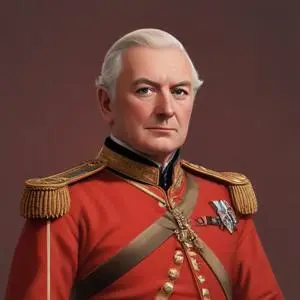
Robert Clive: The Father of British India
Conquering the Indian Subcontinent
Robert Clive, 1st Baron Clive, is renowned for laying the foundation of the British East India Company (EIC) rule in Bengal, thereby shaping the course of Indian history. As the first British Governor of the Bengal Presidency, Clive's military prowess and strategic alliances enabled the EIC to establish a stronghold in the region, ultimately leading to the formation of the British Raj.
Early Life and Career
Born on September 29, 1725, in Styche Hall, Shropshire, England, Clive began his career as a writer (office clerk) for the EIC in 1744. His early days in India were marked by struggle and adaptation, but he soon proved himself to be an astute and ambitious individual.
Rise to Power
Clive's rise to power was swift and dramatic. In 1751, he improvised a military expedition that thwarted French mastery of India, allowing the EIC to adopt the French strategy of indirect rule via puppet government. This bold move earned him recognition and praise from the EIC, setting the stage for his future conquests.
The Battle of Plassey and Its Aftermath
In 1757, Clive won the Battle of Plassey, a decisive victory that cemented the EIC's control over Bengal. As a result, Clive was granted a jagir (a type of fiefdom) worth 30,000 (approximately £5,100,000 in 2023) per year, which was the rent the EIC would otherwise pay to the Nawab of Bengal for their tax-farming concession.
Financial Impact and Net Worth
When Clive left India in January 1767, he had amassed a fortune of 180,000 (approximately £30,500,000 in 2023), which he remitted through the Dutch East India Company. This staggering wealth enabled him to secure an Irish barony and a seat in Parliament, solidifying his position as a prominent figure in British politics.
Philosophical Contributions and Beliefs
Clive's actions were guided by his belief in the importance of British trade interests and the need to expand the empire. Although criticized for his methods, Clive's vision for British India was instrumental in shaping the country's future.
Personal Milestones and Key Life Events
- Clive was appointed as the Governor of Bengal in 1758
- He married Margaret Maskelyne in 1753 and had six children with her
- Clive committed suicide on November 22, 1774, due to depression and ill health
Influence on Modern Society
Clive's legacy is complex and multifaceted. While he is credited with establishing British rule in India, his methods were often brutal and exploitative. Nevertheless, his actions had a profound impact on the development of the British Empire and the shaping of Indian history.
Historical Context and Legacy
Clive's life and career must be viewed within the context of the 18th-century colonial era. His actions, although controversial, were a product of the time and reflect the complex power dynamics at play. Today, Clive is remembered as a pivotal figure in British-Indian history, with his legacy continuing to be debated and scrutinized by historians and scholars.
Quotes and Memorable Sayings
- "I have made a fortune, and I have fulfilled my duty."
- "The great principle of the British Empire is to be maintained by the sword."
Visual Timeline and Milestones
- 1725: Born in Styche Hall, Shropshire, England
- 1744: Begins career as a writer for the EIC in India
- 1751: Leads a military expedition to thwart French mastery of India
- 1757: Wins the Battle of Plassey, cementing EIC control over Bengal
- 1767: Leaves India with a fortune of 180,000
- 1774: Commits suicide due to depression and ill health
FAQ
What is Robert Clive known for?
Robert Clive is known for his role as a British general and politician, who played a significant role in the establishment of British India.
What were Robert Clives military achievements?
Robert Clive achieved several military victories, including the Battle of Plassey in 1757, which marked the beginning of British rule in India.
What was Robert Clives role in the East India Company?
Robert Clive was a key figure in the East India Company, which was a British trading company that played a significant role in the colonization of India.
How did Robert Clive impact the history of India?
Robert Clives actions helped to pave the way for British rule in India, which had a profound impact on the countrys history and culture.
What is Robert Clives legacy?
Robert Clives legacy is as a complex figure, who played a significant role in shaping the history of India. He is remembered as a skilled military leader, but also as a figure who helped to perpetuate British colonialism.