


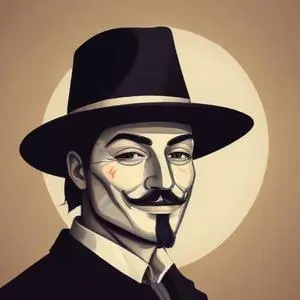
A conspirator in a failed plot to blow up the English Parliament and kill King James I, known for his role in the infamous Gunpowder Plot of 1605.
Guy Fawkes, a name synonymous with treason and rebellion, is best known for his involvement in the failed Gunpowder Plot of 1605, a daring attempt to blow up the English Parliament and assassinate King James I.
Born on April 13, 1570, in Stonegate, York, Guy Fawkes was the second of four children to Edward Fawkes and his wife, Edith. His early life was marked by tragedy, with his father passing away when he was just eight years old. His mother's subsequent marriage to a recusant Catholic, however, would have a profound impact on Fawkes' life.
Fawkes converted to Catholicism and left for mainland Europe, where he fought for Catholic Spain in the Eighty Years War against Protestant Dutch reformers in the Low Countries. He adopted the alias "Guido Fawkes" during this time, a name that would later become synonymous with his treasonous act.
In 1604, Fawkes met Thomas Wintour, with whom he returned to England and joined forces with Robert Catesby, the mastermind behind the Gunpowder Plot. The plotters planned to assassinate King James I and restore a Catholic monarch to the throne. Fawkes was tasked with guarding the gunpowder stockpiled in an undercroft beneath the House of Lords.
An anonymous letter prompted the authorities to search Westminster Palace on November 5, 1605, where they discovered Fawkes guarding the explosives. He was subsequently questioned and tortured over the next few days, eventually confessing to his role in the plot.
Fawkes was sentenced to be hanged, drawn, and quartered, a gruesome fate that was foiled when he died by a broken neck during the hanging process on January 31, 1606. Some accounts suggest that he deliberately jumped to his death to avoid the agony of his sentence.
The failure of the Gunpowder Plot led to the commemoration of Guy Fawkes Night on November 5, 1605, where effigies of Fawkes are traditionally burned on bonfires, often accompanied by fireworks. The question remains, however, whether Fawkes was a martyr fighting for religious freedom or a traitor who sought to destroy the English government.
Guy Fawkes' life and legacy continue to fascinate and inspire, serving as a reminder of the complexities of faith, power, and rebellion.
Guy Fawkes' story is one of intrigue, controversy, and tragedy, a testament to the enduring power of human conviction and the blurred lines between martyrdom and treason.
Born in 1811
A prominent figure in the Anti-Corn Law League, he advocated for free trade and social reform, playing a significant role in shaping Britain's economic and political landscape.
Born in 1729
An 18th-century Irish bishop and poet, he's remembered for his influential collections of traditional Irish ballads, which helped preserve the country's cultural heritage.
