


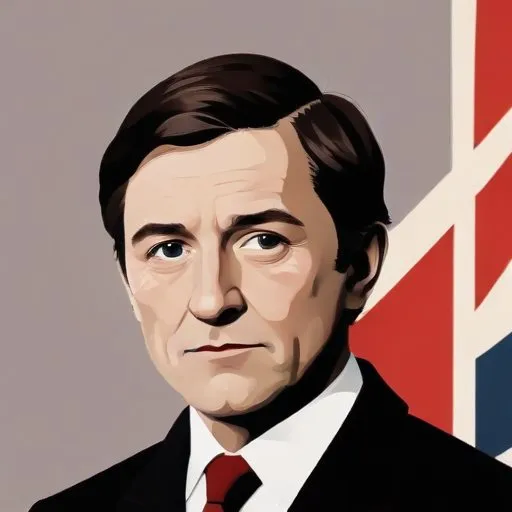
A prominent figure in the Anti-Corn Law League, he advocated for free trade and social reform, playing a significant role in shaping Britain's economic and political landscape.
John Bright, a British Radical and Liberal statesman, is renowned for his tireless efforts to promote free trade policies and social justice, earning him the distinction of being one of the greatest orators of his generation. His most notable achievement was the abolition of the Corn Laws, a testament to his unwavering commitment to reducing poverty and promoting economic growth.
Born on November 16, 1811, in Greenbank, Rochdale, Lancashire, England, Bright was the son of Jacob Bright, a respected Quaker and cotton mill owner. His father's values of hard work, simplicity, and social responsibility deeply influenced Bright's worldview and future endeavors.
In partnership with Richard Cobden, Bright co-founded the Anti-Corn Law League, a movement dedicated to abolishing the Corn Laws, which had been levying taxes on imported wheat since 1815. These laws benefited landowners at the expense of the working class, perpetuating poverty and social inequality. Through their relentless campaign, Bright and Cobden successfully persuaded the British government to repeal the Corn Laws in 1846, a milestone in the history of economic reform.
Bright's advocacy for free trade led to the Cobden-Chevalier Treaty of 1860, a groundbreaking agreement between Great Britain and the Second French Empire. This treaty, negotiated in collaboration with French economist Michel Chevalier, aimed to promote closer economic interdependence between the two nations, paving the way for increased trade and cooperation.
Bright served in the House of Commons from 1843 to 1889, championing causes such as electoral reform, religious freedom, and social justice. He passionately opposed the Crimean War and advocated for the rights of the working class, earning him the respect and admiration of his peers. Bright also played a pivotal role in disestablishing the Church of Ireland and introducing land reform in Ireland, which benefited the Catholic peasantry.
Bright's commitment to social justice and economic equality was rooted in his Quaker upbringing and his conviction that government should serve the interests of the people, rather than the privileged few. His unwavering dedication to these principles has inspired generations of reformers and policymakers.
Bright's eloquence and wit are exemplified in his famous phrase, "The mother of parliaments," which has become synonymous with the British Parliament. His wisdom and vision continue to inspire, as evident in his quote, "Force is not the instrument of reform; the ballot is the instrument of reform."
John Bright's remarkable life and achievements serve as a testament to the power of conviction, perseverance, and leadership. His legacy continues to shape economic and social policies, inspiring future generations to strive for a more just and equitable society.
Born in 1804
A skilled politician who served as Prime Minister of the United Kingdom, known for his influential role in shaping the country's politics and economy during the 19th century.
Born in 1871
Prolific writer of historical novels and adventure stories, also a talented landscape painter.
Born in 1883
Led the Labour Party to a landslide victory in 1945, implementing significant social and economic reforms, including the creation of the National Health Service. He played a crucial role in shaping post-war Britain.
Born in 1885
Won the 1952 Olympic Games marathon in Helsinki, Finland, and held the world record in the marathon from 1952 to 1953.
73 Years Old
The former Prime Minister of the United Kingdom who led the country through a transformative period, including the Iraq War, and is known for his charismatic leadership and controversial decisions.
75 Years Old
The Prime Minister of the United Kingdom from 2007 to 2010, known for his key role in shaping the country's economy and response to the 2008 global financial crisis.
59 Years Old
The former Prime Minister of the United Kingdom who led the country from 2010 to 2016, known for his role in the Brexit referendum and austerity measures.
69 Years Old
The second female Prime Minister of the United Kingdom, leading the country through Brexit negotiations and implementing policies on national security and education. Known for her strong stance on immigration and law and order.
