


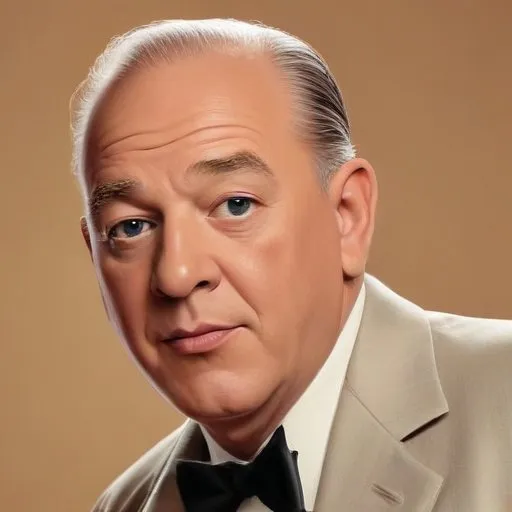
A prolific character actor and singer, he brought warmth and humor to over 150 films, often playing lovable, bumbling sidekicks.
Guy Kibbee, the American stage and film actor, is perhaps best remembered for his iconic roles in some of the most iconic films of the 1930s, including 42nd Street, Gold Diggers of 1933, and Mr. Smith Goes to Washington. With a career spanning over three decades, Kibbee's unique blend of comedic timing and endearing on-screen presence made him a staple of Hollywood's Golden Age.
Born on March 6, 1882, in El Paso, Texas, Kibbee's early life was marked by a fascination with the world of entertainment. At the tender age of 7, he learned how to set type under the guidance of his father, editor of the El Paso Herald-Post newspaper. This early exposure sparked a passion that would drive him to run away to join a traveling show at just 14 years old.
Kibbee's entertainment career began on Mississippi riverboats, where he honed his acting skills in traveling stock companies. However, it wasn't until he made his Broadway debut in 1930 in the play Torch Song that he gained widespread recognition. This critical acclaim caught the attention of Hollywood, and Paramount Pictures soon signed him to a contract.
Kibbee's film career took off in the 1930s, with memorable performances in 42nd Street (1933) and Gold Diggers of 1933 (1933). These roles cemented his status as a master of daft and jovial characters, earning him a spot as a key player in the Warner Bros. stock company.
One of Kibbee's most notable performances during this period was in the title role of Babbit (1934), a condensed adaptation of Sinclair Lewis's novel. This starring role showcased his versatility as an actor and further solidified his position in Hollywood.
Kibbee's personal life was marked by two marriages, first to Helen Shay, with whom he had a family in Staten Island, and later to Ethel Brownie Reed, with whom he remained married for 31 years. His son, Robert Kibbee, would go on to become the chancellor of the City University of New York.
Kibbee continued to act throughout his life, albeit at a slower pace. He passed away on May 24, 1956, due to complications from Parkinson's disease, leaving behind a legacy as one of Hollywood's most beloved character actors.
Guy Kibbee's contributions to the world of cinema are undeniable. His unique brand of humor and charm has left an indelible mark on the entertainment industry. As a character actor, he brought life to countless memorable roles, providing a glimpse into the Golden Age of Hollywood.
His performances continue to delight audiences, and his influence can be seen in the work of later character actors. Kibbee's legacy serves as a testament to the power of talent, perseverance, and dedication to one's craft.
Born in 1903
Smooth-voiced crooner who dominated the music charts and silver screen with his warm, baritone voice and iconic Christmas tunes.
Born in 1903
A legendary entertainer who brought laughter and joy to millions through his iconic comedy specials, films, and USO tours, leaving a lasting impact on American entertainment.
Born in 1914
A sultry actress and singer who starred in popular 1930s-40s films, often playing exotic roles, and was known for her signature sarong dresses. She was a major Hollywood star during her time.
Born in 1908
Star of classic Disney movies and TV shows, including "My Three Sons," known for his affable, everyman persona.
Born in 1908
A screwball comedy queen of the 1930s, known for her rapid-fire wit, charming on-screen presence, and iconic film roles in "Twentieth Century" and "My Man Godfrey".
Born in 1894
A beloved comedian and radio personality, famous for his witty humor, stingy persona, and iconic catchphrase "Your money or your life!"
Born in 1896
A legendary comedian and entertainer, known for his quick wit, charming stage presence, and iconic cigar, starring in films and TV shows that brought laughter to generations.
Born in 1895
A zany comedian and actress who delighted audiences with her witty banter and comedic timing on stage, screen, and radio, particularly in the 1930s and 1940s.
