


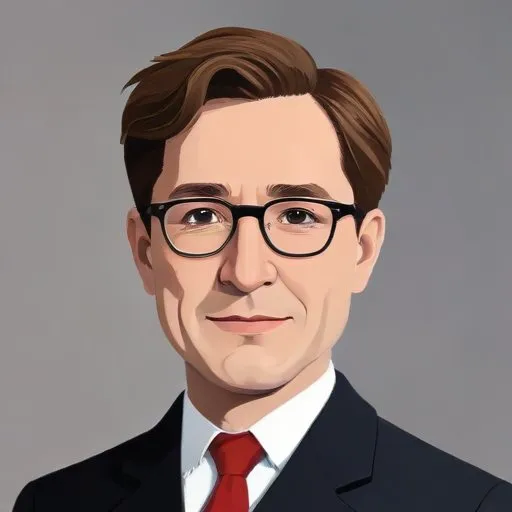
A Belgian academic and politician who served as the 7th Minister-President of Wallonia, known for his efforts to promote regional autonomy and economic development in the region.
Guy Spitaels was a prominent Belgian politician who left an indelible mark on the country's political landscape. As the 7th Minister-President of Wallonia from 1992 to 1994, he played a pivotal role in transforming Belgium's unitary structures into a federalist system, a feat that was largely accomplished by 1989 and formalized in 1993.
Born on September 3, 1931, in Ath, Belgium, Guy Spitaels graduated in political and social sciences from the Université Catholique de Louvain (UCL) in 1957. He later attended the College of Europe in Bruges from 1957 to 1958. Spitaels' educational background laid the foundation for his future success in politics.
Spitaels' political career spanned over four decades, during which he held various prominent positions. He was chief of staff to several Belgian socialist ministers in the early 1970s and became a senator in 1974. In 1977, he was appointed mayor of Ath, a position he held for 20 years. The same year, he became the minister of Labour under Prime Minister Paul Vanden Boeynants.
In the late 1970s and early 1980s, Spitaels served as deputy prime minister under the governments of Wilfried Martens, concurrently holding the portfolios of minister of the budget (1979-1980) and minister of transport (1980-1981). After the electoral defeat of 1981, the PS was relegated to the opposition, and Spitaels became party chairman of the PS (1981-1992).
Spitaels' leadership played a crucial role in the transformation of Belgium's unitary structures into a federalist system. Along with other politicians from his party, he worked tirelessly to achieve this goal, which was largely accomplished by 1989 and formalized in 1993.
However, Spitaels' career was not without controversy. In 1992, he arranged to become Minister-President of the Walloon Government, but his tenure was cut short due to his involvement in the Agusta scandal, which led to his resignation in 1994. He was subsequently convicted for his role in the scandal.
Despite the controversy surrounding his later years, Guy Spitaels' contributions to Belgian politics cannot be overstated. He was a passionate advocate for social justice and played a key role in shaping the country's federalist system.
In his later years, Spitaels remained active in politics, albeit in a diminished capacity. He passed away on August 21, 2012, leaving behind a legacy that continues to influence Belgian politics to this day.
Spitaels was known for his strong convictions and unwavering commitment to his ideals. He quit the Roman Catholic faith and became a Freemason, reflecting his strong values and principles.
Guy Spitaels' life and career serve as a testament to his unwavering dedication to public service and his vision for a more just and equitable society. His contributions to Belgian politics continue to inspire generations of politicians and citizens alike.
75 Years Old
A Belgian chemist-turned-politician who served as Prime Minister of Belgium, known for his efforts to stabilize the country's economy and politics during a period of crisis.
79 Years Old
The 158th Prime Minister of France, a prominent figure in French politics, known for his leadership during the Maastricht Treaty negotiations and his role in shaping the European Union.
85 Years Old
A French-Belgian lawyer and politician who served as the 63rd Prime Minister of Belgium, known for his key role in shaping the European Union and its institutions. He was a strong advocate for European integration and played a crucial part in the creation of the euro currency.
73 Years Old
The 47th Prime Minister of Belgium, a prominent liberal politician who played a key role in shaping the European Union's policies and architecture. He's a strong advocate for a federal Europe and has been a vocal critic of nationalism.
78 Years Old
The first permanent President of the European Council, known for his role in shaping the European Union's economic and political policies. A key figure in European politics, guiding the EU through the European sovereign-debt crisis.
