


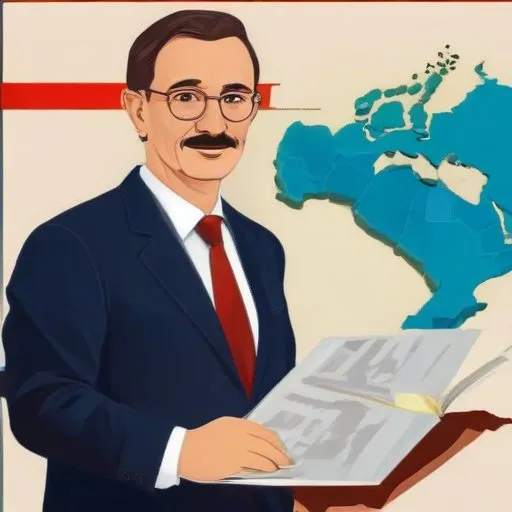
A Hungarian economist and geographer who studied and wrote extensively on regional development, urbanization, and economic geography, particularly in Eastern Europe. He's known for his work on the economic and social disparities between regions.
György Enyedi is renowned for his groundbreaking contributions to the field of regional science, playing a pivotal role in its development as an independent discipline. This Hungarian economist and geographer has left an indelible mark on the academic community, shaping the course of regional science research for generations to come.
György Enyedi was born on August 25, 1930, in Hungary. He pursued his academic interests in economics and geography, laying the foundation for his future accomplishments.
Enyedi's research career took off in the 1960s, focusing on agricultural and rural typology. His work revealed the negative consequences of Hungary's settlement system transformation, shedding light on social and economic inequalities in rural spaces.
He expanded his research scope to the international level, leading a worldwide comparative research team under the International Geographical Union (IGU). Between 1972 and 1984, his team studied rural space development, producing seminal works that continue to influence the field.
In 1984, Enyedi founded the Centre for Regional Studies of the Hungarian Academy of Sciences, which has since become a leading organization in Hungarian regional science. The centre boasts a staff of over 100 researchers across four institutes, dedicated to analyzing European and Hungarian regional development.
György Enyedi is a prolific author, with an impressive repertoire of 40 books and over 300 publications. His work has been recognized with numerous awards and honors, including:
György Enyedi's work has had a profound impact on our understanding of regional development and its implications on social and economic inequalities. His research has informed policy decisions, shaping the trajectory of regional science and its applications in various fields.
György Enyedi's passing on September 10, 2012, marked the end of an era, but his contributions continue to inspire new generations of researchers and scholars. His legacy serves as a testament to the power of dedicated scholarship, leaving an indelible mark on the scientific community.
Born in 1911
A Hungarian lawyer and politician who played a key role in the country's transition to democracy after World War II, known for his courageous opposition to communist rule.
