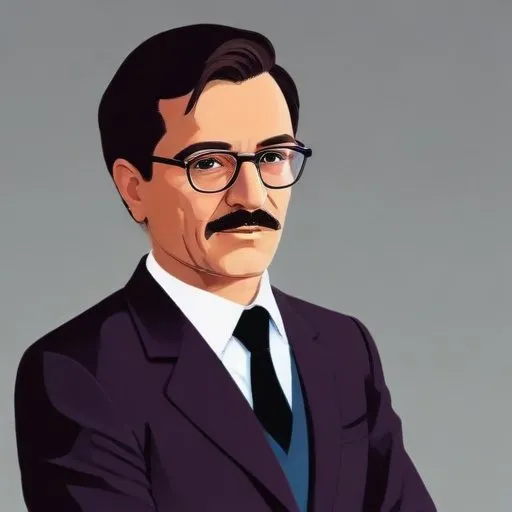
Istvn Bib: The Voice of Freedom and Democracy
The Last Minister Standing
Istvn Bib, a Hungarian lawyer, civil servant, politician, and political theorist, is best known for his courageous stand during the 1956 Hungarian Revolution, where he remained at his post in the Hungarian Parliament building, defying the Soviet invasion, and penned his famous proclamation, "For Freedom and Truth." This act of bravery cemented his legacy as a champion of democracy and human rights.
A Life of Service and Scholarship
Born on August 7, 1911, in Budapest, Hungary, Bib received a law degree from the Franz Joseph University and later taught there. He furthered his education at the Graduate Institute of International and Development Studies in Geneva, where he earned a PhD in 1935. Throughout his life, Bib was dedicated to serving his country and promoting democratic values.
Academic Contributions
Bib's scholarly works are a testament to his expertise in political theory and international relations. Some of his notable publications include:
- "The Crisis of Hungarian Democracy" (Valsg, October 1945, in Hungarian)
- "The Poverty of Eastern European Small States" (A keleteurpai kisllamok nyomorsga, Budapest, 1946, in Hungarian; translated into French as "Misère des petits états d'Europe de l'Est," LHarmattan, 1986)
- "The Paralysis of International Institutions and the Remedies" (A Study of Self-Determination, Concord among the Major Powers, and Political Arbitration, introduction by Bernard Crick, The Harvester Press, Hassocks, 1976)
- "Democracy, Revolution, Self-Determination: Selected Writings" (Edited by Kroly Nagy, Translated by Andrs Boros-Kazai, Columbia University Press, New York, 1991)
- "The Art of Peacemaking: The Political Essays of Istvn Bib" (New Haven: Yale University Press, 2015)
Imprisonment and Legacy
On May 23, 1957, Bib was arrested and later sentenced to life imprisonment on August 2, 1958. However, he was released in 1963 as part of an amnesty. Despite the hardships he faced, Bib's commitment to democracy and human rights remained unwavering.
Honors and Recognition
Bib's legacy has been honored in various ways:
- The Bibo Prize was founded in Boston in 1980, recognizing outstanding contributions to democracy and human rights.
- In 2011, the National Bank of Hungary issued a 5,000 Forint coin featuring Bib's portrait.
- The Etvs Lornd University in Budapest named a special honors society/ extracurricular studies program after him, the Bibo Istvan Szakkollegium.
A Champion of Freedom and Democracy
Istvn Bib's life serves as a powerful reminder of the importance of standing up for democratic values and human rights. His courage, scholarship, and commitment to freedom have inspired generations, and his legacy continues to shape the world today.
FAQ
What was István Bibós role in Hungarian politics?
István Bibó was a prominent Hungarian lawyer and politician who played a key role in Hungarys transition to democracy after World War II. He served as Minister of Justice in the 1940s and was a vocal advocate for human rights and the rule of law.
What was István Bibós early life like?
István Bibó was born on August 7, 1911, in Budapest, Hungary. He studied law at the University of Budapest and became involved in politics at a young age, joining the Hungarian Social Democratic Party.
How did István Bibós work promote democracy and human rights in Hungary?
István Bibós work promoted democracy and human rights in Hungary by advocating for the establishment of an independent judiciary, a free press, and the protection of individual rights. He was a strong critic of communism and played a key role in the Hungarian Revolution of 1956.
What was István Bibós relationship with the Hungarian Communist Party?
István Bibós relationship with the Hungarian Communist Party was one of opposition. He was a vocal critic of communist ideology and opposed the partys efforts to suppress democracy and human rights in Hungary.
What is István Bibós legacy in Hungarian politics?
István Bibós legacy in Hungarian politics is that of a courageous advocate for democracy and human rights. His work helped to lay the foundations for Hungarys transition to democracy and continues to inspire Hungarians today.