


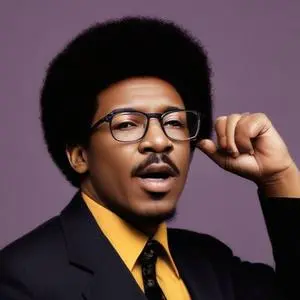
A prominent figure in the Black Power movement, known for his militant rhetoric and advocacy for African American empowerment through radical action.
H. Rap Brown is a name synonymous with controversy and activism in the civil rights movement. As the fifth chairman of the Student Nonviolent Coordinating Committee (SNCC) and the Black Panther Party's minister of justice, Brown was a vocal advocate for black empowerment and self-defense, often using provocative rhetoric to drive his point home.
Born Hubert Gerold Brown on October 4, 1943, Brown was introduced to activism through his older brother Ed, who was involved with SNCC. In 1963, Brown visited Cambridge, Maryland, where he witnessed the first riot between whites and blacks over civil rights issues. This experience had a profound impact on him, and he soon became involved with SNCC, organizing for the organization during the 1964 Mississippi Freedom Summer.
In 1966, Brown became the chairman of SNCC, a position that gave him a national platform to advocate for black rights. He was known for his fiery speeches and provocative statements, including his infamous declaration that "violence is as American as cherry pie." Brown's rhetoric often sparked controversy, but it also drew attention to the civil rights movement and the struggles faced by African Americans.
In 1969, Brown published his autobiography, Die Nigger Die!, which became a bestseller and cemented his reputation as a bold and uncompromising voice for black empowerment. The book is a candid and unapologetic account of Brown's life and activism, offering a unique perspective on the civil rights movement.
In 2000, Brown was arrested and charged with shooting two Fulton County, Georgia, sheriff's deputies. He was convicted of murder and sentenced to life in prison. Despite his imprisonment, Brown remains a figure of controversy and fascination, with many regarding him as a symbol of resistance against systemic racism.
Brown's legacy is complex and multifaceted. While his advocacy for self-defense and his provocative rhetoric have been criticized by some, they have also inspired generations of activists and artists. Brown's autobiography, Die Nigger Die!, is considered a classic of African American literature, and his commitment to black empowerment continues to resonate with many today.
Brown's philosophy was deeply rooted in black nationalism and the need for self-defense in the face of systemic racism. He believed in the importance of community empowerment and the need for African Americans to take control of their own destinies.
Brown's activism took place during a pivotal moment in American history, as the civil rights movement was gaining momentum. His commitment to black empowerment and self-defense was a response to the violence and oppression faced by African Americans, and his legacy continues to influence social justice movements today.
85 Years Old
A prominent figure in the Civil Rights Movement, advocating for Black Power and self-defense, and famously coining the term "Black Power" in 1966. Known for his radical approach to achieving racial equality.
Born in 1925
A prominent figure in the Civil Rights Movement, advocating for African American rights and self-defense, and a powerful orator who inspired a generation.
97 Years Old
A prominent leader in the civil rights movement, advocating for racial equality and social justice through nonviolent means, leaving a lasting impact on American history.
84 Years Old
Co-founder of the Black Panther Party, a revolutionary socialist organization that advocated for African American empowerment and challenged police brutality in the 1960s and 1970s. Known for his charismatic leadership and radical ideology.
89 Years Old
Co-founder of the Black Panther Party, a radical organization that fought for African American rights and empowerment in the 1960s and 1970s, known for his activism and leadership during a tumultuous period in American history.
90 Years Old
A former Black Panther Party leader and writer, known for his prison memoir "Soul on Ice" and his role in the Black Power movement.
82 Years Old
A prominent civil rights activist, academic, and author who has been a vocal advocate for racial and gender equality, and an icon of black feminism. Known for her work on prison reform and her involvement in the Black Panther Party.
77 Years Old
The chairman of the Illinois chapter of the Black Panther Party, a charismatic leader who advocated for racial equality and social justice through community empowerment and political activism. He's most known for his impassioned speeches and radical approach to fighting systemic racism.
