


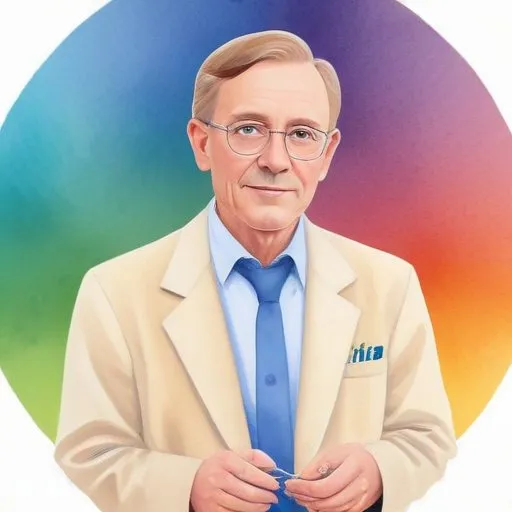
Australian bioinorganic chemist and protein crystallographer renowned for pioneering research on the structure and function of metalloproteins, particularly in understanding the role of metals in biological systems.
Hans Freeman, a German-born Australian bioinorganic chemist, is renowned for his groundbreaking work on the unusual structural, electrochemical, and spectroscopic properties of blue copper proteins, particularly plastocyanin. His research has had a profound impact on our understanding of protein crystallography and its applications in the field of chemistry.
Hans Charles Freeman was born on May 26, 1929, in Breslau, Germany (now Wrocław, Poland), to Karl and Lotte Freeman. Following a tip-off from a Nazi party member, his family relocated to Australia in 1938, where he spent his formative years.
Freeman's education was marked by academic excellence. He was dux of his primary school, dux of Sydney Boys High in 1945, and went on to earn his Bachelor's degree with the University Medal in Chemistry in 1949 from the University of Sydney.
Freeman's academic career spanned over four decades, with most of it spent at the University of Sydney. He introduced protein crystallography to Australia and was a strong advocate for ensuring access to big science facilities for Australian scientists.
Freeman's contributions to chemistry were recognized with numerous honors, including:
Freeman was a charismatic lecturer who continued to teach voluntarily well into his formal retirement. He inspired a generation of scientists with his passion for chemistry and his ability to make complex concepts accessible to his students.
Hans Freeman's work has left an indelible mark on the field of bioinorganic chemistry. His research has paved the way for further exploration of protein crystallography and its applications in the development of new materials and technologies.
Freeman's legacy extends beyond his scientific contributions. He embodies the spirit of perseverance and dedication, inspiring future generations of scientists to strive for excellence in their pursuit of knowledge.
In conclusion, Hans Freeman's remarkable life and career serve as a testament to the power of human ingenuity and the importance of pursuing one's passion. His contributions to science have opened doors to new possibilities, and his legacy will continue to inspire and motivate scholars and researchers for years to come.
Born in 1917
A Nobel Prize-winning chemist who pioneered stereochemistry research, making significant contributions to our understanding of molecular structures and their interactions.
Born in 1914
Pioneering crystallographer who unraveled the structure of hemoglobin, revolutionizing our understanding of biological molecules. His work paved the way for major advances in medicine and biochemistry.
Born in 1910
A pioneering scientist who deciphered the structures of biomolecules like insulin and vitamin B12, revolutionizing our understanding of biology and medicine.
Born in 1920
A British biochemist who discovered the mechanism of cellular respiration, earning a Nobel Prize in Chemistry for his groundbreaking work on the electron transport chain. His research revolutionized our understanding of energy production in cells.
Born in 1916
Pioneering scientist who discovered the structure of DNA, revolutionizing our understanding of genetics and life itself.
98 Years Old
Discovered the structure of DNA, revolutionizing our understanding of genetics and earning a Nobel Prize. Pioneering work in molecular biology has far-reaching implications for medicine and beyond.
Born in 1920
A British scientist who contributed significantly to the discovery of the structure of DNA, providing high-quality X-ray crystallography images that helped James Watson and Francis Crick develop their famous model.
Born in 1916
A Nobel Prize-winning physicist and biologist who contributed significantly to the discovery of the structure of DNA, using X-ray crystallography to produce the first clear images of the molecule.
