


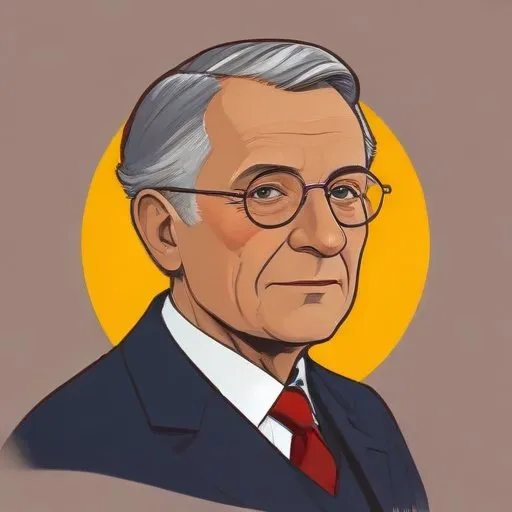
A pioneer in ion trapping and precision spectroscopy, he developed techniques to isolate and study individual atoms, earning him the Nobel Prize in Physics in 1989.
Hans Georg Dehmelt, a renowned German-American physicist, is best known for his groundbreaking work in developing the ion trap technique, also known as the Penning trap, which earned him a Nobel Prize in Physics in 1989. This innovative technique enabled high-precision measurements of the electron magnetic moment, revolutionizing the field of physics.
Dehmelt was born on September 9, 1922, in Görlitz, Germany. At the tender age of 10, he enrolled in the Berlinisches Gymnasium zum Grauen Kloster, a prestigious Latin school in Berlin, where he was awarded a scholarship. After completing his secondary education in 1940, Dehmelt volunteered for service in the German Army and was later sent to the University of Breslau to study physics in 1943.
During the Battle of the Bulge, Dehmelt was captured and held in an American prisoner-of-war camp. After his release in 1946, he resumed his studies at the University of Göttingen, where he supported himself by repairing and bartering old radio sets.
Dehmelt completed his master's thesis in 1948 and received his Ph.D. in 1950, both from the University of Göttingen. He then moved to Duke University as a postdoctoral associate in 1952, marking the beginning of his illustrious academic career.
In the 1950s, Dehmelt began working on the ion trap technique, a method that uses electromagnetic fields to trap and manipulate ions. This innovative technique enabled the precise measurement of the electron magnetic moment, a fundamental constant in physics. Dehmelt's work, in collaboration with Wolfgang Paul, led to the development of the Penning trap, which was recognized with the Nobel Prize in Physics in 1989.
Dehmelt's work on the ion trap technique has had a profound impact on modern society, enabling the development of precise measurement tools and instruments in fields such as medicine, navigation, and materials science.
Hans Georg Dehmelt's pioneering work on the ion trap technique has left an indelible mark on the field of physics, inspiring future generations of scientists and researchers. His legacy continues to inspire and motivate, a testament to the power of human ingenuity and perseverance.
Born in 1900
A pioneer in quantum mechanics, he formulated the exclusion principle, which states that no two electrons in an atom can have the same set of quantum numbers. His work laid the foundation for modern physics and chemistry.
Born in 1913
Developed theories on quantum electrodynamics and the behavior of hydrogen atoms, earning a Nobel Prize in Physics in 1955.
97 Years Old
A pioneer in particle physics, discovering subatomic particles like quarks and gluons, and developing the theory of quantum chromodynamics.
Born in 1918
A brilliant physicist and engineer who pioneered quantum mechanics and famously explained complex concepts in simple terms, making science accessible to all.
Born in 1902
A Hungarian physicist and mathematician who made groundbreaking contributions to quantum mechanics and nuclear physics, and was awarded the Nobel Prize in Physics in 1963.
Born in 1885
A pioneer in quantum mechanics, he introduced the concept of wave-particle duality, revolutionizing our understanding of atomic structure. His philosophical approach to science also explored the nature of reality and human understanding.
