


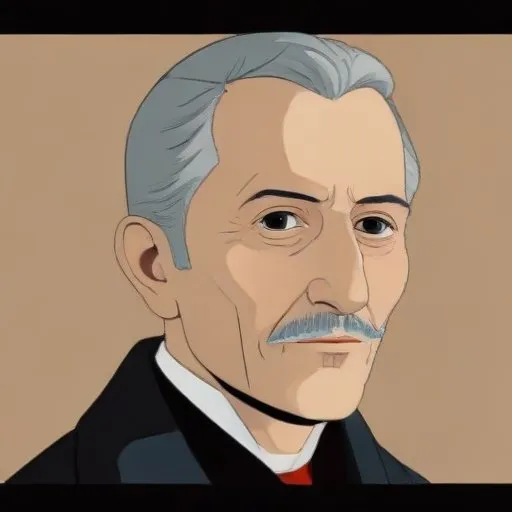
A Czech-American jurist and philosopher who developed the "pure theory of law," which separates law from morality and politics, and is also known for his work on international law and the concept of sovereignty.
Hans Kelsen, an Austrian jurist, legal philosopher, and political philosopher, is renowned for being the principal architect of the 1920 Austrian Constitution, which remains in operation to this day. His groundbreaking work, "Pure Theory of Law," has had a profound impact on the fields of legal theory, political philosophy, and social theory.
Hans Kelsen was born on October 11, 1881, in Prague, Austria-Hungary (now the Czech Republic). He studied law at the University of Vienna, earning his doctorate in 1906. During his time at the university, Kelsen developed a strong interest in legal philosophy, which would become the foundation of his life's work.
Kelsen's most notable achievement is his role as the principal architect of the 1920 Austrian Constitution. This document, which has undergone amendments over the years, remains the basis of Austria's legal system to this day. Kelsen's work on the constitution showcased his commitment to democracy and his ability to craft a legal framework that would stand the test of time.
Due to the rise of totalitarianism in Austria and a 1929 constitutional change, Kelsen was forced to leave his homeland in 1930. He relocated to Germany, where he continued to teach and write until the Nazi seizure of power in 1933. As a result of his Jewish ancestry, Kelsen was forced to flee Germany, eventually settling in Geneva in 1933. In 1940, he moved to the United States, where he would spend the remainder of his life.
Kelsen's reputation as a leading jurist was well established by the 1940s. His work, particularly his "Pure Theory of Law," had a profound impact on the fields of legal theory, political philosophy, and social theory. In 1934, Roscoe Pound, a renowned American jurist, lauded Kelsen as "undoubtedly the leading jurist of the time."
Kelsen's influence extends far beyond the realm of legal theory. His work has had a profound impact on the fields of philosophy, sociology, and international relations. His commitment to democracy and his defense of the rule of law have inspired generations of scholars and policymakers.
Kelsen was known to have crossed paths with some of the most influential figures of his time, including Sigmund Freud and his circle. Despite his busy academic schedule, Kelsen maintained a strong commitment to his personal relationships, which played a significant role in shaping his intellectual pursuits.
Kelsen received numerous awards and honors for his contributions to legal philosophy and political science. These include the Grand Austrian State Prize for Science (1951) and honorary doctorates from several universities, including the University of Geneva and the University of Vienna.
Hans Kelsen's legacy continues to shape the fields of legal theory, political philosophy, and social theory. His commitment to democracy, his defense of the rule of law, and his groundbreaking work on the "Pure Theory of Law" have cemented his place as one of the most influential legal philosophers of the 20th century.
Born in 1856
Pioneering psychoanalyst who developed theories on the subconscious mind, childhood experiences, and the structure of personality, revolutionizing our understanding of human behavior and psychology.
Born in 1822
A Latvian-German chemist and academic who pioneered the field of biochemistry, discovering various compounds and contributing significantly to the understanding of proteins and amino acids.
Born in 1870
Austrian lawyer and politician who served as the 4th President of Austria, known for his role in establishing the country's post-WWII government and drafting its constitution. He played a key role in Austria's transition to democracy.
