


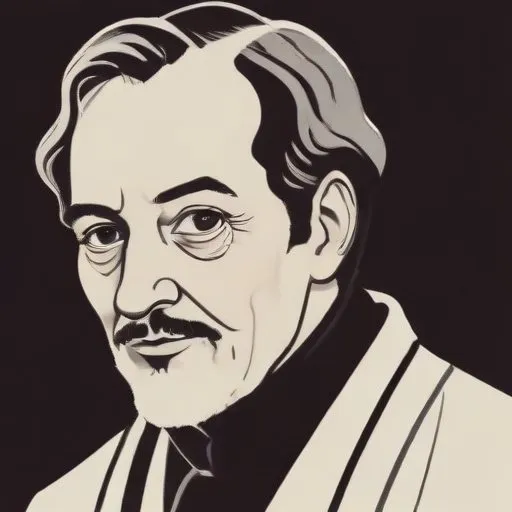
A 16th-century master of Meistergesang, a traditional form of German poetry and song, who wrote over 6,000 works, including plays, poems, and songs, showcasing his wit and satire.
Hans Sachs, a German Meistersinger, poet, playwright, and shoemaker, is renowned for his remarkable contributions to the world of literature and music. Born on November 5, 1494, in Nuremberg, Germany, Sachs left an indelible mark on the cultural landscape of his time.
Sachs' fascination with poetry and music was sparked during his childhood years, when he attended a singing school in Nuremberg's church. His father, a tailor, encouraged his creative inclinations, and he later attended Latin school in Nuremberg.
At the age of 14, Sachs began his apprenticeship as a shoemaker, a trade he would master and later combine with his artistic pursuits. His journeyman years, known as the Wanderjahre, took him to various towns, including Regensburg, Passau, Salzburg, Munich, Osnabrück, Lübeck, and Leipzig.
In 1513, Sachs arrived in the small town of Wels, where he dedicated himself to honing his artistic skills. It was during this period that Emperor Maximilian I, struck by Sachs' talent, invited him to join his court in Innsbruck.
However, Sachs' courtly sojourn was short-lived, as he soon returned to his craft, eventually settling in Nuremberg in 1516. Here, he began his apprenticeship to become a mastersinger under the guidance of Lienhard Nunnenbeck, a linen weaver.
Sachs' poetic talents blossomed during this period, and he became an ardent supporter of the Reformation, inspired by Martin Luther's teachings. In 1523, he penned the poem "Die wittenbergisch Nachtigall" (The Nightingale of Wittenberg), a tribute to Luther.
This creative outpouring was accompanied by a series of remarkable dialogues in prose, showcasing Sachs' mastery of language and form. His artistic output was remarkable, with over 6,000 poems and songs attributed to him.
Sachs' personal life was marked by both joy and tragedy. He married Kunigunde Creutzer in 1519, with whom he had seven children, although all unfortunately predeceased him. He later married Barbara Harscher, a young widow, in 1561.
Through his work, Sachs not only reflected the cultural and intellectual currents of his time but also left a lasting impact on German literature and music. His legacy continues to inspire generations of artists and scholars.
Hans Sachs' work continues to influence contemporary German literature and music, with many of his poems and songs remaining popular to this day. His legacy serves as a testament to the power of art to shape cultural identity and inspire future generations.
Born in 1756
A child prodigy and master of classical music, he composed over 600 works, including symphonies, operas, and chamber music, that continue to inspire and influence musicians today.
Born in 1749
A German literary giant who penned iconic works like "Faust" and "The Sorrows of Young Werther", shaping the Romantic movement and influencing countless writers.
Born in 1759
A renowned poet and playwright who crafted influential works that explored the human condition, morality, and the struggle for freedom, leaving a lasting impact on German literature.
Born in 1714
A pioneering opera composer who revolutionized the art form with his innovative and expressive works, blending music and drama in a way that captivated audiences.
Born in 1813
A revolutionary composer who transformed opera with his epic, mythological works, creating a new era of musical storytelling. His iconic operas, such as "Der Ring des Nibelungen," continue to captivate audiences worldwide.
Born in 1770
A musical genius who expanded the possibilities of classical music, creating iconic symphonies and piano sonatas that continue to inspire and influence generations of artists.
Born in 1833
A renowned pianist and composer, he crafted complex, expressive works that blended traditional and innovative techniques, leaving an indelible mark on classical music.
Born in 1811
A virtuosic pianist and composer who revolutionized classical music with his technically demanding and emotionally expressive works, blending Hungarian folk influences with Romantic-era drama.
