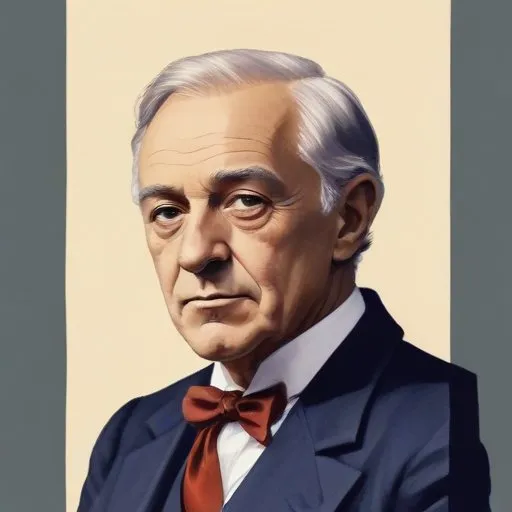
Harry H. Laughlin: The Eugenics Enthusiast Who Shaped American Policy
The Father of Compulsory Sterilization Legislation
Harry H. Laughlin, an American educator and eugenicist, is notorious for his influential role in shaping the country's eugenics policy, particularly in the realm of compulsory sterilization. As the superintendent of the Eugenics Record Office (ERO) from 1910 to 1939, Laughlin's work had a profound impact on the lives of countless individuals, often with devastating consequences.
Early Life and Education
Born on March 11, 1880, in Oskaloosa, Iowa, Laughlin graduated from the First District Normal School (now Truman State University) in Kirksville, Missouri. He later earned a Doctor of Science degree in cytology from Princeton University in 1917. His educational background laid the foundation for his future work in the field of eugenics.
Eugenics Record Office and Its Agenda
Laughlin's interest in eugenics led him to correspond with Charles Davenport, a prominent researcher on Mendelian inheritance. In 1910, Davenport invited Laughlin to join him at the newly established Eugenics Record Office (ERO) in Cold Spring Harbor, New York. As the managing director, Laughlin dedicated himself to promoting the ERO's goals, which included advocating for eugenics-based legislation.
Statistical Testimony and Its Consequences
Laughlin's statistical testimony before the United States Congress played a significant role in shaping the Johnson-Reed Immigration Act of 1924. He presented data that supposedly demonstrated the prevalence of "feeble-mindedness" among immigrants from southern and eastern Europe, as well as Jews. This misinformation contributed to the discriminatory quotas established by the Act, severely limiting immigration from these regions.
Public Perception and Controversies
Laughlin's work and testimony have been widely criticized for their lack of scientific basis and racist undertones. Bacterial geneticist
Herbert Spencer Jennings condemned Laughlin's statistics as invalid, highlighting the flawed methodology and biased conclusions. Despite these criticisms, Laughlin's influence on American eugenics policy persisted for decades.
Lectures and Writings
Laughlin was a prolific lecturer, traveling across the United States to promote his eugenic ideals. He even co-wrote a eugenic comedy in four acts, performed at the ERO for the entertainment of field workers. His writings and lectures helped disseminate his beliefs to a broader audience, further solidifying his impact on the eugenics movement.
Legacy and Historical Context
Laughlin's legacy is complex and controversial, reflecting both the fascination with eugenics during the early 20th century and the devastating consequences of its misapplication. His work serves as a cautionary tale about the dangers of unchecked scientific enthusiasm and the importance of rigorous, unbiased research.
Personal Milestones and Key Life Events
- March 11, 1880: Born in Oskaloosa, Iowa
- 1910: Joined the Eugenics Record Office (ERO) as managing director
- 1917: Earned Doctor of Science degree in cytology from Princeton University
- 1924: Provided statistical testimony to support the Johnson-Reed Immigration Act
- January 26, 1943: Passed away
Comparative Analysis with Contemporaries
Laughlin's work and ideas are often compared to those of his contemporaries, such as Charles Davenport and Madison Grant. While sharing similar interests in eugenics, these individuals contributed to the movement in distinct ways, shaping its development and trajectory.
Philosophical Contributions and Beliefs
Laughlin's philosophical contributions to the eugenics movement centered around the concept of "improving" the human race through selective breeding and sterilization. He believed that certain traits, such as "feeble-mindedness," were hereditary and needed to be eradicated to ensure the progress of society.
Impact on Modern Society
Laughlin's influence on modern society is multifaceted, with both positive and negative consequences. While his work contributed to the development of modern genetics, it also perpetuated harmful stereotypes and discriminatory policies. His legacy serves as a reminder to approach scientific inquiry with caution, respecting the complexities of human diversity and promoting equitable social policies.
FAQ
What is Harry H. Laughlins most notable contribution to eugenics?
Harry H. Laughlin was a prominent American eugenicist who developed the concept of model sterilization law. This law, adopted by many US states, mandated the forced sterilization of individuals deemed unfit or feeble-minded.
What was Harry H. Laughlins role in the Eugenics Record Office?
Harry H. Laughlin was the superintendent of the Eugenics Record Office, a research institute dedicated to promoting eugenics and race betterment. He worked closely with Charles Davenport and other prominent eugenicists to advance their agenda.
How did Harry H. Laughlins work influence immigration policy in the US?
Harry H. Laughlins work on eugenics and race betterment influenced the development of US immigration policy in the 1920s. His ideas on undesirable racial and ethnic groups contributed to the passage of restrictive immigration laws, such as the Johnson-Reed Act.
What is Harry H. Laughlins legacy in the history of eugenics?
Harry H. Laughlins legacy in the history of eugenics is complex and controversial. While his work was influential in shaping eugenic policies in the US, it is now widely recognized as flawed, discriminatory, and unethical.
What criticisms have been leveled against Harry H. Laughlins work?
Harry H. Laughlins work has been criticized for its flawed science, racial and ethnic biases, and role in perpetuating discrimination and human rights violations. His ideas on eugenics have been largely discredited and are now regarded as a dark chapter in the history of science.