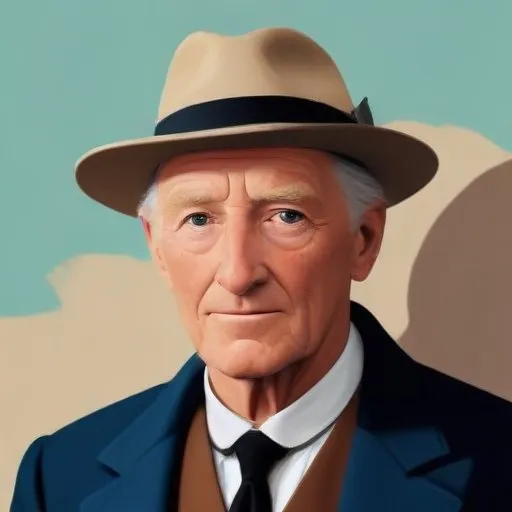
Sir Harry Johnston: The Visionary Explorer and Cartographer of Africa
A Life of Adventure and Discovery
Sir Harry Johnston was a British explorer, botanist, artist, colonial administrator, and linguist who left an indelible mark on the understanding and mapping of Africa. With a career spanning over four decades, Johnston published an astonishing 40 books on subjects related to the continent, cementing his position as one of the most prolific and influential figures of the Scramble for Africa.
Early Years and Artistic Beginnings
Born on June 12, 1858, in Kennington Park, south London, Johnston was the son of John Brookes Johnstone and Esther Laetitia Hamilton. He attended Stockwell grammar school and later pursued his artistic interests at King's College London and the Royal Academy. During this period, he traveled extensively across Europe and North Africa, including a visit to the relatively unknown interior of Tunisia.
Exploration and Cartography in Africa
In 1882, Johnston embarked on a journey to southern Angola with the Earl of Mayo, followed by a meeting with Henry Morton Stanley in the Congo in 1883. This encounter made him one of the first Europeans to explore the river above the Stanley Pool. His developing reputation earned him the leadership of a scientific expedition to Mount Kilimanjaro in 1884, where he concluded treaties with local chiefs that were later transferred to the British East Africa Company.
British Colonial Service and the Cape to Cairo Vision
In October 1886, Johnston was appointed vice-consul in Cameroon and the Niger River delta area, and later became acting consul in 1887. During this tenure, he sketched a fantasy map of his vision for the African continent, proposing the division of the continent among colonial powers. This grand plan envisioned two blocks of British colonies, including a continuous territory in West Africa, the Nile valley, and much of eastern Africa.
Legacy and Impact
Johnston's contributions to the exploration and mapping of Africa are immeasurable. His works not only shed light on the continent's geography, botany, and linguistics but also shaped the course of colonial politics in the region. His cartographic endeavors helped to establish the British East Africa Company, which would later become a cornerstone of British colonialism in Africa.
Personal Milestones and Key Life Events
- 1882: Traveled to southern Angola with the Earl of Mayo
- 1883: Met Henry Morton Stanley in the Congo
- 1884: Led a scientific expedition to Mount Kilimanjaro
- 1886: Appointed vice-consul in Cameroon and the Niger River delta area
- 1887: Became acting consul and deposed local chief Jaja
Influence on Modern Society
Johnston's legacy extends beyond his cartographic achievements. His work had a profound impact on the Scramble for Africa, shaping the course of colonial politics and international relations in the region. His writings and explorations continue to inspire generations of scholars, explorers, and enthusiasts, offering a unique window into the complexities of Africa's past and present.
Quote
"The discovery of the Congo River was not the discovery of a new river, but the discovery of a new world." - Sir Harry Johnston
Historical Context and Legacy
Johnston's life and work are a testament to the complexities of colonialism and the Scramble for Africa. His contributions, while often controversial, have left an indelible mark on our understanding of the continent. As we reflect on his legacy, we are reminded of the importance of nuanced exploration and the enduring power of discovery.
FAQ
What was Harry Johnstons most significant botanical discovery?
Harry Johnstons most significant botanical discovery was the discovery of the okapi, a giraffe-like animal that was previously unknown to Western science.
What was Harry Johnstons role in the exploration of Africa?
Harry Johnston was a prominent explorer of Africa, and his expeditions led to the discovery of new species, the mapping of new territories, and a greater understanding of the African continent.
What awards did Harry Johnston receive for his work?
Harry Johnston received numerous awards for his work, including the Founders Medal of the Royal Geographical Society.
What was Harry Johnstons approach to exploration?
Harry Johnstons approach to exploration was characterized by his bravery, his curiosity, and his commitment to scientific inquiry.
How did Harry Johnstons work impact our understanding of the natural world?
Harry Johnstons work had a significant impact on our understanding of the natural world, as it led to the discovery of new species, the mapping of new territories, and a greater appreciation for the diversity of African ecosystems.