


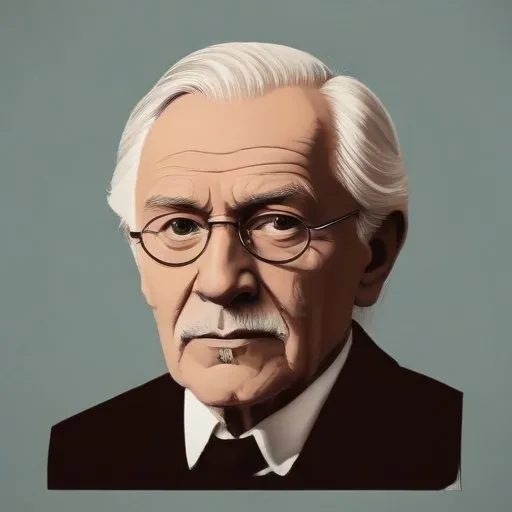
A Swedish literary mastermind, renowned for his poignant and evocative works that explored the human condition, earning him the Nobel Prize in Literature in 1974.
Harry Martinson, a renowned Swedish writer, poet, and former sailor, is best known for his jointly awarded Nobel Prize in Literature in 1974, alongside fellow Swede Eyvind Johnson, for writings that "catch the dewdrop and reflect the cosmos". This prestigious honor recognized his innovative and influential contributions to 20th-century Swedish poetry, earning him the title of "the great reformer" of his time.
Martinson was born Harry Edmund Olofsson on May 6, 1904, in Jämshög, Blekinge County, southeastern Sweden. At a young age, he faced significant challenges, losing his father to tuberculosis in 1910 and his mother, who emigrated to Portland, Oregon, leaving behind her children. Martinson was subsequently placed as a foster child in the Swedish countryside, where he grew up without a steady family support system.
At the age of 16, Martinson ran away and signed onto a ship, spending the next few years sailing around the world, visiting countries including Brazil and India. However, lung problems eventually forced him to set ashore in Sweden, where he traveled extensively, often living as a vagabond on country roads. These early experiences greatly influenced his writing, imbuing his poetry with a deep sense of humanism and love for nature.
In 1929, Martinson debuted as a poet, co-authoring the anthology Fem unga (Five Youths) with fellow writers Artur Lundkvist, Gustav Sandgren, Erik Asklund, and Josef Kjellgren. This collection introduced Swedish modernism, showcasing Martinson's innovative use of language and metaphors. His subsequent works, including the semiautobiographical novel Nässlorna blomma (Flowering Nettle) in 1935, cemented his reputation as a master storyteller and poet.
The joint Nobel Prize in Literature in 1974 marked the climax of Martinson's career, recognizing his lasting impact on Swedish literature and poetry. His writings, characterized by their unique blend of linguistic innovation, humanism, and love for nature, continue to inspire generations of writers and readers alike. Martinson's legacy extends beyond his literary achievements, as his life's journey – marked by adversity, adventure, and resilience – serves as a testament to the transformative power of art and the human spirit.
Martinson's poetry and writings reflect his deep commitment to humanism, egalitarianism, and social justice. His work often explores the interconnectedness of human experience, nature, and the cosmos, revealing a profound appreciation for the beauty and complexity of life.
Martinson's literary innovations and Nobel Prize recognition have had a lasting impact on Swedish literature and poetry, inspiring generations of writers and poets. His commitment to social justice and humanism continues to resonate with contemporary audiences, making his work a powerful tool for promoting empathy, understanding, and positive change.
Through his extraordinary life and work, Harry Martinson leaves behind a rich legacy, reminding us of the transformative power of art, resilience, and the human spirit.
Born in 1900
A Swedish novelist and short story writer, known for his lyrical and introspective works that explored the human condition, earning him the Nobel Prize in Literature in 1974.
Born in 1891
A Swedish literary mastermind, renowned for his poignant and thought-provoking works that explore the human condition, often blending elements of mysticism and social commentary.
95 Years Old
A Swedish poet, translator, and psychologist who explored the human condition through lyrical and accessible verse, and was awarded the Nobel Prize in Literature in 2011.
Born in 1907
A Swedish poet and author known for his modernist and surrealist poetry, exploring themes of existential crisis and the human condition.
Born in 1900
A Swedish poet and novelist who explored themes of love, identity, and social commentary in her works, leaving a lasting impact on Scandinavian literature.
Born in 1906
A Swedish poet and critic who explored the intersection of poetry and politics, known for his lyrical and socially conscious works that often critiqued modern society.
98 Years Old
A Swedish literary figure who wrote poetry, plays, and songs, known for his lyrical and expressive style that explored themes of love, nature, and the human condition.
