


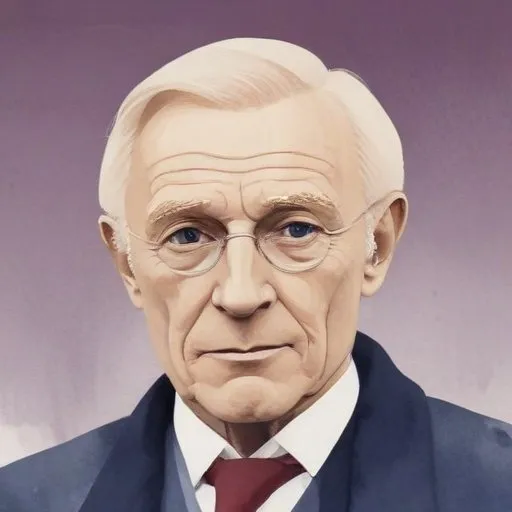
A Swedish novelist and short story writer, known for his lyrical and introspective works that explored the human condition, earning him the Nobel Prize in Literature in 1974.
Eyvind Johnson is widely regarded as the most groundbreaking novelist in modern Swedish literature, renowned for his innovative and avant-garde writing style that defied traditional narrative conventions. His works, characterized by a unique blend of realism and fantasy, earned him the prestigious Nobel Prize in Literature in 1974, shared with Harry Martinson.
Born Olof Edvin Verner Jonsson on July 29, 1900, in the village of Svartbjörnsbyn, near Boden, Norrbotten, Sweden, Johnson's humble beginnings belied his future literary success. Leaving school at 13, he worked various jobs, including log driving and cinema ticket selling, before moving to Stockholm in 1919, where he began publishing articles in anarchist magazines.
Johnson's writing career spanned several decades, during which he published numerous novels and short stories that showcased his unique style. His early works, such as the 1924 short story collection De fyra främlingarna, hinted at the innovative approach he would later adopt. Influenced by writers like Marcel Proust, André Gide, and James Joyce, Johnson gradually distanced himself from traditional narrative forms, becoming the most important representative of modernist literature in Sweden.
Johnson's critical success came with the 1929 novel Kommentar till ett stjärnfall, an attack on capitalist society, but it was his four autobiographical novels, published between 1934 and 1937, that cemented his reputation as a literary giant. These novels, collectively known as Romanen om Olof, blended realism with fairy tales, offering a unique insight into the life of a young man growing up in rural Sweden.
In recognition of his contributions to literature, Johnson was awarded the Nobel Prize in Literature in 1974, "for a narrative art, far-seeing in lands and ages, in the service of freedom." He was also a member of the Swedish Academy, serving from 1957 until his death in 1976. Today, Johnson's work continues to inspire new generations of writers and scholars, solidifying his position as one of the most important figures in modern Swedish literature.
Johnson's writing often reflected his philosophical leanings, which were deeply rooted in his anarchist and socialist beliefs. His novels frequently critiqued the social and economic systems of his time, advocating for individual freedom and social justice. Through his work, Johnson left an indelible mark on Swedish intellectual and cultural discourse.
Johnson's innovative writing style and philosophical beliefs have had a lasting impact on Swedish literature and society. His influence can be seen in the works of subsequent writers, who have drawn inspiration from his unique approach to storytelling. Additionally, his critique of capitalist society and advocacy for social justice continue to resonate with contemporary debates on economic inequality and individual freedom.
Born in 1904
A Swedish literary mastermind, renowned for his poignant and evocative works that explored the human condition, earning him the Nobel Prize in Literature in 1974.
Born in 1891
A Swedish literary mastermind, renowned for his poignant and thought-provoking works that explore the human condition, often blending elements of mysticism and social commentary.
95 Years Old
A Swedish poet, translator, and psychologist who explored the human condition through lyrical and accessible verse, and was awarded the Nobel Prize in Literature in 2011.
Born in 1907
A Swedish poet and author known for his modernist and surrealist poetry, exploring themes of existential crisis and the human condition.
Born in 1900
A Swedish poet and novelist who explored themes of love, identity, and social commentary in her works, leaving a lasting impact on Scandinavian literature.
