


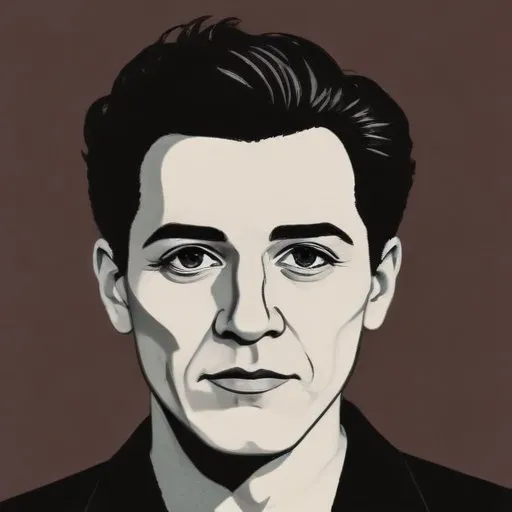
A folk singer-songwriter and poet, best known for his classic song "Big Rock Candy Mountain", a humorous tale of a hobo's paradise. His music often reflected his experiences as a railroad worker and hobo.
Harry McClintock, also known as Haywire Mac, is best known for his iconic song "The Big Rock Candy Mountains," which reached the top of Billboard's Hillbilly Hits chart in 1939 and has since become a timeless classic. As a railroad man, radio personality, actor, singer, songwriter, and poet, McClintock's multifaceted career is a testament to his boundless energy and creativity.
McClintock was born on October 8, 1884, in Uhrichsville, Ohio, to parents from nearby Tippecanoe, Ohio. His family soon moved to Knoxville, Tennessee, where he grew up with a sense of restlessness and wanderlust. In his youth, McClintock ran away from home to join the circus, marking the beginning of a lifetime of adventures and travels.
He worked as a sailor, supplied food and ammunition to American soldiers as a civilian muletrain packer in the Philippines, and even worked as an aid to newsmen in China during the Boxer Rebellion in 1899. Closer to home, McClintock worked as a railroader and minstrel, traveling across the United States and honing his musical talents.
In 1925, McClintock participated in a KFRC Radio talent contest, where his performance of "The Big Rock Candy Mountains" won him spots on two new radio shows: "Mac and His Gang," a children's program featuring his Haywire Orchestry, and "Blue Monday Jamboree," a variety program that he hosted alongside Meredith Willson, Bea Benaderet, Edna Fischer, and future I Love Lucy producer Jess Oppenheimer.
McClintock's music career continued to flourish, with "The Big Rock Candy Mountain" becoming a staple of American folk music. His song "The Old Chisholm Trail" was later featured in the end credits of the TV documentary miniseries "The West."
McClintock's music has had a lasting impact on American popular culture. His song "The Big Rock Candy Mountains" was featured in the 2000 Coen brothers film "O Brother, Where Art Thou," introducing his work to a new generation of fans.
Through his music and radio broadcasts, McClintock brought the spirit of the American west to a wider audience, capturing the essence of the railroad era and the rugged individualism of the American frontier.
On October 8, 1917, McClintock married Bessie K. Johnson in Farmington, Utah, and they had one daughter together. Throughout his life, McClintock remained committed to his craft, always seeking new ways to express himself and connect with his audience.
Today, Harry McClintock is remembered as a true American original, a man whose restless spirit and creative energy continue to inspire generations of musicians, writers, and artists.
Born in 1912
A legendary folk musician who traveled the country, singing about the struggles of the working class and fighting for social justice through his powerful lyrics and melodies.
Born in 1919
A legendary folk musician and social activist, known for his iconic banjo-playing and protest songs that inspired generations to take action for civil rights and environmental causes.
Born in 1888
A legendary musician and songwriter who popularized American folk and blues music through his powerful voice and skilled 12-string guitar playing, leaving a lasting impact on the genre.
95 Years Old
A folk music legend, known for his distinctive voice and guitar style, who influenced Bob Dylan and other famous musicians. He's a key figure in the American folk music revival of the 1950s and 1960s.
Born in 1918
A folk music legend, known for his smooth, rich voice and skillful guitar playing, which helped popularize American folk music in the 1950s and 1960s.
Born in 1914
A pioneering blues musician, known for his soulful voice, intricate guitar playing, and socially conscious songwriting, which addressed racism and inequality.
Born in 1911
A legendary blues musician renowned for his soulful harmonica playing and distinctive singing style, which greatly influenced the development of blues and folk music.
Born in 1915
A folk-blues singer and guitarist known for his soulful voice and intricate fingerpicking style, blending traditional blues with urban folk and gospel influences. He was a key figure in the 1940s-1950s blues revival.
