


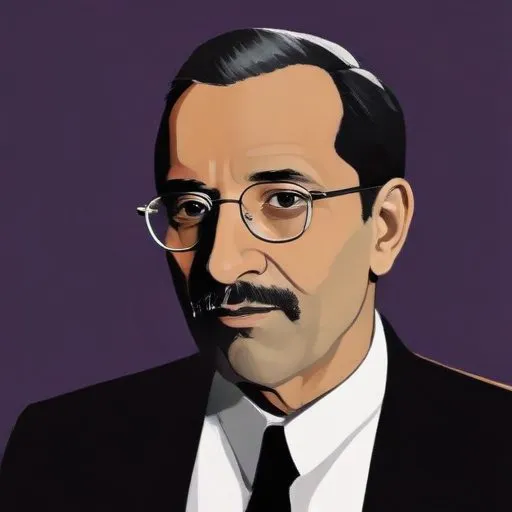
A renowned Pakistani linguist, scholar, and critic who made significant contributions to the fields of Urdu literature, linguistics, and cultural studies, particularly in the context of South Asian languages and cultures.
Renowned for his unparalleled contributions to Urdu literature, linguistics, and philosophy, Hasan Askari is a household name in Pakistan and beyond. This prolific scholar, writer, and literary critic is celebrated for his remarkable efforts in translating Western classics into Urdu, thereby introducing the works of literary giants like Shakespeare, Dickens, and Tolstoy to the Indian subcontinent.
Born on November 5, 1919, in Bulandshahr, British India, Hasan Askari came from a traditional, middle-class Muslim family that valued education and literature. His grandfather, Maulvi Husamuddin, was a scholar, and his father, Muhammad Moinul Haq, worked as an accountant.
Askari's educational pursuits took him to Allahabad University, where he earned a Master of Arts degree in English literature in 1942. He later taught English literature at Meerut College before joining All India Radio, Delhi.
Askari's life took a significant turn in 1947, when he migrated to Pakistan amidst the chaos of Partition. He settled in Lahore, where he immersed himself in Urdu literature, eventually becoming a prominent figure in the country's literary circle.
This period marked a shift in Askari's approach to literature, as he began to focus on the rich cultural heritage of Urdu and its significance in the newly formed state of Pakistan.
Askari's intellectual trajectory was deeply influenced by his encounters with Western philosophy and Eastern spiritual traditions. He was particularly drawn to the works of René Guénon, a French philosopher, and Maulana Ashraf Ali Thanwi, a prominent Islamic scholar from India.
Askari's philosophical stance was characterized by a critical approach to Western modernity, which he believed had lost touch with traditional values and spirituality. He advocated for a return to the roots of Islamic culture and ideology, emphasizing the importance of preserving cultural heritage in the face of Westernization.
Hasan Askari's contributions to Urdu literature and philosophy have left an indelible mark on Pakistani culture. His efforts to bridge the gap between East and West have inspired generations of scholars, writers, and intellectuals.
Today, Askari's work continues to influence contemporary debates on cultural identity, modernity, and the role of tradition in shaping our understanding of the world.
"Culture is not a mere ornament; it is the very fabric of our existence."
"We must revitalize our cultural heritage, lest we forget who we are and where we come from."
These quotes capture the essence of Askari's philosophical stance, emphasizing the significance of cultural heritage in the face of rapid modernization.
Hasan Askari's remarkable journey, marked by intellectual curiosity, literary innovation, and philosophical depth, continues to inspire and enrich our understanding of the complex tapestry of human culture.
Born in 1911
A renowned poet and journalist who wrote about love, politics, and social issues, inspiring generations with his powerful and evocative words.
Born in 1919
A pioneering female voice in Punjabi literature, known for her bold and emotive poetry and novels that explored themes of love, feminism, and social justice.
Born in 1912
A prominent Urdu writer and playwright, known for his bold and provocative short stories that explored the human cost of India's partition and the struggles of everyday people. His works are celebrated for their gritty realism and nuanced portrayal of complex social issues.
99 Years Old
A pioneering Urdu writer and critic, known for her novels that explored the Indian subcontinent's cultural heritage and the human experience.
Born in 1923
A renowned Urdu writer and critic, celebrated for his poignant and thought-provoking novels and short stories that explored the human condition, cultural identity, and the Partition of India.
