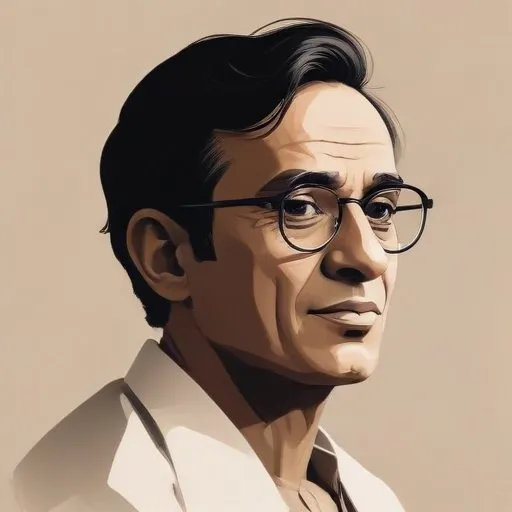
Saadat Hasan Manto: The Maverick Urdu Writer
A Literary Icon of the 20th Century
Saadat Hasan Manto is revered as one of the most prominent Urdu writers of the 20th century, celebrated for his fearless and poignant portrayals of the human experience during the tumultuous era of India's partition. Through his works, Manto captured the essence of the human condition, tackling themes of love, loss, and social injustice with unflinching honesty.
Early Life and Education
Born on May 11, 1912, in Paproudi village, Ludhiana, India, Manto hailed from a Kashmiri trading family that had settled in Amritsar. His father, Khwaja Ghulam Hasan, was a session judge, and his mother, Sardar Begum, had a Pathan ancestry. Manto's early education took place at a Muslim High School in Amritsar, where he twice failed his matriculation examination. He later attended Hindu Sabha College but dropped out after the first year due to poor health.
Literary Career and Notable Works
Manto's writing career spanned over two decades, during which he produced 22 collections of short stories, a novel, five series of radio plays, three collections of essays, and two collections of personal sketches. His most notable works include:
- Thanda Gosht (Cold Meat), a short story that exemplifies his defiance of social norms
- Khol Do (Open It), a collection of short stories that scrutinizes the aftermath of Partition
- Toba Tek Singh, a novella that explores the complexities of love and relationships
Controversies and Trials
Throughout his career, Manto faced six trials for obscenity, three times before 1947 in British India and three times after independence in Pakistan. Despite the controversies, he was never convicted, and his works continued to inspire and provoke readers.
Influence on Modern Society
Manto's literary contributions have had a profound impact on modern society. His works have been adapted into films, plays, and television series, ensuring his legacy endures. In 2015 and 2018, two biographical films were released, paying tribute to his life and literary achievements.
Philosophical Contributions and Beliefs
Manto's writing embodies a humanitarian philosophy, emphasizing the importance of empathy, compassion, and social justice. He believed in the power of literature to challenge societal norms and spark meaningful conversations.
Personal Milestones and Key Life Events
Some significant events in Manto's life include:
- 1941: Manto moved to Bombay (now Mumbai) to work in the film industry, where he wrote screenplays and stories for various films
- 1947: Manto migrated to Lahore, Pakistan, following the Partition of India
- 1950s: Manto's health began to deteriorate due to excessive drinking and financial struggles
Legacy and Impact on Urdu Literature
Saadat Hasan Manto's contributions to Urdu literature are immeasurable. His fearless and unflinching portrayals of the human experience have inspired generations of writers, artists, and intellectuals. Today, Manto's works remain a testament to the power of literature to challenge, provoke, and inspire.
Final Thoughts
In conclusion, Saadat Hasan Manto's life and works are a testament to the transformative power of literature. Through his writing, Manto continues to inspire and provoke, leaving an indelible mark on the literary landscape of the 20th century.
FAQ
What kind of writing did Saadat Hasan Manto focus on?
Saadat Hasan Manto was a prominent writer of short stories, plays, and screenplays. He is known for his bold, provocative, and often controversial works that explored themes of love, sex, and social justice.
What was Saadat Hasan Mantos most famous work?
Mantos most famous work is probably his short story collection Toba Tek Singh, which explores the human cost of the Partition of India in 1947. The title story is considered a masterpiece of Urdu literature.
Why was Saadat Hasan Manto controversial?
Manto was often controversial due to his candid and unflinching portrayals of sex, violence, and social inequality. He was tried for obscenity six times, but was always acquitted.
How did Saadat Hasan Mantos work influence Indian literature?
Mantos work had a profound influence on Indian literature, paving the way for a new generation of writers who explored themes of social justice, identity, and human rights.
How is Saadat Hasan Manto remembered today?
Saadat Hasan Manto is remembered as a pioneering figure in Urdu literature, a bold and fearless writer who tackled difficult subjects with unflinching honesty and compassion.