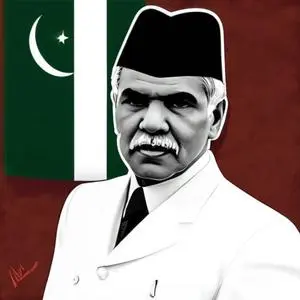
Muhammad Ali Jinnah

Muhammad Ali Jinnah

Muhammad Ali Jinnah was born on December 25th, 1876

Full Name: Muhammad Ali Jinnah
Nationality: Indian-Pakistani
Profession: Lawyer and Politician
Notable Work: Founder of Pakistan
Notable Role: 1st Governor-General of Pakistan
Birth Place: Karachi, India
Occupation: Politician and Lawyer
Title: Quaid-e-Azam

Leader of the All-India Muslim League, instrumental in the creation of Pakistan, and its first head of state. He's revered as the "Father of the Nation" in Pakistan.

Timeline
1876
Born in Karachi, India
Muhammad Ali Jinnah was born on December 25, 1876, in Karachi, India, to a family of modest means.
1894
Moved to London to study law
Jinnah moved to London to study law, exposing himself to Western ideas and politics.
1913
Joined the All-India Muslim League
Jinnah joined the All-India Muslim League, beginning his involvement in Indian politics and the fight for Muslim rights.
1940
Proposed the formation of Pakistan
Jinnah proposed the formation of Pakistan as a separate nation-state for Muslims in India, sparking a movement for independence.
1948
Died as Governor-General of Pakistan
Muhammad Ali Jinnah passed away on September 11, 1948, as the Governor-General of Pakistan, leaving behind a legacy as the founder of the nation.
Muhammad Ali Jinnah

Muhammad Ali Jinnah Quiz

What was Muhammad Ali Jinnah's role in the creation of Pakistan?

Score: 0/5
FAQ
What was Muhammad Ali Jinnahs role in the Pakistan movement?
Muhammad Ali Jinnah was the founder of Pakistan and played a pivotal role in the Pakistan movement. He was a key leader in the All-India Muslim League and worked tirelessly to create a separate homeland for Muslims in India.
What was Muhammad Ali Jinnahs vision for Pakistan?
Muhammad Ali Jinnahs vision for Pakistan was to create a democratic, secular, and modern state that would provide a safe haven for Muslims in India. He believed in the principles of equality, justice, and freedom for all citizens.
What is Muhammad Ali Jinnahs legacy in Pakistani history?
Muhammad Ali Jinnahs legacy in Pakistani history is that of a national hero and a symbol of independence. He is revered for his leadership, vision, and commitment to the creation of Pakistan.
What was Muhammad Ali Jinnahs relationship with Mahatma Gandhi?
Muhammad Ali Jinnah had a complex and often contentious relationship with Mahatma Gandhi. While they shared a commitment to Indian independence, they disagreed on the issue of separate electorates for Muslims and Hindus.
What were Muhammad Ali Jinnahs views on womens rights?
Muhammad Ali Jinnah was a strong advocate for womens rights and believed in the importance of education and empowerment for women. He encouraged women to participate in the Pakistan movement and later, in the development of the new state.

Related People:

Jawaharlal Nehru

Born in 1889

India's first Prime Minister, a key figure in the country's struggle for independence from British rule, and a champion of democracy and secularism. He played a crucial role in shaping modern India's government and economy.

Liaquat Ali Khan

Born in 1895

First Prime Minister of Pakistan, leading the country to independence from British colonial rule and shaping its early years. Known for his role in the country's formative period.

Shah Rukh Khan

60 Years Old

A Bollywood superstar who has been ruling the Indian film industry for decades, known for his iconic romantic roles and charismatic on-screen presence.

Imran Khan

73 Years Old

A legendary cricketer who led Pakistan to World Cup victory in 1992, and later became the country's Prime Minister, known for his charismatic leadership and anti-corruption stance.

Zulfikar Ali Bhutto

98 Years Old

A charismatic leader who served as Pakistan's president and prime minister, known for his socialist and nationalist policies, and his role in developing Pakistan's nuclear program.

Benazir Bhutto

72 Years Old

The first female Prime Minister of a Muslim-majority country, known for her efforts to democratize Pakistan and promote women's rights. She was a symbol of hope for a more liberal and tolerant Pakistan.