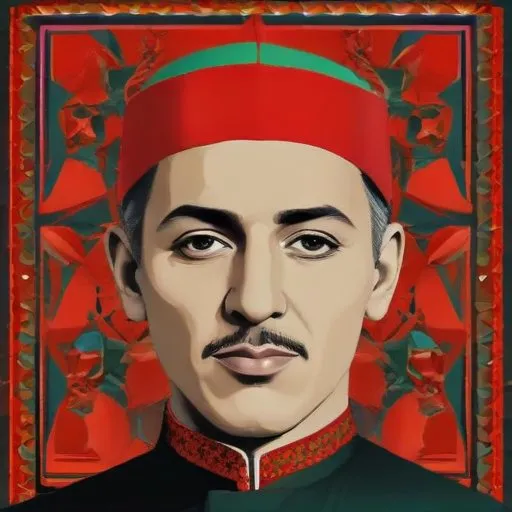
Hassan II of Morocco: The Authoritarian King Who Shaped the Nation
Early Life and Accession to the Throne
Hassan II, the King of Morocco from 1961 until his death in 1999, is remembered for his authoritarian rule, human rights abuses, and the Western Sahara conflict. Born on July 9, 1929, as Mawlay al-Hassan bin Mohammed bin Yusef al-Alawi, he was the eldest son of Sultan Mohammed V and his second wife, Lalla Abla bint Tahar.
Hassan II's early life was marked by his education in Islamic sciences at the Dar al-Makhzen in Fez, and later at the Royal College in Rabat, where he obtained his baccalaureate in 1948. He then pursued higher education at the Rabat Institute of Higher Studies, earning a law degree in 1951 and a master's degree in public law from the University of Bordeaux in 1952.
Rise to Power and Reign
Hassan II was named Crown Prince in 1957 and became the first commander-in-chief of the Royal Armed Forces. following his father's death in 1961, he ascended to the throne. His reign was marked by controversy, including the Western Sahara conflict, the Sand War, and two failed coups d'état against him in 1971 and 1972.
Consolidation of Power and Human Rights Abuses
Hassan II's conservative approach reportedly strengthened his rule over Morocco and the Western Sahara, but it came at the cost of human rights and civil liberties. During the "Years of Lead," a period of repression and violence, allegations of human rights violations, forced disappearances, and torture were rampant. A truth commission was established after his death to investigate these abuses.
Personal Milestones and Key Life Events
- 1957: Named Crown Prince
- 1961: Ascended to the throne following his father's death
- 1971 and 1972: Survived two failed coups d'état against him
- 1999: Died on July 23, marking the end of his 38-year reign
Influence on Modern Society
Hassan II's legacy is complex and multifaceted. While criticized for his authoritarian rule and human rights abuses, he also oversaw significant economic development and modernization in Morocco. His reign saw the country's GDP grow, and he implemented policies aimed at promoting industrialization and tourism.
Legacy and Controversies
Hassan II's legacy is marked by controversy, with many recalling his regime's human rights abuses and authoritarian tendencies. However, others remember him as a leader who stabilized the country and promoted economic growth. His reign serves as a cautionary tale about the dangers of unchecked power and the importance of protecting human rights.
Visual Timeline and Milestones
| Year |
Event |
| 1929 |
Born on July 9 |
| 1948 |
Obtained baccalaureate from the Royal College |
| 1951 |
Earned law degree from the Rabat Institute of Higher Studies |
| 1952 |
Earned master's degree in public law from the University of Bordeaux |
| 1957 |
Named Crown Prince |
| 1961 |
Ascended to the throne following his father's death |
| 1971 and 1972 |
Survived two failed coups d'état against him |
| 1999 |
Died on July 23, marking the end of his 38-year reign |
Trivia and Fun Facts
- Hassan II was a skilled sailor and served in the French Navy on board the Jeanne d'Arc cruiser.
- He was a doctoral student at the Faculty of Law of Bordeaux in 1953.
- Mehdi Ben Barka, a prominent Moroccan politician, was Hassan II's mathematics teacher for four years at the Royal College.
Inspirational Stories and Motivations
While Hassan II's reign was marked by controversy, his life serves as a reminder of the importance of balancing power with accountability and protecting human rights. His legacy also highlights the need for transparency and accountability in governance.
FAQ
What was Hassan IIs role in Moroccan politics?
Hassan II was the King of Morocco from 1961 until his death in 1999. He played a dominant role in Moroccan politics, serving as both head of state and head of government. He implemented several modernization reforms and strengthened Moroccos economy.
What was Hassan IIs foreign policy like?
Hassan II pursued a pragmatic foreign policy, maintaining good relations with Western countries, particularly the United States and France. He also played a key role in Arab and African regional organizations, promoting Moroccos interests and influence.
What was Hassan IIs economic policy like?
Hassan II implemented several economic reforms, including privatization and liberalization measures, which helped to modernize Moroccos economy. He also invested heavily in infrastructure and tourism development.
What was Hassan IIs human rights record like?
Hassan IIs human rights record was criticized by many, particularly with regards to the treatment of political dissidents and Western Sahara independence activists. However, he also implemented several reforms aimed at improving human rights and democratization.
What legacy did Hassan II leave behind?
Hassan IIs legacy is as a key figure in modern Moroccan history, shaping the countrys politics, economy, and foreign policy. He is remembered for his efforts to modernize and develop Morocco, but also for his authoritarian style of governance and human rights abuses.