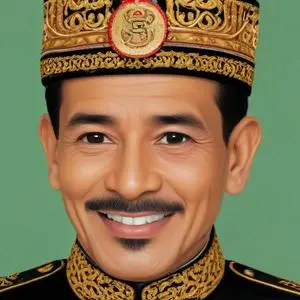
Hassanal Bolkiah: The Sultan of Brunei's Enduring Legacy
The Longest-Reigning Monarch in the Modern Era
Sultan Hassanal Bolkiah ibni Omar Ali Saifuddien III, the 29th ruler of Brunei, has reigned supreme for over five decades, earning him the distinction of being the longest-reigning current monarch and head of state in the world. As the Sultan of Brunei since 1967 and the Prime Minister since 1984, he has navigated his country through a period of significant transformation, balancing tradition with modernization.
A Life of Privilege and Duty
Born on July 15, 1946, in Istana Darussalam, Sultan Hassanal Bolkiah was destined for greatness. As the eldest son of Sultan Omar Ali Saifuddien III and Raja Isteri Pengiran Anak Damit, he was groomed to take the reins of power from a young age. His education was a blend of traditional Islamic schooling and Western-style education, making him the first Sultan of Brunei to have received a full education in the West.
A Golden Jubilee and a Life of Service
On October 5, 2017, Sultan Hassanal Bolkiah celebrated his Golden Jubilee, marking 50 years on the throne. This milestone was a testament to his unwavering commitment to his people and his country. Throughout his reign, he has worked tirelessly to promote economic growth, preserve Brunei's rich cultural heritage, and strengthen international relations.
A Leader of Unparalleled Wealth and Influence
Sultan Hassanal Bolkiah's net worth is estimated to be around $30 billion, making him one of the wealthiest individuals in the world. His wealth and influence have enabled him to play a significant role in regional and global affairs, earning him respect and admiration from world leaders.
Awards andRecognitions
- Commander of the Order of the British Empire (CBE) by Queen Elizabeth II in 1972
- Honorary Knight Commander of the Order of the British Empire (KBE) by Queen Elizabeth II in 1984
- Honorary Doctor of Laws degree from the University of Brunei Darussalam in 2011
A Lasting Legacy
As Sultan Hassanal Bolkiah continues to lead Brunei with wisdom and vision, his legacy is cemented as a champion of his people, a guardian of his country's rich heritage, and a leader of unwavering dedication. His story serves as an inspiration to generations to come, a testament to the power of leadership, tradition, and innovation.
Timeline of Key Events
- 1946: Born on July 15th in Istana Darussalam
- 1961: Crowned as The Pengiran Muda Mahkota Crown Prince on July 14th
- 1967: Ascended to the throne as the 29th Sultan of Brunei
- 1984: Became the Prime Minister of Brunei after independence from the United Kingdom
- 2017: Celebrated his Golden Jubilee on October 5th
A Quote to Remember
"My country will never be colonized again. I will do everything in my power to ensure that." – Sultan Hassanal Bolkiah
FAQ
What is Hassanal Bolkiahs role as the Sultan of Brunei?
As the 29th Sultan of Brunei, Hassanal Bolkiah serves as the monarch and head of government of the oil-rich nation. He has ruled since 1967, implementing policies aimed at modernizing and diversifying the countrys economy.
What are some of Hassanal Bolkiahs notable achievements?
During his reign, the Sultan has overseen significant infrastructure development, including the construction of modern cities, hospitals, and educational institutions. He has also promoted Islamic values and strengthened ties with other Muslim nations.
How has Hassanal Bolkiah maintained Bruneis independence?
Throughout his rule, the Sultan has skillfully navigated the complexities of international relations, maintaining Bruneis sovereignty and independence while also engaging in strategic partnerships with other nations and regional organizations.
What is Hassanal Bolkiahs approach to Islamic governance?
The Sultan has implemented Sharia law in Brunei, aiming to create a more Islamic society. While this has sparked controversy, he remains committed to upholding Islamic values and promoting a more pious way of life.
How has Hassanal Bolkiahs reign affected the economy of Brunei?
Under the Sultans leadership, Brunei has experienced significant economic growth, driven by its vast oil and gas reserves. However, the country is working to diversify its economy, reducing its dependence on fossil fuels and investing in other sectors such as tourism and finance.