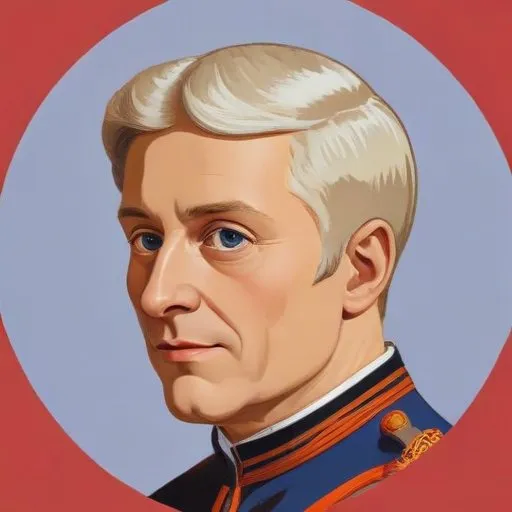
Heinrich XXVII, Prince Reuss Younger Line: The Last Reigning Monarch of a Bygone Era
A Life of Royal Duty and Transition
Heinrich XXVII, Prince Reuss Younger Line, is best known for being the last reigning prince of the House of Reuss Younger Line, ruling from 1913 to 1918, and later becoming the Head of the House from 1918 to 1928. During his reign, he oversaw the transition of his kingdom from a monarchy to a republic, making him a significant figure in German history.
Early Life and Royal Heritage
Born on November 10, 1858, in Gera, Heinrich XXVII was the eldest child of Heinrich XIV, Prince Reuss Younger Line, and Duchess Agnes of Württemberg. Through his father, he was a descendant of Heinrich LXVII, Prince Reuss Younger Line, and through his mother, he was related to the royal families of Württemberg and Hohenlohe-Langenburg.
Rise to Power and Royal Responsibilities
Upon the death of his father on March 29, 1913, Heinrich XXVII inherited the throne of the Principality of Reuss Younger Line. In addition to his new role, he also became the regent of Reuss Elder Line, due to the physical and mental disability of Prince Heinrich XXIV, who had suffered an accident in his childhood.
Marriage and Family
On November 11, 1884, Heinrich XXVII married Princess Elise of Hohenlohe-Langenburg at Langenburg. Together, they had five children:
- Princess Viktoria Reuss Younger Line (1889-1918)
- Princess Luise Reuss Younger Line (1890-1951)
- Prince Heinrich XL Reuss Younger Line (1891-1891)
- Prince Heinrich XLIII Reuss Younger Line (1893-1912)
- Heinrich XLV, Hereditary Prince Reuss Younger Line (1895-1971)
Abdication and Legacy
On November 11, 1918, Heinrich XXVII abdicated the throne, following the first stage of the German Revolution, which led to the abolition of the German monarchies. With the death of Heinrich XXIV in 1927, the Elder Line became extinct, and its titles passed to Heinrich XXVII, making him the sole Prince Reuss.
Later Life and Death
Heinrich XXVII died on November 21, 1928, at the age of 70, marking the end of an era in German royal history. His legacy serves as a reminder of the significant changes that took place in Europe during the early 20th century.
Impact on Modern Society
Heinrich XXVII's reign and abdication had significant consequences for modern German society. His role in the transition from monarchy to republic paved the way for the country's development as a democratic state. Additionally, his legacy continues to be felt in the region, with the House of Reuss Younger Line remaining an important part of German history and cultural heritage.
FAQ
What was Heinrich XXVII, Prince Reuss Younger Lines role in German politics?
Heinrich XXVII, Prince Reuss Younger Line was a member of the German nobility and played a significant role in regional politics, serving as the Prince of Reuss Younger Line.
What were Heinrich XXVII, Prince Reuss Younger Lines views on German unification?
Heinrich XXVII, Prince Reuss Younger Line supported German unification, believing that it was essential for the countrys economic and political development.
What were Heinrich XXVII, Prince Reuss Younger Lines notable achievements as a leader?
During his reign, Heinrich XXVII, Prince Reuss Younger Line implemented several reforms, including the introduction of a constitution and the expansion of education and infrastructure in his region.
What was Heinrich XXVII, Prince Reuss Younger Lines early life and education like?
Heinrich XXVII, Prince Reuss Younger Line was born in Germany and received a traditional noble education, studying at the University of Bonn.
What were Heinrich XXVII, Prince Reuss Younger Lines contributions to the field of art and culture?
Heinrich XXVII, Prince Reuss Younger Line was a patron of the arts, supporting local artists and musicians. He also commissioned several notable architectural projects, including the renovation of his palace.