


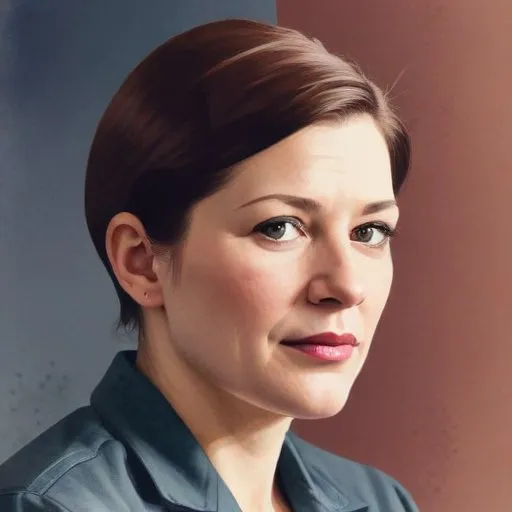
Pioneering geneticist who discovered the first genetic linkage in humans, mapping the location of genes on chromosomes. Known for her groundbreaking work in human genetics and its applications to medicine.
Helen Redfield, born on May 5, 1900, in Archbold, Ohio, was a renowned American geneticist who made significant contributions to the field of genetics, particularly in the areas of crossing over, recombination, and inheritance. Redfield's work, which spanned over three decades, has had a lasting impact on our understanding of genetic principles and their applications in fields such as medicine and agriculture.
Redfield graduated from Rice University in 1920, where she worked in the mathematics department. She then went on to earn her Ph.D. in zoology from the University of California, Berkeley in 1921. This remarkable feat, achieved at a time when women were largely underrepresented in science, demonstrates Redfield's intellectual prowess and determination.
Redfield's academic career was marked by her association with esteemed institutions such as Stanford University, Columbia University, and the California Institute of Technology. Her research focused on the genetic analysis of Drosophila melanogaster, a species of fruit fly commonly used in genetic studies. Her work led to several significant publications, including "A Comparison of Triploid and Diploid Crossing over for Chromosome II of Drosophila Melanogaster" (1932) and "Egg Mortality and Interchromosomal Effects on Recombination" (1957).
In 1926, Redfield married Jack Schultz, a fellow geneticist, and had two children. Interestingly, she retained her maiden name after marriage, a decision that reflects her independence and commitment to her professional identity. In 1942, during World War II, Redfield worked as a lab scientist at Cold Spring Harbor Laboratory, a significant contribution to the war effort.
Redfield's research has had far-reaching implications for fields such as medicine, agriculture, and biotechnology. Her work on genetic inheritance and recombination has informed our understanding of genetic disorders and disease inheritance patterns. Moreover, her pioneering spirit and contributions to the field of genetics have inspired generations of women to pursue careers in science and research.
Helen Redfield's remarkable career and contributions to genetics have left an indelible mark on the scientific community. Her legacy extends beyond her research, serving as a testament to the power of determination, hard work, and intellectual curiosity. Redfield's story is a powerful reminder that women can, and do, make significant contributions to the advancement of science.
Born in 1902
Pioneering geneticist who discovered transposons, mobile genetic elements that jump from one location to another in a genome, revolutionizing our understanding of genetic variation and evolution.
Born in 1920
A British scientist who contributed significantly to the discovery of the structure of DNA, providing high-quality X-ray crystallography images that helped James Watson and Francis Crick develop their famous model.
98 Years Old
Discovered the structure of DNA, revolutionizing our understanding of genetics and earning a Nobel Prize. Pioneering work in molecular biology has far-reaching implications for medicine and beyond.
Born in 1916
Pioneering scientist who discovered the structure of DNA, revolutionizing our understanding of genetics and life itself.
Born in 1916
A Nobel Prize-winning physicist and biologist who contributed significantly to the discovery of the structure of DNA, using X-ray crystallography to produce the first clear images of the molecule.
Born in 1905
A pioneer in DNA research, this biochemist discovered the base pairing rules of DNA, leading to a fundamental understanding of genetic code.
Born in 1901
Pioneering chemist and peace activist who won two unshared Nobel Prizes, one for chemistry and one for peace, for his groundbreaking work on the nature of the chemical bond and his tireless efforts to promote nuclear disarmament.
Born in 1850
A Nobel Prize-winning biologist who made groundbreaking discoveries in molecular biology, particularly in understanding the replication of viruses and DNA.
