


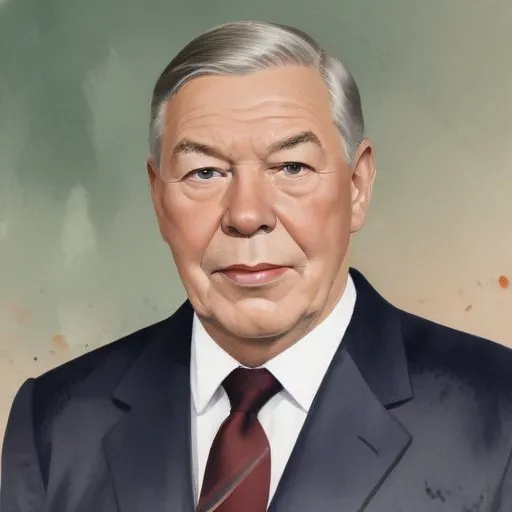
The architect of apartheid, known for implementing and enforcing the racist segregation policies in South Africa from 1958 to 1966. His policies had a profound impact on the country's social and political landscape.
Hendrik Frensch Verwoerd, a Dutch-born South African politician, scholar, and newspaper editor, is commonly regarded as the architect of apartheid and nicknamed the "father of apartheid." As Prime Minister of South Africa, Verwoerd played a significant role in socially engineering and implementing the policies of apartheid, the country's system of institutionalized racial segregation and white supremacy.
Verwoerd was born on September 8, 1901, in Amsterdam, Netherlands, to a Dutch Reformed Church minister. His family moved to South Africa when he was three years old. He pursued his education at the University of Stellenbosch, where he earned a master's degree in psychology and later a doctorate in philosophy.
Verwoerd's political career began as a newspaper editor, where he became a vocal advocate for Afrikaner nationalism and a strong critic of British influence in South Africa. His views resonated with the far-right National Party, and he soon became their political strategist and propagandist. In 1948, the National Party came to power, and Verwoerd played a crucial role in their electoral victory.
In 1950, Verwoerd became the Minister of Native Affairs, where he implemented policies that further entrenched apartheid. He later became the Prime Minister of South Africa in 1958, a position he held until his assassination in 1966. During his tenure, Verwoerd oversaw the proclamation of the Republic of South Africa in 1961 and continued to expand apartheid policies.
Verwoerd was an authoritarian, socially conservative leader who believed in the superiority of the Afrikaner volk. He was a member of the Afrikaner Broederbond, a secret organization dedicated to advancing Afrikaner interests. Verwoerd's ideology was rooted in Calvinism and Afrikaner nationalism, which he believed justified the segregation and oppression of non-whites.
Verwoerd's policies and beliefs have been widely condemned as racist and discriminatory. His role in implementing apartheid has been linked to widespread human rights abuses, forced removals, and economic inequality. Verwoerd's attempts to justify apartheid to international audiences, branding it as a policy of "good-neighbourliness," were met with widespread criticism and ridicule.
Verwoerd was assassinated on September 6, 1966, by Dimitri Tsafendas, a parliamentary messenger. His legacy is marked by controversy, and his policies continue to have a lasting impact on South African society. Despite his role in shaping the country's history, Verwoerd's name is often associated with shame and regret.
"There is no place for him [the black man] in the European community above the level of certain forms of labour." - Hendrik Verwoerd
"The black man is not on the same level as the white man... he is lower."
Verwoerd's legacy is inextricably linked to the history of apartheid and the struggle for racial equality in South Africa. His policies and beliefs continue to have a lasting impact on the country's social and economic landscape. Despite efforts to move beyond the apartheid era, Verwoerd's name remains a symbol of racism and oppression.
Verwoerd's life and legacy serve as a stark reminder of the dangers of racism, discrimination, and inequality. His story is a cautionary tale about the consequences of unchecked power and the devastating impact of discriminatory policies on human lives.
Born in 1915
The 4th State President of South Africa, a key figure in the apartheid regime, known for implementing and enforcing segregationist policies. He's infamous for his role in suppressing anti-apartheid movements.
Born in 1916
The last apartheid-era leader, notorious for enforcing racial segregation and resisting international pressure to reform, ultimately surrendering to demands for democratic elections.
90 Years Old
The last State President of apartheid-era South Africa who led the country's transition to democracy and was awarded the Nobel Peace Prize for his efforts. He's known for his role in releasing Nelson Mandela from prison and dismantling the apartheid system.
Born in 1918
A South African lawyer and politician who fought against apartheid, becoming the country's first black president and a symbol of racial reconciliation, earning a Nobel Peace Prize. He's a beacon of hope and freedom.
Born in 1870
A skilled lawyer and politician who played a key role in shaping South Africa's government and served as a prominent international statesman. He's also known for his influential ideas on holism and evolution.
