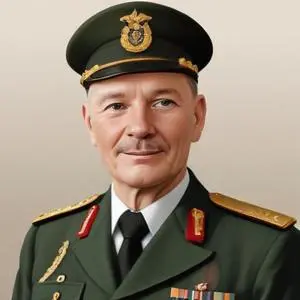
Jan Smuts: The Visionary Statesman and Military Leader
A Legacy of Leadership and Philanthropy
Jan Smuts, a trailblazing South African statesman, military leader, and philosopher, left an indelible mark on the world stage. He is renowned for serving as the Prime Minister of the Union of South Africa from 1919 to 1924 and again from 1939 to 1948, making him one of the most influential figures in South African history.
Early Life and Education
Born on May 24, 1870, to Afrikaner parents in the British Cape Colony, Smuts was educated at Victoria College, Stellenbosch, and later pursued law at Christ's College, Cambridge, on a scholarship. He was called to the bar at the Middle Temple in 1894 and returned to South Africa the following year.
Rise to Prominence
Smuts' leadership potential was evident during the Second Boer War, where he led the South African Republic's delegation to the Bloemfontein Conference and served as an officer in a commando unit. In 1902, he played a key role in negotiating the Treaty of Vereeniging, which ended the war and led to the annexation of the South African Republic and Orange Free State into the British Empire.
Shaping the Union of South Africa
Smuts was instrumental in the creation of the Union of South Africa in 1910, helping to draft its constitution. Alongside Louis Botha, he established the South African Party, with Botha becoming the union's first prime minister and Smuts holding multiple cabinet portfolios.
Defence and Diplomacy
As Defence Minister, Smuts oversaw the Union Defence Force during World War I. He personally led troops in the East African campaign in 1916 and later joined the Imperial War Cabinet in London. At the Paris Peace Conference of 1919, Smuts advocated for the creation of the League of Nations and secured South African control over the former German Southwest Africa.
Philosophical Contributions and Beliefs
Smuts was a prolific writer and philosopher, penning works such as "Holism and Evolution" (1926) and "The Scientific World Picture of Today" (1937). His philosophical contributions focused on holism, the interconnectedness of all things, and the importance of cooperation in achieving global harmony.
Personal Milestones and Key Life Events
- 1919: Became Prime Minister of the Union of South Africa for the first time
- 1924: Lost the general election to the National Party
- 1939: Re-elected as Prime Minister of the Union of South Africa
- 1948: Defeated by the National Party in the general election
- 1950: Passed away on September 11, aged 80
Influence on Modern Society
Smuts' legacy extends beyond South Africa's borders. He played a pivotal role in shaping international relations, advocating for cooperation and collective security. His leadership during World War II and his commitment to the Allied cause cemented his reputation as a visionary statesman.
Controversies and Public Perception
Smuts faced criticism for his role in the apartheid regime and his views on racial segregation. However, his later years saw a shift towards advocating for gradual reform and increased representation for non-whites.
Quotes and Memorable Sayings
- "The universe is not a collection of separate things, but a continuum, an interconnected web."
- "The whole is greater than the sum of its parts."
Historical Context and Legacy
Jan Smuts' remarkable life and career have left a lasting impact on South Africa and the world. His commitment to leadership, diplomacy, and philosophical inquiry continues to inspire generations, solidifying his place as one of the most influential figures of the 20th century.
FAQ
What was Jan Smuts role in South African politics?
Jan Smuts was a prominent South African lawyer and politician who served as the 2nd Prime Minister of South Africa. He played a key role in South African politics, particularly during the First and Second World Wars.
How did Jan Smuts influence South African foreign policy?
Jan Smuts had a significant influence on South African foreign policy, particularly during World War I and World War II. He was a strong advocate for South African independence and played a key role in shaping the countrys foreign policy during this time.
What were Jan Smuts views on racial segregation?
Jan Smuts was a vocal critic of racial segregation and advocated for greater equality between whites and non-whites in South Africa. He believed that segregation was morally wrong and economically unsound.
How did Jan Smuts military experience influence his politics?
Jan Smuts military experience had a significant influence on his politics, particularly during World War I. He saw firsthand the devastation of war and became a strong advocate for international cooperation and collective security.
What is Jan Smuts legacy in South African politics?
Jan Smuts legacy in South African politics is that of a champion of South African independence and a strong advocate for greater equality between whites and non-whites. He is remembered as one of the most important figures in South African history.