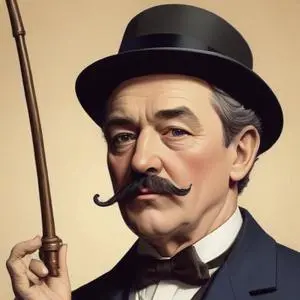
Cecil Rhodes

Cecil Rhodes

Cecil Rhodes was born on July 5th, 1853

Full Name: Cecil John Rhodes
Place of Birth: Hertfordshire, England
Profession: Businessman, Politician
Office Held: 6th PM of Cape Colony
Nationality: English, South African
Date of Birth: July 5, 1853
Zodiac Sign: Cancer
Death Date: March 26, 1902

A British-born entrepreneur and politician who played a significant role in the colonization of South Africa, known for his diamond mining ventures and expansionist policies. He founded the De Beers company and established Rhodes University.

Written by: Emma Thompson Emma Thompson

Cecil Rhodes: The Visionary Behind the Scramble for Africa

The Man Who Shaped the Course of Southern Africa

Cecil John Rhodes, the enigmatic English mining magnate and politician, left an indelible mark on the history of southern Africa. He is best known for founding the territory of Rhodesia, now Zimbabwe and Zambia, and his ambitious vision for a Cape to Cairo Railway that would span British territory.

Early Life and Diamond Empire

Born on July 5, 1853, in Netteswell House, Bishops Stortford, Hertfordshire, Rhodes was the son of a vicar. A sickly child, he was sent to South Africa at the age of 17, hoping the climate would improve his health. Instead, he discovered his entrepreneurial spirit and entered the diamond trade in Kimberley in 1871. With funding from Rothschild & Co, Rhodes began to systematically buy out and consolidate diamond mines, eventually gaining a near-complete monopoly of the world diamond market.

The Rise of De Beers

In 1888, Rhodes formed De Beers, a company that would dominate the diamond industry for over a century. De Beers' success was built on Rhodes' shrewd business acumen and his ability to securing funding from influential investors.

Political Ambitions and Controversies

Rhodes' entry into politics began in 1881, when he was elected to the Cape Parliament at the age of 27. In 1890, he became Prime Minister of the Cape Colony, a position he held until 1896. During his tenure, Rhodes used his political power to expropriate land from black Africans through the Glen Grey Act and triple the wealth requirement for voting under the Franchise and Ballot Act, effectively barring black people from taking part in elections.

The Formation of Rhodesia

Rhodes' most significant achievement was the formation of Rhodesia, a territory that would bear his name. In 1895, he and his British South Africa Company founded the territory, which would eventually become Zimbabwe and Zambia.

A Life of Contrasts

Despite his many achievements, Rhodes' life was not without controversy. The disastrous Jameson Raid, an unauthorized attack on Paul Kruger's South African Republic (Transvaal), led to his forced resignation as Prime Minister in 1896. His health, too, was a constant concern, and he died on March 26, 1902, at the age of 48.

Legacy and the Rhodes Scholarship

In his last will, Rhodes provided for the establishment of the international Rhodes Scholarship at Oxford University. The scholarship, which aims to promote international understanding and education, has been awarded to some of the world's most distinguished individuals, including former US President Bill Clinton.

Lasting Impact

Cecil Rhodes' legacy is complex and multifaceted. While his actions had far-reaching consequences for the people of southern Africa, his vision for a unified Africa and his contributions to education and international understanding continue to inspire generations. His story serves as a reminder of the power of human ingenuity and the importance of considering the consequences of our actions. Rhodes' life was a testament to his boundless energy and vision, and his legacy continues to shape the world we live in today.
Timeline
1853
Born in Bishops Stortford, England
Cecil John Rhodes was born on July 5, 1853, in Bishops Stortford, Hertfordshire, England. He was an English-South African businessman and politician.
1871
Moved to South Africa
Rhodes moved to South Africa in 1871, where he worked as a cotton farmer and later became a successful diamond miner.
1890
Became Prime Minister of Cape Colony
Rhodes became the Prime Minister of Cape Colony in 1890, a position he held until 1896.
1895
Caused the Jameson Raid
Rhodes was involved in the Jameson Raid, a failed attempt to overthrow the government of the South African Republic.
1902
Died in Muizenberg, South Africa
Rhodes died on March 26, 1902, in Muizenberg, South Africa.
Cecil Rhodes

Cecil Rhodes Quiz

Cecil Rhodes is best known for his ventures in which industry?

Score: 0/5
FAQ
What was Cecil Rhodes role in South African politics?
Cecil Rhodes was a British businessman and politician who played a key role in the development of South Africa, particularly in the late 19th and early 20th centuries. He was a prime minister of the Cape Colony and a prominent figure in the Scramble for Africa.
What were Cecil Rhodes business achievements?
Cecil Rhodes was a successful businessman who founded the De Beers company and dominated the diamond mining industry in South Africa. He was also a key player in the development of the gold mining industry and was known for his entrepreneurial spirit and business acumen.
How did Cecil Rhodes politics reflect his business interests?
Cecil Rhodes politics reflected his business interests in that he used his political power to promote his business ventures and protect his interests. He was a strong advocate for British imperialism and believed in the superiority of the British Empire.
What was Cecil Rhodes role in the Scramble for Africa?
Cecil Rhodes played a key role in the Scramble for Africa, a period of intense European colonization and exploration in Africa in the late 19th century. He was a prominent figure in the expansion of British colonial rule in Africa and played a key role in the colonization of Rhodesia, which was named after him.

Related People:

Paul Kruger

Born in 1825

The 5th President of the South African Republic, a Boer war hero who fought against British colonization, and later became a symbol of Afrikaner nationalism. He's most known for his resistance against British rule and his role in shaping South Africa's history.

Jan Smuts

Born in 1870

A skilled lawyer and politician who played a key role in shaping South Africa's government and served as a prominent international statesman. He's also known for his influential ideas on holism and evolution.

Hendrik Verwoerd

Born in 1901

The architect of apartheid, known for implementing and enforcing the racist segregation policies in South Africa from 1958 to 1966. His policies had a profound impact on the country's social and political landscape.

B. J. Vorster

Born in 1915

The 4th State President of South Africa, a key figure in the apartheid regime, known for implementing and enforcing segregationist policies. He's infamous for his role in suppressing anti-apartheid movements.

P. W. Botha

Born in 1916

The last apartheid-era leader, notorious for enforcing racial segregation and resisting international pressure to reform, ultimately surrendering to demands for democratic elections.

F. W. de Klerk

90 Years Old

The last State President of apartheid-era South Africa who led the country's transition to democracy and was awarded the Nobel Peace Prize for his efforts. He's known for his role in releasing Nelson Mandela from prison and dismantling the apartheid system.

Nelson Mandela

Born in 1918

A South African lawyer and politician who fought against apartheid, becoming the country's first black president and a symbol of racial reconciliation, earning a Nobel Peace Prize. He's a beacon of hope and freedom.